


21 Contemporary Interior Design Ideas to Transform Your Home in 2026
Ask what contemporary interior design is really about, and it's pretty much this: a home that feels of-the-moment, without the trend that ages badly in a season. So I've pulled together 21 ideas below worth trying out, and they hold up whether you're just sorting one room or taking on the whole house. Color, furniture, lighting, layout, we'll walk through the lot in everyday language, and each pick suits a home that gets actually lived in, not one staged for the camera.
Walk into a home that's been done right, and you tend to notice it straight away. Clean architectural lines. A few soft curves to break them up. Underneath, a neutral palette quietly carries the weight, with one or two bold accents grabbing the eye up top. The reason this style has run throughArchitectural Digest spreads for nearly a decade comes down to one thing — the look just doesn't age. What follows are 21 ideas, drawn from how designers actually put contemporary rooms together in real client homes. Take what fits your space, and leave the rest.
What Is Contemporary Interior Design?
Contemporary interior design is basically whatever looks current right now. It changes how our taste shifts, but some things hang on: clean lines, open space, and neutral colors. Short version? It's the word designers use for a room that feels current. That's really all there is to it.
The term first appeared in the 1970s. By that point, interiors were borrowing so freely from modernism, Art Deco, and mid-century modern that they didn't really fit into any one box anymore. Five decades on, the word's still here, mostly because nothing better has come along to replace it.
Look at contemporary interiors now, and you'll catch a familiar mix, even as the details keep changing. Clean lines sit beside sculptural curves. A neutral base built on whites and grays. Open floor plans where closed-off rooms once stood. A few statement pieces pulling each room together.
The style keeps moving along with the wider design trends around it. That's exactly why a contemporary living room in 2026 looks nothing like one from 2015. And that constant change isn't a flaw — it's really the whole point.
Contemporary vs Modern Interior Design
People mix these two terms up constantly. Modern interior design? That points to a specific period running from 1920 to 1955, rooted in Bauhaus and Scandinavian principles. The whole movement ended decades ago. Contemporary interior design has no fixed era. It absorbs whatever the design world is producing right now, year by year. The two overlap because contemporary leans heavily on classic modern furniture forms. Where they split: the curves, mixed materials, and trend-forward accents, contemporary keeps piling on top.
21 Contemporary Interior Design Ideas to Try at Home
Flip through the magazines and thecontemporary design style ideas change season to season, sometimes quicker. But under all that, the same few moves keep turning up in every contemporary room that actually looks good. These 21 ideas are the ones designers reach for again and again.
1. Anchor the Room with a Modular Sofa

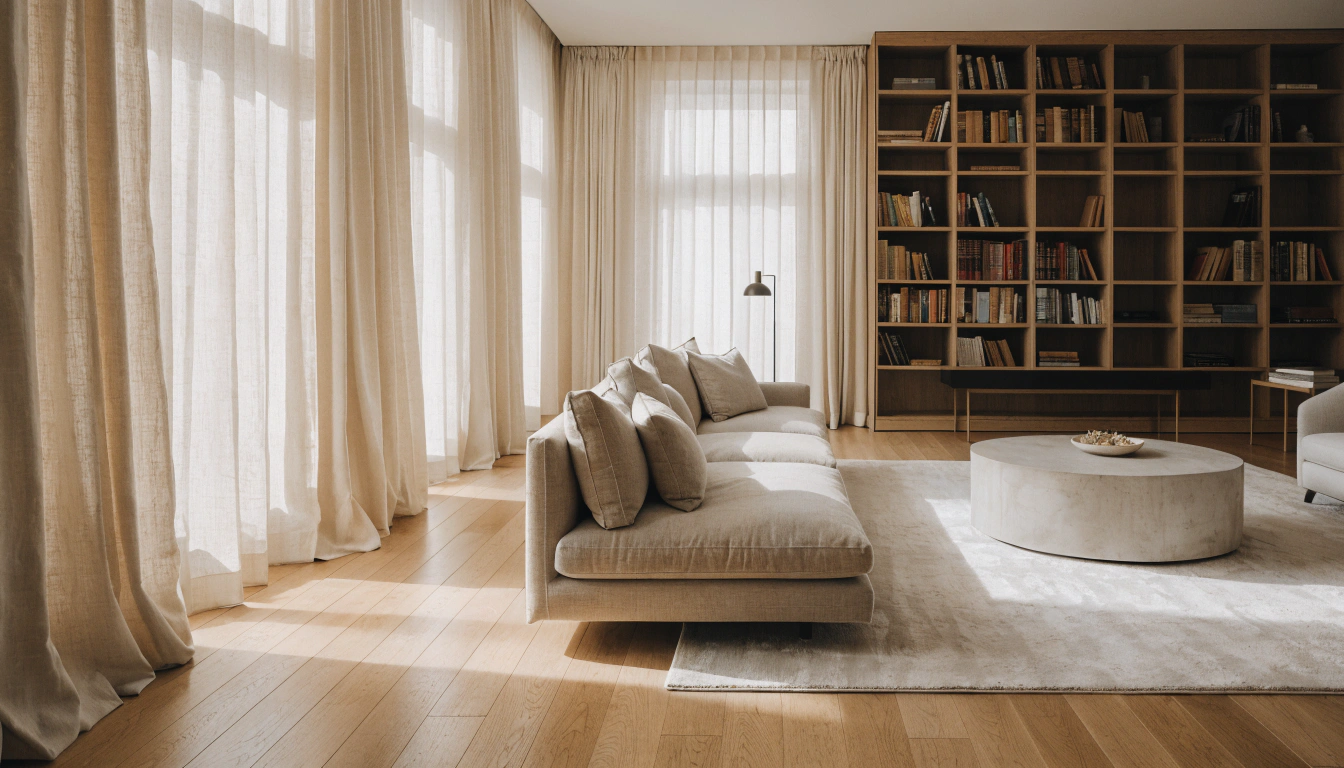
Few things read contemporary faster than a low, oversized modular sofa anchoring the living room. The shape needs to be sculptural enough to land as a statement piece, yet comfortable enough to actually crash on — and that tension is what designers keep chasing. TheEira modular L-shaped sectional sofa pulls it off, with feather-down fill that gives you the slouchy, sink-in feel contemporary interiors are after.
2. Layer Cool Neutrals with Strategic Pops of Color

Every contemporary home worth a magazine spread leans on a neutral color palette. Whites. Beiges. Taupes. Soft grays. The trick? Color restraint. One mustard yellow throw pillow tossed onto a stone-gray sofa. A burnt orange rug pulled under a charcoal seating arrangement. One navy armchair against a warm white wall. Bold colors arrive as guests in the room. Never as permanent residents.
3. Embrace Open Floor Plans for Visual Flow

Open floor plans have become inseparable from contemporary interior design. The style cares about how rooms connect, not how they divide. Knock down the wall between the living room and the kitchen. Swap a solid wall for a glass partition. Area rugs and pendants now mark zones, not walls. The contemporary living room furniture collection at Sicotas is sized specifically for these open layouts.
4. Mix Materials for Textural Contrast

Without texture, a neutral room falls flat, and the good designers feel that coming before it happens. So you pair opposites. Hard with soft. Matte against gloss. Cool against warm. A travertine coffee table pulled up to a boucle armchair. A polished brass floor lamp standing over a chunky wool rug. That's the contrast that drags a beige room out of dull and into something that looks meant, and it barely costs a thing.
5. Make Sculptural Lighting the Focal Point

Lighting in contemporary homes? It's a sculpture you happen to switch on at night. Walk through any AD-featured project, and the fixtures behave like art first, light sources second. An oversized linen drum pendant above the dining table. A single arched brass floor lamp pulls the eye toward a corner. Sculptural lighting in any form holds a contemporary room together visually on its own.
6. Add Curved Furniture for Soft Geometry

The strict geometric lines of mid-century modernism have softened. Curves are back. A rounded coffee table. A circular mirror with a thin black frame. A curved upholstered armchair tucked into a corner. Each one drops a quiet softness into rooms that would otherwise read too sharp. The arch trend across mirrors, headboards, and doorways is the most visible part of this whole curve revival.
7. Hang Oversized Art Above the Sofa
Skip the gallery wall entirely. Hang one oversized painting above the sofa instead. Scale alone does most of the work, creating a focal point while leaving empty wall around it to breathe. Abstract pieces win, or muted landscape photography. Anything ornate kills the contemporary mood instantly. Keep frames thin. Black or natural wood. Never gilded.
8. Use Sheer Curtains for Diffused Natural Light

Heavy drapes belong in traditional homes, not contemporary ones. Three options work cleanly here. Sheer linen curtains soften the edges. Simple roller shades disappear when not needed. Bare windows win if your privacy situation allows. The goal stays the same. Maximum natural light floods the room. Daylight is the strongest signal that a room reads contemporary rather than traditional.
9. Choose Streamlined Storage with Hidden Function

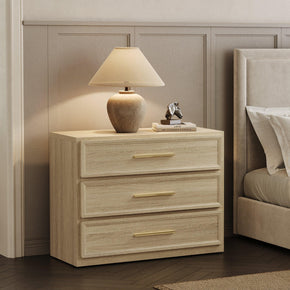
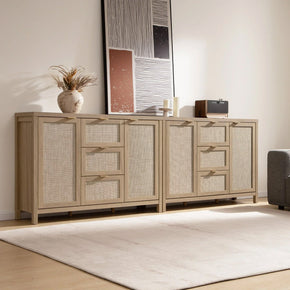
Contemporary interiors look effortless not because there's nothing to put away, but because the clutter has been tucked neatly out of sight. TheCas horizontal chest with open-drawer detailing is a great example of storage that manages to feel sculptural and minimal at the same time. Its open drawer fronts give the piece a bit of visual rhythm, while the drawers behind them quietly hold a surprising amount.
10. Bring in Natural Materials and Indoor Plants

Without organic elements, a contemporary room slides quickly into looking sterile. Wood floors. Rattan accents. Jute rugs. Stone surfaces. Indoor plants at varying heights. Drop a large fiddle leaf fig into the living room corner. Stand an olive tree in a textured ceramic pot beside the sofa. These touches are the actual line between a lived-in contemporary home and a staged real estate listing.
11. Style a Warm Minimalist Bedroom

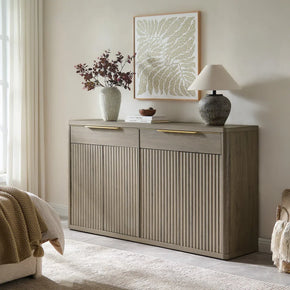
Stark white bedrooms are officially over. Warm minimalism replaced them. Cream walls instead of pure white. Layered linen bedding rather than one stiff duvet. A wool throw was rumpled at the foot of the bed instead of being perfectly arranged. The Stria 6-drawer chest bedroom set works particularly well here. The fluted panel detailing brings texture without breaking the calm.
12. Try a Black Kitchen for Bold Contrast

Black kitchens have become one of the most photographed contemporary moves of the past few years. Matte black cabinetry. A lighter island breaking the dark mass. Brass or chrome hardware bridging the two finishes. One stone counter ties everything together. One warning, though. Black cabinets only work in homes with strong natural light. In low-light kitchens, the same combination turns oppressive by evening.
13. Float the Vanity in a Contemporary Bathroom

Swapping a floor-mounted vanity for a wall-mounted floating one is one of the highest-impact bathroom moves you can make. The space underneath creates that airy, weightless feeling,g defining contemporary furniture everywhere else. Pair the floating vanity with large-format porcelain tile. A frameless mirror with integrated lighting. Matte black or brushed brass fixtures in one finish family.
14. Carve Out a Streamlined Home Office Nook

Working from home has changed how contemporary interiors handle workspaces. A dedicated office room isn't the only acceptable answer anymore. Now it might be a clean-lined desk tucked into a hallway corner, or a floating wall-mounted one in the guest bedroom. TheSicotas home office desk range has plenty built for exactly this kind of nook, with cable management worked right in.
15. Mix Eras with Mid-Century Modern Touches

Mid-century modern is the quiet trick behind many contemporary rooms. The two talk the same way, clean lines, real wood, none of the fuss, so putting them together just works. Set an Eames-style lounge chair by a curved contemporary sofa, and the room kind of wakes up. A '60s walnut credenza under a fresh abstract painting does the same. Mix eras like that, and the place looks gathered over the years, not pulled off one catalog page.
16. Add a Slate or Stone Feature Wall
Natural stone has been one of the strongest material choices of the last couple of years. Slate, travertine, limestone, or even stone-look porcelain will all do the trick. Run it across a single feature wall behind the sofa or bed, then keep the surrounding walls in a softer neutral. A slim picture light fitted above catches the texture and turns that wall into an even stronger anchor once the sun goes down.
17. Pick a Sculptural Coffee Table with Personality

A contemporary living room draws most of its character from one or two pieces that feel more like sculpture than plain furniture. TheStria round coffee table has exactly that sort of presence. It turns the center of the room into a focal point all its own, rather than just a flat surface where coffee cups end up sitting.
18. Style an Upholstered or Padded Headboard

Forget the old wood and metal frames for a minute. Big upholstered headboards have slowly taken over as the main event in the contemporary bedroom, and you can see why pretty fast. Do it in performance velvet, boucle, or natural linen and the texture by itself already feels rich, then the size finishes the job. A tall, padded headboard makes a bed look like someone actually designed it, not just stuck it there to sleep on. Swap the bedside lamps out for brass wall sconces. And stick to three pillows, no more.
19. Layer Lighting at Three Different Heights

A single overhead fixture is rarely enough for a contemporary room. The style leans on layered light, not one flat glow pouring down from the ceiling. The simplest way to handle it is across three levels: a high source like a pendant or chandelier, a mid-height one such as a floor lamp or sconce, and a low source like a table lamp or candle. Mornings call for the overhead. Evenings ask for nothing more than the table lamp.
20. Hide Clutter with Smart Closed Storage

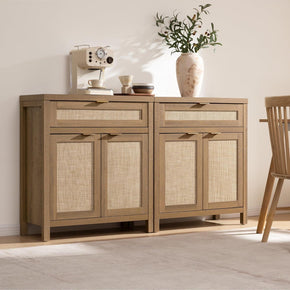
The pared-back contemporary look falls apart the second clutter starts piling on visible surfaces. Closed cabinetry handles this better than open shelving in most households. The Stria sideboard with sculptural fluted doors pulls double duty here. Real visual character on the outside, daily chaos hidden behind closed doors.
21. Integrate Smart Home Tech That Disappears

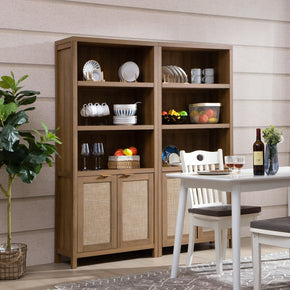
Smart tech belongs in a contemporary home only if you cannot actually see it. Recessed in-wall speakers? Yes. Cable runs tucked behind built-ins? Yes. Voice-activated lighting tied to discreet switches that disappear into the wall? Absolutely. The Helio modular TV stand, built for large screens, was made for this exact problem. Built-in cable management. Modular sections that grow with whatever TV or media setup comes next.
Key Elements of Contemporary Interior Design Style
Past the specific ideas, contemporary interior design rests on a handful of underlying principles. The contemporary style guide from HGTV walks through the elements that turn up in nearly every contemporary home its designers feature.
Clean Lines and Streamlined Silhouettes

You see it in the architecture and the furniture both: clean lines, nothing accidental. Straight lines do most of the work. Curves are fine, the sculptural kind, as long as they're there on purpose and not just for show. Anything fussy, anything overdone, it just doesn't belong here.
Neutral Color Palette with a Pop of Color
Whites, creams, beiges, soft grays, taupes, those do the groundwork here, handing every statement piece the room it needs to stand out. Color comes in as the guest, never the host. That bit of restraint is exactly what separates a calm, polished contemporary room from a busy, cluttered one.
Mixed Materials and Layered Textures
A contemporary room without texture reads flat almost immediately. Wood, metal, glass, stone, leather, linen, wool, and rattan should all appear in balanced quantities. The combination of cool materials with warmer ones creates the depth contemporary spaces need.
Statement Pieces as Focal Points

Every contemporary room has at least one piece drawing the eye on its own. An oversized pendant. A sculptural coffee table. A curved sofa. The statement works because everything around it stays deliberately quiet.
How to Style Contemporary Interior Design by Room
The core principles do not change from room to room. What shifts is how you apply them. The contemporary interior design guide from Castlery makes a similar point. The same style of language has to bend depending on how each room is actually used.
Contemporary Living Room Ideas

Start with a low-profile modular sofa in a neutral shade, grounded on top of one large area rug. Add a sculptural coffee table in stone, marble, or glass. Hang a single oversized piece of art above the sofa. Let a sculptural floor lamp arch in from the nearest corner. That's it.
Contemporary Kitchen Ideas

Flat-panel cabinets in matte finishes are the contemporary kitchen starting point. Run stone or quartz counters straight up the backsplash for a single continuous surface, with no broken lines. Tuck appliances behind panels or hide them entirely. The focal point? A single statement pendant or a row of three above the kitchen island.
Contemporary Bedroom Ideas

Choose either a low-profile bed frame or an oversized upholstered headboard — not both fighting for attention. Layer linen bedding in neutral tones, then bring in a single accent color through a pillow or blanket. Keep the nightstand surface nearly bare. Finish with one large piece of art.
Contemporary Home Office Ideas

Start with a clean, streamlined desk, either solid wood or stone-topped. The chair counts just as much, so pick leather or bouclé with enough shape to feel like a real design choice rather than an afterthought. Don't bother with a whole bookcase. One floating shelf covers it. And put a single bold piece of art behind the desk, because that's the video-call backdrop nobody mentions but everybody clocks.
Common Mistakes That Make Contemporary Interiors Look Cheap
Contemporary interiors tend to go wrong in the same handful of ways. Scatter too many little decorative bits around and the whole thing reads cheap right away. Lean on one overhead light, and the room just goes flat once the sun's down. Furniture that doesn't fit the space either jams it up or sort of drifts there, lost. And a contemporary interior design scheme that's all neutral with no real texture? It comes off cold, more showroom than a place you'd actually flop down in. Usually, the fix isn't buying more, it's taking stuff away. Then layer three or four different materials into the same palette so the eye finds something beyond color.
Sustainable Choices in Contemporary Interior Design
Sustainability slipped into contemporary interior design quietly, almost without anyone announcing it. The guide to contemporary interior design from Maison Flâneur points out that contemporary homes increasingly prioritize eco-friendly materials and furniture built to last for decades. Solid wood over particleboard. Natural fibers over synthetics. Brands with transparent sourcing.
The wider Sicotas modern furniture catalog carries pieces built to last well beyond a single trend cycle. Investing in fewer high-quality pieces beats rotating through fast furniture every few years.
FAQs
What is contemporary design in interiors?
Contemporary design in interiors refers to the current, evolving style of decoration that reflects what feels relevant in design right now. The look blends clean lines with sculptural curves. It layers a neutral color palette against bold accents. It emphasizes open floor plans, natural light, and a few selected statement pieces anchoring each room.
What is the difference between modern and contemporary interior design?
Modern interior design points to a specific historical movement from the 1920s through the 1950s, rooted in Bauhaus and Scandinavian principles. Contemporary interior design is fluid and reflects current trends rather than any single era; modern stays frozen in its period. Contemporary keeps absorbing new ideas year after year.
What items make your house look cheap?
Poor lighting from one overhead fixture, cluttered surfaces packed with small accessories, fake-looking finishes, undersized area rugs floating in the room, visible cable management, and furniture sized wrong for the room all push a contemporary home toward looking cheap. The fix? Remove items rather than add more.
What is an example of contemporary style?
A contemporary living room might include a low-profile modular sofa in cream linen, a round travertine coffee table, an oversized abstract painting above the sofa, a sculptural brass floor lamp, sheer linen curtains, and one mustard yellow throw pillow as the accent. The result reads current, intentional, and uncluttered.
What are the 7 elements of interior design?
The seven elements of interior design are space, line, form, light, color, texture, and pattern. Contemporary interior design relies particularly heavily on space, line, light, and texture. Pattern tends to show up less often than in traditional or maximalist styles.
What is contemporary luxury interior design?
Contemporary luxury interior design pairs the clean current style with premium materials like marble, walnut, brushed brass, and high-end fabrics such as boucle and velvet. Restraint defines the luxury version. One stunning statement piece made of quality materials delivers more luxury impact than ten ordinary, expensive objects scattered around the room.
What are the key elements of contemporary style?
The key elements of contemporary style are clean lines, a neutral color palette punctuated by pops of bold color, open floor plans, abundant natural light, mixed materials and layered textures, sculptural statement lighting, minimal clutter, and one or two carefully selected focal points per room.
Sources
- Architectural Digest. Contemporary Interior Design 101.
- HGTV. Contemporary Style 101.
- Decorilla. 30 Best Contemporary Design Style Ideas of 2026.
- Castlery. Contemporary Interior Design Guide.
- Maison Flâneur. A Guide to Contemporary Interior Design.
- Sharps. Contemporary Style Guide.
- American Society of Interior Designers. ASID Resources for Homeowners.
- Benjamin Moore. Color Trends and Paint Resources.


Stay In The Know
Expert advice. Very good deals. The absolute best (and worst) things we've tested lately.
Looking for something else?
Best Vase for Tulips: A Florist's Honest Guide to Shape, Height, and Styling
LEARN MORE
41 Small Outdoor Living Spaces Ideas to Transform Even the Tiniest Patio
LEARN MORE
Modern Sideboard for Living Room: Complete Buying & Styling Guide
LEARN MORE
17 Camel Leather Sofa Decorating Ideas to Transform Your Living Room
LEARN MORERead more from Blogs
Looking for something else?
36 Wall Art Ideas That Make Any Room Feel Finished
LEARN MORE
What is an Ottoman? 8 Reasons Why You Need One
LEARN MORE
How to Sit in Bed With Good Posture: 10 Simple Tips
LEARN MORERead more from Blogs
You may also like


Further reading
What Is a Platform Bed? A Simple Guide to Types, Benefits, and Buying
Bed Sizes Guide: Dimensions From Twin to King