

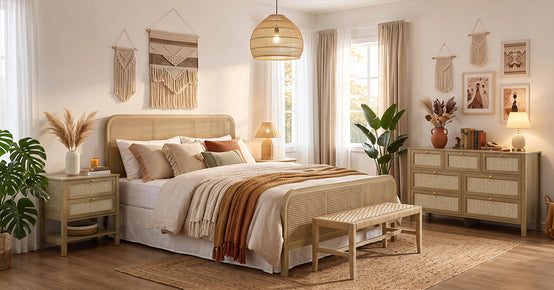
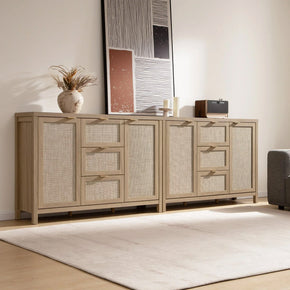
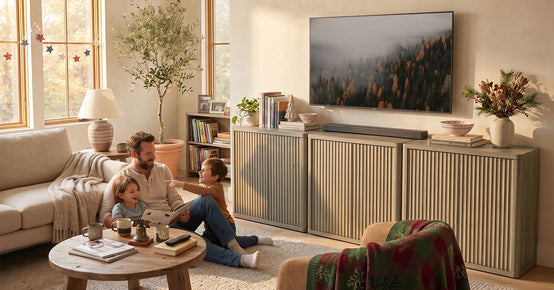
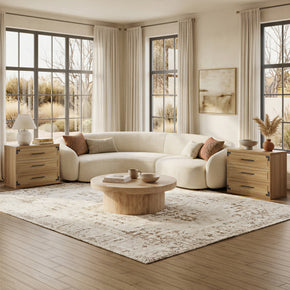


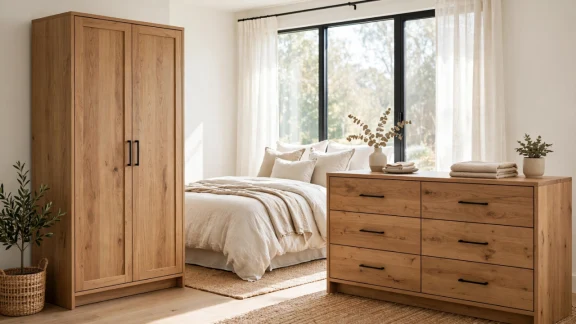

Cabinet vs Dresser: Doors or Drawers for Bedroom Storage

Picture a regular Tuesday morning — half asleep, ninety seconds before you're officially late, hunting socks, underwear, a t-shirt. With drawers it's one pull per drawer, everything lying flat where you can see it. Grab, dress, done. With doors: open up, scan the stack, drag a pile forward to check what's buried underneath — then shut everything again. Tiny difference per motion. Multiply it by 365 mornings and it isn't tiny anymore.
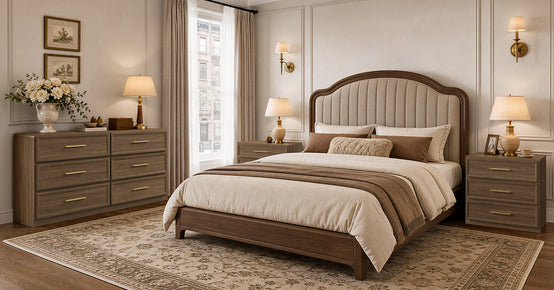
That's why dressers — drawers in a wide, low box — own the bedroom. Nothing holds folded clothes like a drawer — tees, jeans, pajamas, socks, the whole everyday lineup. Most dressers run 30 to 70 inches wide and 18 to 24 deep. The perfect footprint for side-by-side drawers at a see-into-it height.
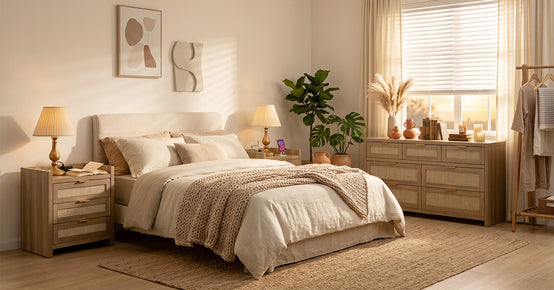
Drawer interiors matter more than most people ever check. Take the Savanna Dresser, 7 Drawers — each main drawer interior measures 6.88 inches high by 15.16 inches deep, with 24.61 inches of width side to side. That's enough depth to file-fold jeans upright and read them like book spines — the single best trick for wearing what's actually in your drawers instead of the same three shirts on repeat. A drawer that can't fit your folded jeans standing up is a junk drawer waiting to happen.
Drawers keep small things findable too — dividers turn one wide drawer into six compartments, and suddenly socks stop being an archaeological dig. Nobody buys drawer dividers for a shelf behind doors. That tells you which mechanism respects small items.
The Hiding Test: Where Doors Earn Their Keep

Now picture the opposite job — spare blankets, a suitcase, board games, winter coats in April. Try putting a suitcase in a dresser drawer and you'll understand the limits of the drawer religion fast. Doors win the hiding test — not close.
Behind doors you get shelves — and shelves don't care what shape your life is in this year. Most adjust — tall boots show up, shift a shelf; boot season ends, shift it back. Drawers are fixed volumes, period. They don't negotiate. Ever. A drawer that's perfect for t-shirts can't hold a stand mixer — while a shelf just shrugs and makes room.
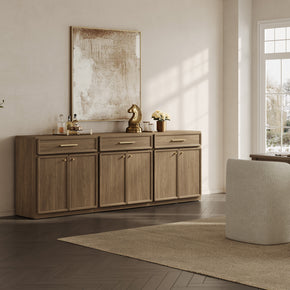
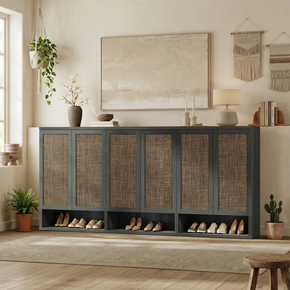
Doors give you something drawers can't — visual calm on demand. Close two doors and the room looks tidy, even when the shelves behind them are a disaster. A bedroom with closed storage reads as restful. The same room with open shelving reads as a to-do list. If your bedroom doubles as your decompression chamber, that counts for more than any spec sheet.
And doors protect — dust takes much longer to cake onto things behind a closed door, so anything you touch weekly but not daily (guest bedding, photo albums, the good bag) ages better behind doors.
One more quiet advantage: cabinets go vertical. A tall narrow cabinet holds as much as a wide dresser on half the floor — in a small bedroom where the bed claimed two walls, that's the whole game.
Measure for the Mechanism, Not the Furniture

Here's where people go wrong, and it's never the furniture's fault: they measure the piece and forget the *motion*. A dresser isn't 18 inches deep — it's 18 inches plus the 20-odd inches the drawer travels, plus your body. Plan roughly 36 inches of clear floor in front, the number furniture guides keep landing on. Anything less and you're doing a sideways shuffle every morning.
Doors have their own math: a pair of 18-inch doors needs an 18-inch swing arc, clear of the bed, the rug edge, everything. Sliding doors dodge this — popular in tight rooms — but hinged doors are cheaper and seal better against dust. Before the delivery truck arrives, check drawer pull-out clearance: drawers need about 36 inches of open floor, doors need their full swing arc. Mark it and stand in it — this five-minute ritual has saved more buyers than any review. Our standard drawer depth guide walks through the exact interior numbers to check before you commit.
Room size often makes the call more than taste does. Small bedroom with one free wall and a door swinging nearby? A tall cabinet with doors likely fits where a wide dresser won't. Big bedroom, one long empty wall? That's where a dresser finally gets the stage it was designed for. Medium room? Then it's genuinely about your habits. Which brings us to money.
The Cost Question Nobody Asks First

Drawers cost more than doors — structurally, not a little. Every drawer is a box plus slides plus a front plus hardware — a six-drawer dresser pays for that six times over. A cabinet with two doors and four shelves is mostly empty air in panels. Cabinet doors and shelves usually run cheaper than drawers and pull-outs.
Do the honest math before you fall in love. Storing folded daily clothes? Drawers earn that premium every single morning. But six deep drawers for spare blankets and old chargers is paying drawer prices for shelf jobs. Match the expensive mechanism to the high-frequency task; let cheap doors handle everything else.
There's a second cost people miss: replacement. Drawer slides wear out — replaceable, but it's a project. A shelf behind a door has no moving parts to fail. Buying for a decade? A simple cabinet will likely outlive a complex dresser with zero maintenance.
Two Real Dressers, Measured Side by Side
Enough theory — two real pieces from the SICOTAS dressers collection, numbers pulled from their product pages. No rounded marketing dims; the real ones.

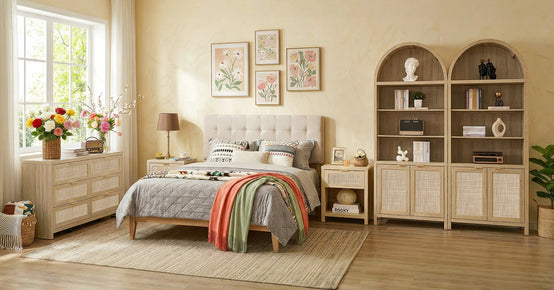
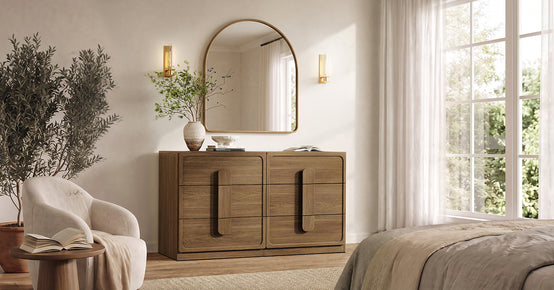
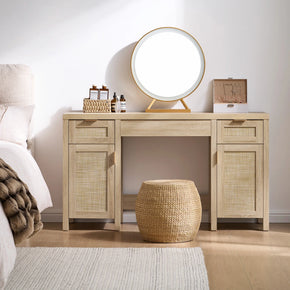
The Savanna Dresser, 7 Drawers measures 31.34 inches high, 56.88 inches wide, and 17.72 inches deep — seven drawers on metal roller glides, engineered wood with a matte finish, 119 pounds. At just over 31 inches tall, the top is a natural height for a lamp, a book, and the phone charger. The woven rattan fronts are practical too: the texture hides small scuffs glossy fronts would advertise.
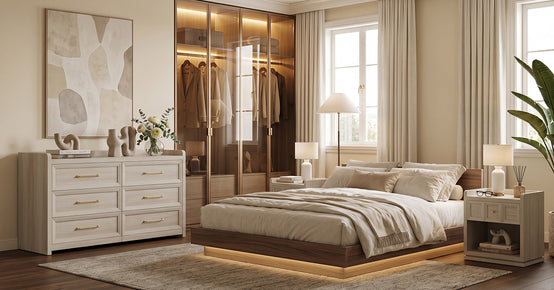
The Stria Modular Tall Dresser measures 33.7 inches high, 77.7 inches wide, and 15.6 inches deep — nine drawers, matte engineered wood, metal roller glides, 177 pounds. The heavyweight option: nearly 78 inches of storage wall for a master bedroom or a shared room where two people need real drawer real estate. Units sit side by side, so the piece can grow with the room instead of being replaced by it.
|
Savanna Dresser, 7 Drawers |
Stria Modular Tall Dresser |
|
|
Overall size |
31.34" H x 56.88" W x 17.72" D |
33.7" H x 77.7" W x 15.6" D |
|
Drawers |
7 |
9 |
|
Drawer interior |
6.88" H x 15.16" D, 24.61" W |
7.1" H x 13.7" D, 23.6" W |
|
Weight |
119 lb |
177 lb |
|
Glides |
Metal roller glides |
Metal roller glides |
|
Best for |
Standard bedrooms, single sleeper |
Master bedrooms, couples, heavy storage needs |
Both are dressers — and that's the point. Once you've picked drawers, the only question left is scale: how many drawers does your life actually fill? Count your folded clothes categories, not your optimism. Seven honest drawers beat nine half-empty ones.
The Third Option: Stop Choosing
Here's the open secret: most well-organized bedrooms use both. Drawers for the daily rotation, doors for the bulky overflow. Kitchen designers figured this out years ago; bedrooms are just late to the memo.

You don't need two giant pieces either. A combo dresser — drawers one side, doored cabinet the other — covers both mechanisms in a single footprint. Or pair a proper dresser with one tall narrow cabinet in the corner for everything the drawers reject. The modular idea behind pieces like the Stria is exactly this: start with what you need now, add the rest later.
If the budget stretches to one piece this year, buy the drawers first — daily clothes are the high-frequency task. Add the doored cabinet when the blanket situation gets out of hand. Your mornings thank you immediately. Your shelves can wait.
Your 5-Minute Decision Checklist

● List what you're actually storing — mostly folded daily clothes points to drawers; mostly bulky, seasonal, or odd-shaped items points to doors.
● Mark the pull-out zone on your floor. Drawers need about 36 inches of clearance; doors need their full swing arc.
● Count drawer interiors, not drawers. The mains should fit folded jeans standing up — around 7 inches of height does it.
● Match the expensive mechanism to the frequent task — drawer prices for daily clothes, cheap doors for the rest.
● When in doubt, drawers first, doored cabinet later. Mornings beat storage every time.
FAQs
Cabinet vs dresser, what's the actual difference?
The mechanism. A dresser is drawers sliding out toward you — usually wide, usually low, built for folded clothes. A cabinet is doors opening onto shelves, built for bulkier stuff or a real mix. Store names overlap a lot, so judge the front, not the label.
My bedroom is tiny, cabinet or dresser?
Usually the cabinet. Tall narrow cabinets use vertical space. A dresser needs a wide wall plus about 36 inches of pull-out clearance. When floor space is the constraint, doors win.
Are drawers actually pricier than cabinets?
Yeah — usually. Every drawer is a box plus slides plus hardware. Multiply that by six or seven, and of course it costs more to build than a cabinet that's mostly doors and shelves. That's why you want drawers holding the clothes you grab every day, and let cheaper doors handle the rest.
Could I just use a cabinet as a dresser?
Sure, loads of people do. Especially wardrobe-style cabinets where you hang some things and fold the rest on shelves. Toss in dividers or bins and it works great, because bare shelves just don't sort small stuff the way drawers do.
How much room does a dresser need in front of it?
Give it roughly 36 inches of clear floor out front — the drawer's travel plus your body. Map it out before you commit, including the full pull of the deepest drawer.
Which is safer and more practical for a kid's room?
A low, stable dresser with drawers kids can reach — anchored to the wall with an anti-tip kit. Avoid tall, narrow pieces a child could climb. Drawers at kid height mean they can put their own clothes away themselves — which is the real win.
Do dressers hold more than cabinets?
Folded clothes? Usually the dresser — drawers waste almost none of their volume. Blankets, luggage, odd-shaped stuff? Cabinet, easily. Shelves adjust; drawers don't. Count what you own before you decide.
What about a combo piece, drawers and doors together?
One piece only? Start with the drawers. The task you repeat daily deserves the budget. A combo piece handles both jobs in one footprint — and modular designs let you add matching units later instead of starting over.


Looking for something else?

How to Choose a Bookcase for Plants Without Damaging the Shelves
LEARN MORE
How to Choose a Bookcase for Board Games: Shelf Depth, Height, and Access
LEARN MORE
7 Best Narrow Nightstands for Small Bedrooms With Real Storage
LEARN MORE
Chest of Drawers vs Dresser: Key Differences and Which One to Choose
LEARN MORELooking for something else?
Narrow Shoe Cabinet Buying Guide: Depth, Sizes and Styles That Fit a Small Entryway
LEARN MORE
11 Best Mid-Century Modern TV Stands for Style and Real Storage
LEARN MORE
Mid Century Sideboard Guide: How to Choose the Right Size, Wood and Style
LEARN MORE


Further reading

Zen Bedroom Ideas for a Calmer Room

Sage Green Bedroom Ideas and Furniture That Suits It


