




Boho Living Room Furniture: What to Choose for a Relaxed, Layered Space
Boho living room furniture is comfy, natural, and collected instead of matched. A plain sofa. Warm wood or woven pieces. One chair that doesn't belong to any set.
Most people shop for decor first. That is the mistake. No amount of macrame or pampas grass can rescue a room with the wrong furniture.
This guide runs in buying order. Start with the sofa, then chairs, the coffee table, and storage—then rugs and textiles. Save color, plants, and lighting for last. Get the big pieces right, and the layering takes an afternoon.
What Kind of Furniture Is Boho?

No shop has a boho aisle. It is a set of traits instead, and most boho living room furniture would look perfectly at home in a plain modern room.
Comfortable Before Formal
Deep seats, soft edges, low or medium profiles. Seat depth is the number to check, and around 22 to 24 inches is a common range for a sofa you plan to curl up on.
Fit is personal. A depth that suits a tall person leaves a shorter one perched forward or unable to reach the back cushions without a pillow behind them. Test it with whoever will actually sit on it.
Listed depth isn't always usable depth, either. Thick back cushions eat several inches, and some listings measure to the frame rather than to the cushion face. Ask which figure the seller is quoting.
If you can, sit in one before you commit. Feet flat, back against the cushions, ten minutes rather than ten seconds.
Mixed Rather Than Matched
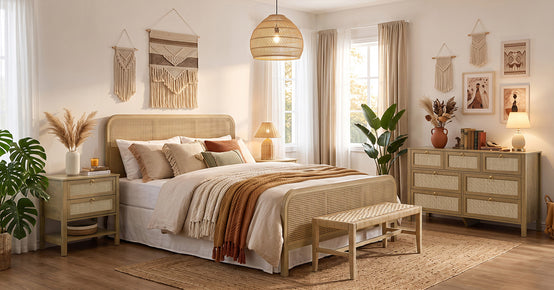
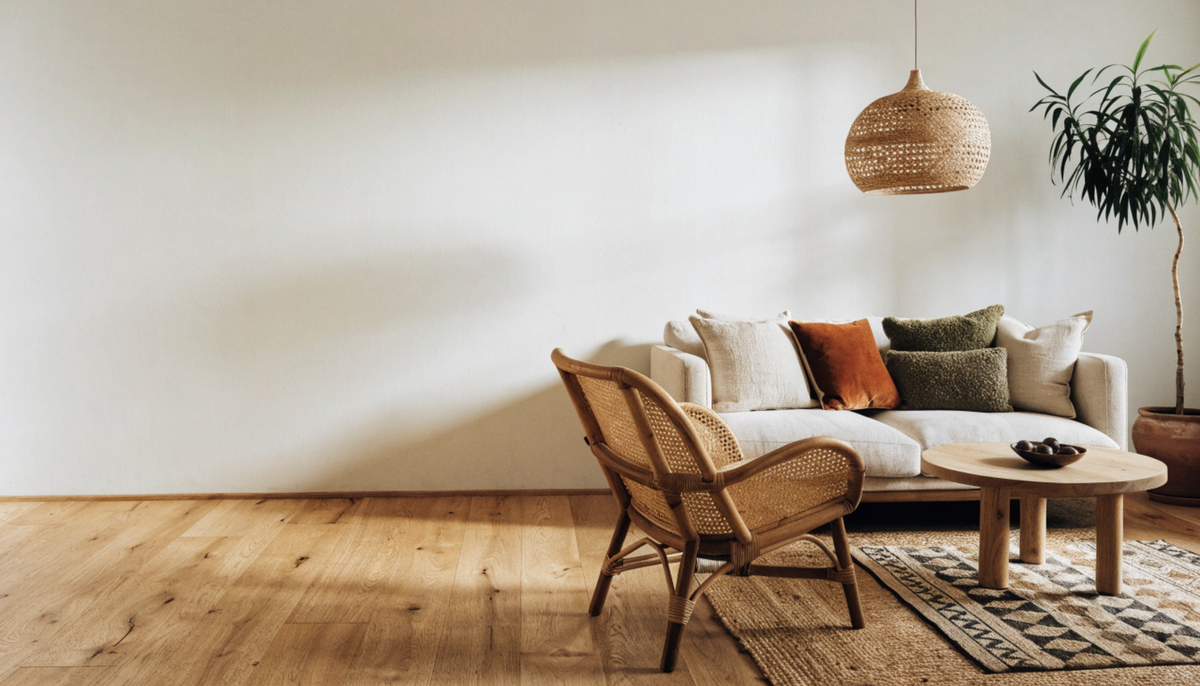
A linen sofa, a vintage wood table, a cane chair, a woven ottoman. Nothing matches. Everything shares one thing, though. A wood tone. A shape. A color family.
That shared thread is what separates collected from chaotic.
Natural Materials Do the Work
Wood and rattan do most of the work. Cane, jute, and linen fill in. Cotton, leather, and wool handle the rest.
One thing worth knowing. Frame construction varies more than the surface suggests. Rattan-look furniture may be built on engineered wood or metal. Solid wood, molded plastic, and natural rattan also show up.
Check the materials listing before you assume. If the frame uses particleboard, MDF, or hardwood plywood,US formaldehyde emission standards apply, and the product should be labeled accordingly. A metal or solid rattan frame is a different question.
Ask the seller if the listing does not say. Vague material descriptions on a product page usually mean no one has asked before.
Buy the Sofa First

Everything else hangs off the sofa, so it goes first—measure before you choose a shape.
Four things decide the configuration. The room's dimensions and where the traffic runs through it. How many people sit down on a normal evening, and whether the layout is likely to change. And whether the piece can physically get through your doors and stairs.
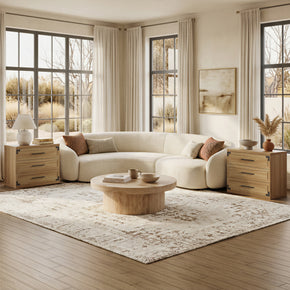
Sectionals suit rooms with space to give and a layout you expect to keep. They anchor a corner well and seat more people than their footprint suggests. They also commit you to an arrangement, and a wrong-handed chaise is expensive to live with.
A standard sofa moves. Two smaller pieces move more. In a small room, or a rental you will leave, that flexibility is usually worth more than the extra seat.
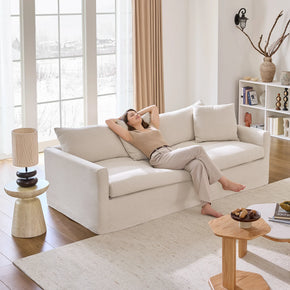
Whichever shape fits, a quiet color leaves the most room to layer later.A deep-seat three-seater in a neutral is the kind of starting point that does not fight what comes next.
Neutral Sofas Age Better
Cream. Beige. Warm grey. Camel, soft brown, muted olive. Any of them let you swap rugs and cushions every couple of years without repainting the room.
Or Go Straight to an Earth Tone
Terracotta and rust both anchor a room well. Tobacco, ochre and deep green do the same. Just keep the rest of the room quieter when the sofa is doing the talking.
Clean modern shapes are fine here. Textiles and wood soften a straight-lined sectional fast.
Add a Chair That Does Not Match the Sofa

One contrasting chair does more for a boho living room than a matching armchair pair ever will.
Rattan and Cane Chairs
Open frames add texture without visual weight, which helps in a small room. Light passes through them, so the corner stays airy.
One Vintage Piece Beats a Whole Set
A secondhand chair brings age that new furniture cannot fake. Check the joints and the frame before you commit.
Buying reclaimed or recycled wood pieces? The FSC Recycled label means the material was independently verified, which a seller writing recycled on a listing does not.
Choose a Coffee Table With Some Character

Round and organic shapes suit relaxed seating better than sharp rectangles. A round fluted coffee table gives you texture and a soft outline in one piece.
Look for visible grain, rounded edges, and a simple form. Height should sit within an inch or two of your sofa seat.
Then leave most of the top empty. A tray, a short stack of books, one plant. That is plenty.
Bring in Rattan and Woven Pieces Without Overdoing It

Woven surfaces read as texture, and too much of it in one room flattens back into pattern. The check is visual rather than numerical.
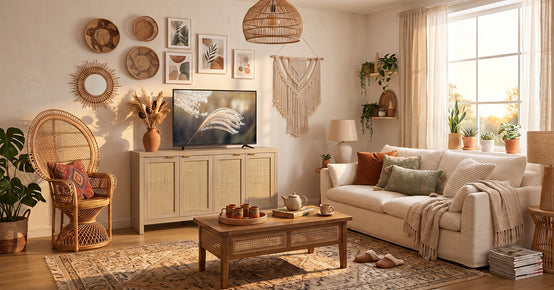
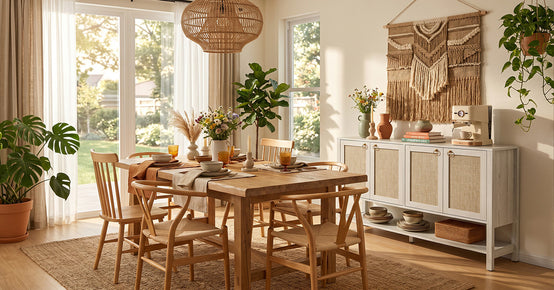
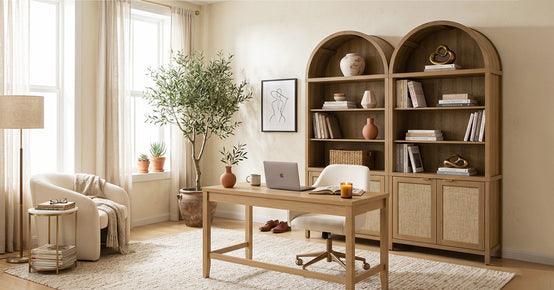
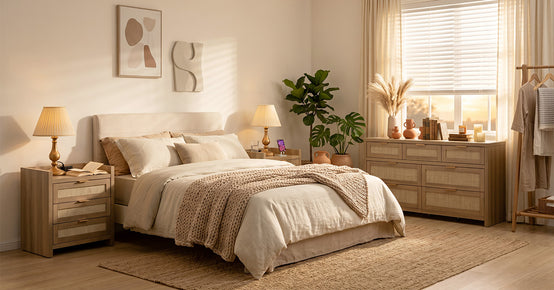
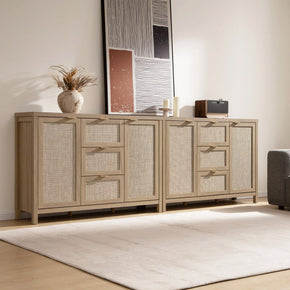
Look at how much woven surface is actually visible. A cane cabinet front and a rattan chair back are small areas doing a lot of work. Six pieces spread across a large open room with different weaves and finishes can sit comfortably, while three matching ones clustered on one wall will not.
Spacing and scale do most of the work. Keep woven pieces apart rather than grouped, vary the weave density where you can, and let solid surfaces sit between them.
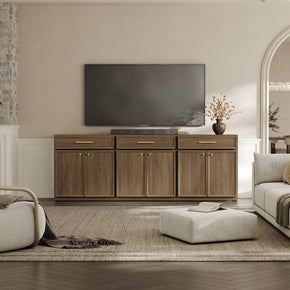
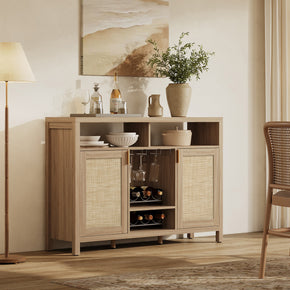
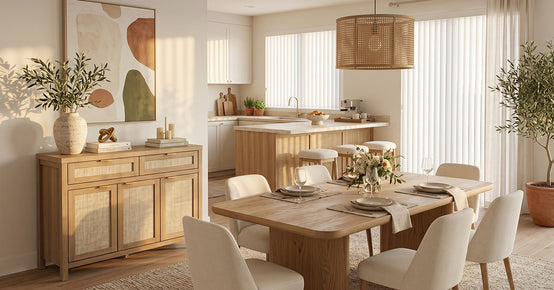
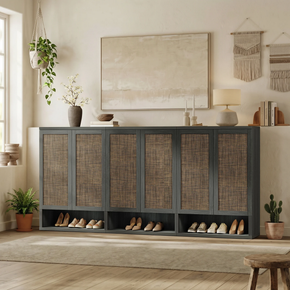
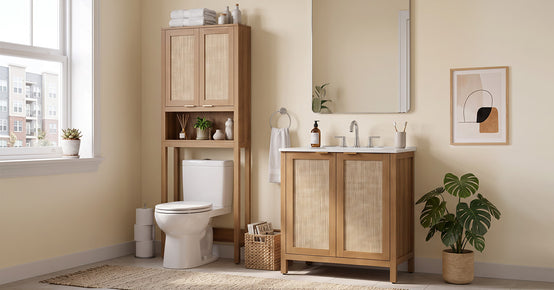
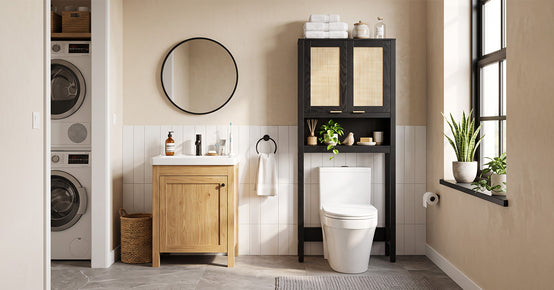
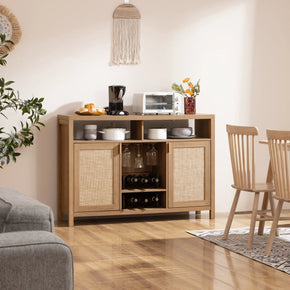
A rattan-front console table behind the sofa or against a side wall introduces the texture without committing the whole room to it.xs
Balance woven texture against something solid. Upholstery works. Solid wood, stone, metal, or a plaster-look finish all do too. Anything that stops the room going one-note.
Side Tables and Storage That Feel Collected

Use two side tables, and don't match them. Pair wood with ceramic, or stone, or metal. A set of tall end tables with drawers swallows the clutter that would otherwise pile up on the coffee table.
Woven baskets take throws, magazines, and spare cushions. Keep their tones close so the pile still looks deliberate.
Layer Rugs Before Buying More Furniture

A rug adds depth and costs you no floor space. That is why layering beats squeezing in another piece.
Start with a big natural-fiber base. Jute, sisal, or flatweave wool. Size it so the front legs of every seat land on it.
Then throw a smaller patterned rug over the top, set at an angle. Vintage-style, geometric, handwoven. Any of them.
Textiles Do More Than the Furniture
Most of the boho look lives in things you can pull off and wash. Good news if you already own a plain sofa.
Mix the materials before you mix the patterns. Linen next to velvet. Wool beside boucle. Some cotton and a bit of embroidery. That reads rich without going busy.
When prints do go together, run one shared color through all of them. A stripe with a floral works fine if both carry the same rust.
One or two throws is enough—three starts to look staged.
Buy Craft, Not Generic Global Decor
Boho leans on Moroccan and Turkish craft. On West African weaving and South Asian textiles. Most guides file it all under ethnic decor and move on.
Do better than that. Find out where a rug or textile really comes from. Buy from makers or fair-trade sellers when you can. Then say what it is when a guest asks.
It also makes for a more interesting room, because you end up with pieces that have a story instead of a style label.
Building the Boho Color Palette

Warm neutrals give you the easiest base. Cream and sand. Beige and warm white. Taupe or camel.
Earth tones bring the depth. Terracotta, rust and ochre. Mustard, olive, brown.
Jewel tones belong on smaller pieces. Teal and turquoise. Emerald or burgundy. Put them on a chair, a cushion or a rug, never on a wall.
Repetition is one way to hold a layered space together. Picking up a color two or three times around the room keeps it from reading as a stray object, which helps when the color arrives in small pieces.
Weight matters more than count. A large focal element can carry a color on its own without needing an echo anywhere, and a deep sofa or a painted wall already does enough work. Small accents look accidental in isolation.
Step back and look at where your eye goes rather than counting appearances. Repeat the color that pulls attention and then has nowhere to go.
Add Plants Without Turning It Into a Jungle

Match the Plant to Your Actual Light
Every boho guide says add plants. Almost none mention light, which is why so many die. Extension guidance on indoor plant lighting describes low light as bright enough to read a newspaper by, and that is the test to use in a dim corner.
Tolerating low light is not the same as thriving in it. Snake plants, pothos, and ZZ plants survive in dim rooms, though they grow slowly there and do better with more light than a dark corner offers.
Judge the light rather than the compass direction. Hold your hand a foot above the surface around midday. A sharp shadow means bright light, a soft one means medium, and almost no shadow means low. Distance from the window matters as much as which way it faces.
A fiddle-leaf fig needs a genuinely bright spot near a window. It drops leaves when the light is wrong, and it does not bounce back quickly.
Check before you buy if you have pets. The ASPCA lists all four astoxic to cats and dogs. Parlor palms and Boston ferns tolerate lower light and aren't on that list.
Three Heights, Not Thirty Pots
One floor plant, one on a table, one trailing from a shelf. Keep them a few inches off the glass, since houseplant care notes warn that windows swing between temperature extremes.
Pots should match your material palette. Terracotta or ceramic. A woven basket. Something plain and stone-like.
Layer the Lighting

Skip the Single Ceiling Light
One overhead fixture flattens a room. Use three or four lower sources instead. A floor lamp. A table lamp. A wall light, and maybe a woven pendant.
Warm bulbs. Shades in fabric or rattan. Bases in ceramic or wood. You want pools of light, not one flood.
If You Are Using Candles
Boho styling leans hard on candles, and no design guide ever mentions the obvious. NFPA candle safety guidance takes two minutes to read. Sturdy holders. A foot of clearance from anything that burns. Never left burning in an empty room.
On a shelf full of dried stems and woven baskets, flameless candles give you the same glow without the worry.
Modern Boho vs Traditional Boho

Traditional boho piles it on. More pattern, deeper color, more vintage, more on display. It rewards years of collecting.
Modern boho keeps the natural materials and the warm palette, then strips back everything else. Cleaner sofas. Less pattern. Fewer statement pieces and a lot more space.
Modern boho is easier to live with and far easier to update. Done properly though, traditional boho has more soul.
Common Boho Furniture Mistakes
Buying Everything in Rattan
Run one material through the sofa, chairs, tables, and shelving, and it stops looking natural. It starts looking like a theme.
Making Every Piece a Statement
A rug, chair, table, and art all shouting at once means nothing gets heard. Pick one hero. Let the rest back it up.
Going Low Everywhere
Low seating is comfortable until every surface sits at knee height. Add one taller piece, and the room stays usable.
Leaving Tall Storage Unanchored
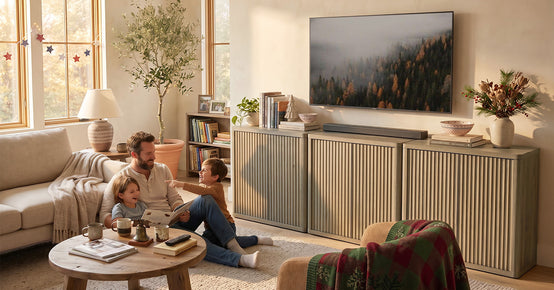
Load a woven shelving unit unevenly, and it will tip forward. Tall cabinets do it too. Follow tip-over prevention advice and strap anything tall to the wall, especially if you have kids in the house.
Is Boho Still in Style in 2026?

Yes, though the version that dates a room is the assembled one. Macrame, pampas grass, a feather wall hanging, and a room's worth of matching rattan all arriving together reads as a moment rather than a home.
What holds up is less specific. Warm neutrals, natural wood, vintage finds, and curved seating work regardless of what the style is called, and rattan does too when used sparingly rather than everywhere.
Currentfurniture arrivals lean toward the edited end of this, which tells you something about where retail sits rather than settling the question.
Final Takeaway
Buy in order. Sofa, then a chair that contrasts with it. Rug next. Wood and woven tables after that. Textiles, plants, and lighting last.
Repeat your colors. Mix your materials. Stop before every surface is covered.
Good boho living room furniture feels collected, comfy, and layered. Never accidental.
FAQs
What kind of furniture is boho?
Relaxed, comfy, natural, and a bit mismatched. Think linen or cotton sofas. Rattan and cane chairs: vintage wood tables, woven ottomans, low seating, and pieces from different decades sharing a room.
What links them is material, color, or scale. Not a matching set.
How to style a boho living room?
Work outward from the biggest piece:
- Choose the sofa, then one contrasting accent chair
- Ground the seating with a large natural-fiber rug
- Add wood or woven tables for warmth
- Layer cushions and one or two throws
- Finish with plants, warm lamps, and a few things that are actually yours
What colors look good in a boho living room?
Warm neutrals for the base. Earth tones for depth. Jewel tones in small doses. Cream and beige pair well with terracotta, rust, mustard, olive, teal, and brown.
What are boho items?
Woven rugs and textured cushions. Handmade ceramics and rattan furniture. Baskets, vintage finds, floor cushions, warm lamps, plants, and whatever you collect.
They share one quality. Made by somebody, rather than stamped out by the thousand.
What type of style is boho?
An eclectic, informal style built around personal expression. It favors natural materials and layered texture, with a strong vintage streak. The room should look gathered over years, not bought in one trip.
Is boho still in style in 2026?
Yes, in its cleaner form. Natural materials still work. Vintage pieces, curved furniture, and handmade objects all hold up too.
What feels dated is the heavily themed room stuffed with recognizable boho props.
What is boho interior style?
Boho interior style pulls together comfy furniture and natural materials, then mixes eras. Layered textiles, warm color, and greenery go on top. The decor should mean something to you. The result reads relaxed and personal.
What colors are typical for boho style?
The palette comes straight from nature:
- Warm neutrals such as cream, beige, sand, camel and taupe
- Earth tones like terracotta, rust, ochre, mustard, olive and brown
- Jewel accents in teal, turquoise, emerald or burgundy
Sources
- National Fire Protection Association – Safety With Candles
- University of Minnesota Extension – Lighting for Indoor Plants
- Smithsonian Gardens – Houseplant Care
- U.S. Consumer Product Safety Commission – Anchor It! Tip-Over Prevention
- U.S. Environmental Protection Agency – Formaldehyde Emission Standards for Composite Wood Products
- Forest Stewardship Council – Recycled Materials and the FSC Recycled Label


Looking for something else?

Burl Wood Furniture: The Complete Buying Guide
LEARN MORE
What Is a Hope Chest? Meaning, History, and Modern Uses
LEARN MORE
What Is a Foyer? Meaning, Purpose and Design Guide
LEARN MORE
GREENGUARD Gold Certified Furniture: What It Really Means for Your Home
LEARN MORELooking for something else?

How to Clean a Mirror Without Streaks: Simple Step-by-Step Guide
LEARN MORE
21 Above-Bed Decor Ideas for a Stylish Bedroom Wall
LEARN MORE
Furniture Materials Guide: Picking the Right Material Room by Room
LEARN MORE


Further reading

18 Decorative Storage Box Ideas That Hide Clutter Well

How to Store Comforters Without Losing Space or Loft


