

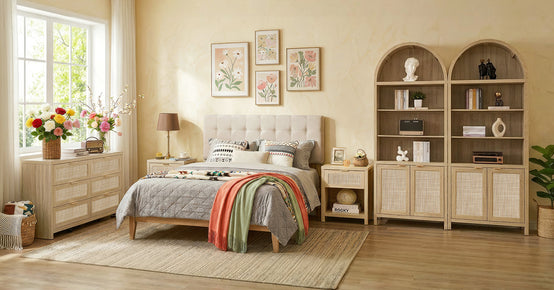
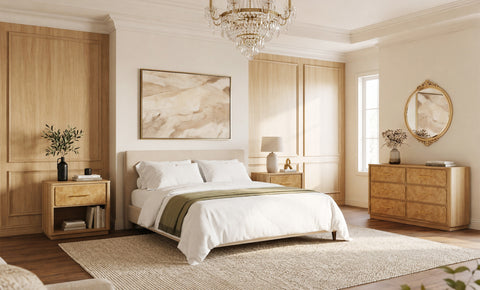
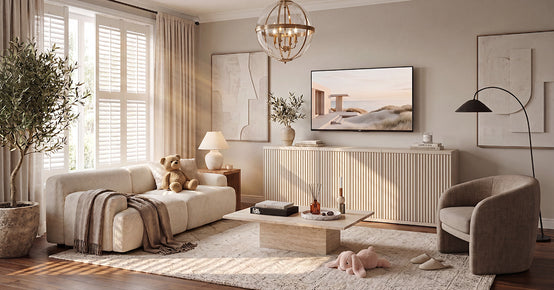
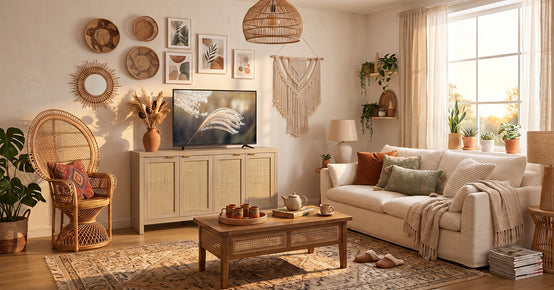
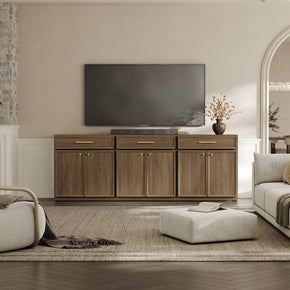
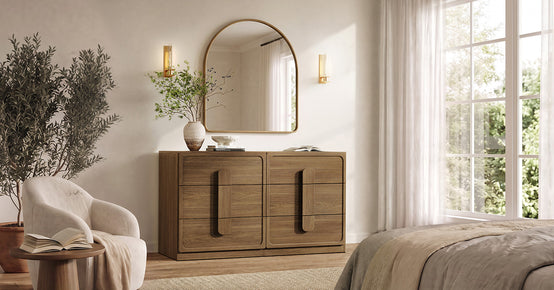
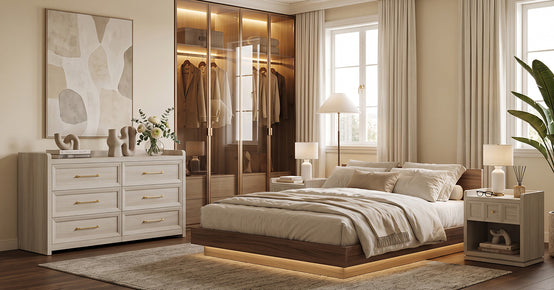
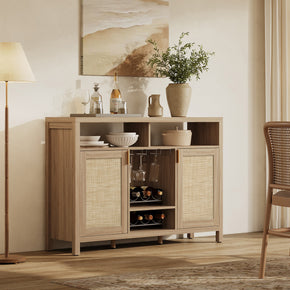
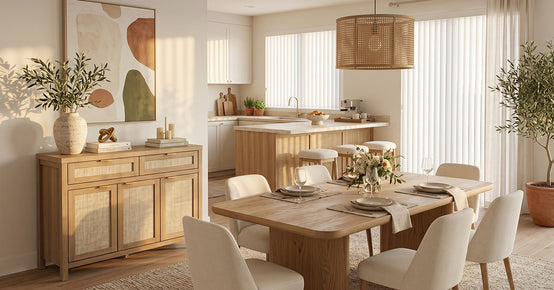
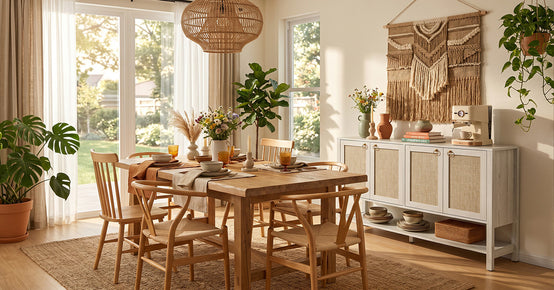
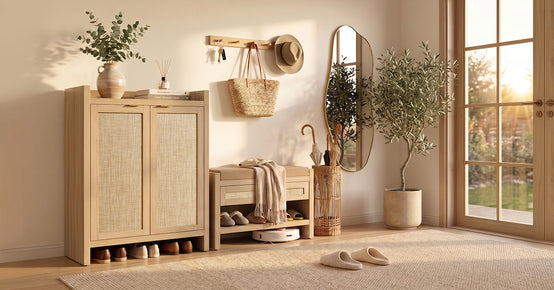
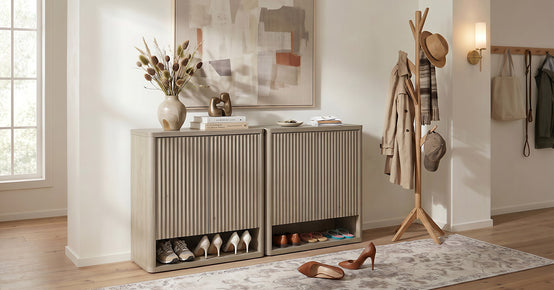
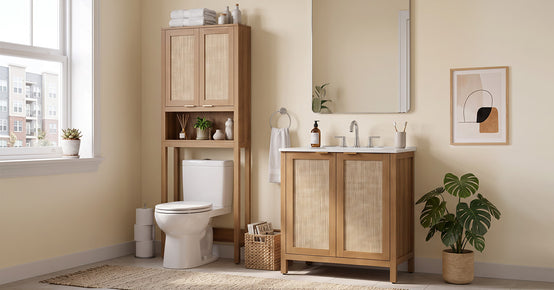
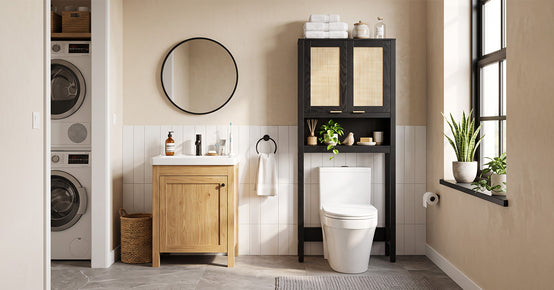
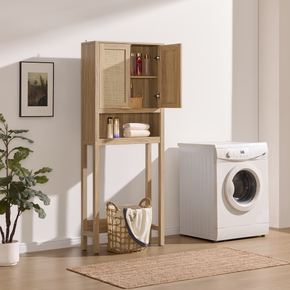
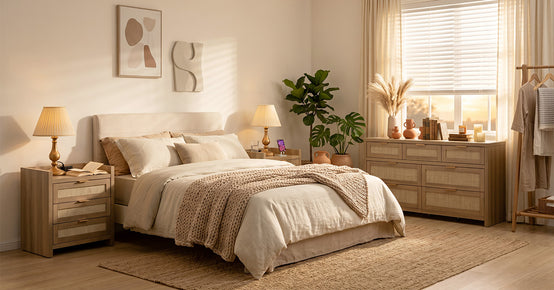
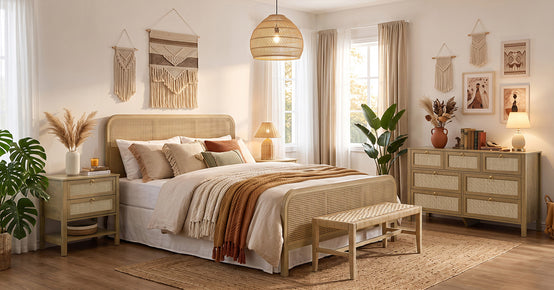
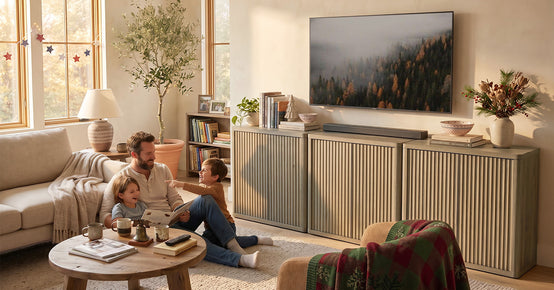


Biophilic furniture keeps you connected to the natural world. The material does part of that job, and the shape does more. Then comes the feel under your hand and the spot it sits in. All of it comes frombiophilic design, which architects have leaned on for years.
One thing to clear up early. A green sofa with a plant next to it does not count on its own. Color alone does very little.
This guide covers what actually counts. Material. Curves. Texture. Light. And the point where the whole idea runs out of road.
What Is Biophilic Furniture?
Biophilic design is the wider approach. Biophilic furniture is the part you can buy, shift around and sit on. A biophilic living room follows the same rules as a biophilic office—only the job changes.
Biophilia, Briefly
Biophilia says we are wired to seek out nature and living things. Edward O. Wilson put the word in front of a wide audience during the 1980s. Stephen Kellert spent the decades after that turning the theory into something a designer could build from.
Furniture Is Only One Layer
Daylight, fresh air, and greenery are the building's job. Furniture works closer in. Chairs, tables, beds, shelving and storage put real material within arm's reach of you, every single day.
That closeness is the point. A window you look at. A table you rest your hand on.
Biophilic Does Not Just Mean Green
Shops now stick the biophilic label on anything painted sage. Paint is the easy bit. Proper biophilic interiors pull together material, shape, texture, daylight, greenery and the layout of the room itself.
Line those up and the color stops mattering much.
What Makes Furniture Biophilic?
Six things carry most of the weight. Use them as a checklist when you shop, instead of trusting the word on a product page.
1. Real Materials, Lightly Worked

Solid wood counts, and so do stone, cork, bamboo, rattan, cane, clay, wool, linen, and hemp. One rule ties them together. The surface has to show where it came from. Visible grain. Color that shifts across a panel. Small marks left by a hand rather than a machine.
2. Organic Shapes and Soft Curves

Nature makes very few straight lines. Rounded sofa backs, oval tables, sculpted chair arms and irregular live edges all echo stones, leaves and worn riverbanks. Designers call these biomorphic forms.
Curves also read as calmer. Sharp corners put the eye on alert.
3. Texture Your Hands Notice

This is a sensory idea before it is a visual one. Woven cane, nubby wool, open-weave linen, raw ceramic and unfilled wood grain all give your fingers something to read. Glossy laminate gives them nothing.
4. Color Borrowed From Landscapes

Moss and forest green. Clay, sand, stone grey, warm brown, a muted sky blue. Each of those comes from a landscape. Let color back up the material instead of standing in for it. A painted board in olive is still a painted board.
5. Room for Living Things

Some furniture is built with indoor plants in mind. Shelving with deep enough ledges, consoles with open bays, benches near a window, side tables sized for a pot. Integrated planters go further and build the container in.
6. A Link to Daylight and Views

This one is free. Turn an ordinary chair toward a window, a tree, or a patch of sky, and it starts doing biophilic work. Placement counts as design. Hardly anyone bothers with it.
The Best Natural Materials for Biophilic Furniture

Every material pulls its weight differently. Know what each does, and shopping gets much quicker.
Wood
Wood holds up most biophilic interiors. Grain gives a surface depth. A water-based or oiled finish keeps that grain visible, while heavy lacquer buries it. Solid timber suits tables, bed frames, shelving and desks.
Reclaimed boards arrive with dents and nail holes from an earlier job. Some people love that. Others find it busy.
Rattan, Cane and Bamboo

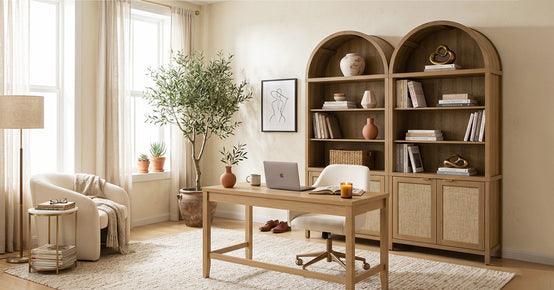
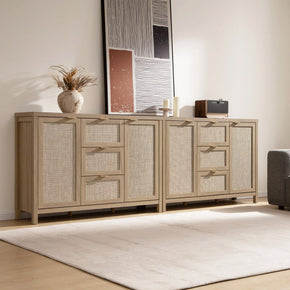
These three lighten a room. Woven cane lets light and air pass through, so a large cabinet stops reading like a wall. Sicotas uses the idea on a rattan-front work desk, where the woven panel breaks up an otherwise solid block of storage.
Bamboo is a grass, so it regrows quickly. Rattan is a climbing palm, and it takes a tight curve without cracking.
Stone, Clay and Cork
Stone and clay ground a room. A travertine side table or a hand-thrown ceramic lamp base adds weight and a cool touch against all that warm timber. Cork is the quiet one. It is light, it regrows, it is soft underfoot, and it swallows noise.
The Soft Side: Wool, Linen, Hemp, Cotton
Natural fibers cover everything soft. Wool rugs, linen covers, hemp cushions, organic cotton throws. They breathe and hold a texture synthetics still fail to copy. They also age into something better rather than pilling into something worse.
|
Material |
What It Brings |
Best For |
Watch Out For |
|
Solid wood |
Grain, warmth, weight |
Tables, beds, shelving, desks |
Cost and dry indoor air |
|
Rattan and cane |
Open weave, light feel |
Cabinet fronts, chairs, storage |
Damp rooms and hard sun |
|
Bamboo |
Fast regrowth, clean lines |
Legs, slats, flat surfaces |
Splits if bent sharply |
|
Stone and clay |
Cool touch, solidity |
Side tables, lamp bases, tops |
Heavy and can chip |
|
Cork |
Light, quiet, springy |
Stools, accent tables, boards |
Dents under point loads |
|
Wool and linen |
Soft hand, breathes well |
Upholstery, rugs, cushions |
Fussier to clean |
Biophilic Furniture Is Not the Same as Sustainable Furniture
These two get blurred together constantly. They do overlap. They answer different questions though.
Looking Natural Is Not the Same as Low Impact
Picture a rattan chair flown halfway around the world. Stuck together with high-emission glue and built to survive about three years. It feels biophilic and scores badly on footprint. The look and the footprint are separate things.
A Long Life Beats Fast Furniture
The greenest piece in your house is the one you never replace. Check for joints you can fix, covers that come off, parts you can order again, and a look you will still want in ten years. Furniture chasing a trend on a thin budget ends up in landfill within a few years.
How to Check a Sourcing Claim
FSC-certified wood is a fair place to start. The Forest Stewardship Council audits how a forest is managed, not the finished chair. That makes it a signal, not proof, so weigh it against everything else here.
- Ask where the timber or cane grew, not only where the piece got assembled
- Check the finish, because water-based coatings give off far less than solvent-heavy ones
- See whether spare parts exist, which tells you the maker expects it to last
- Read words like eco and green as marketing until someone backs them up
7 Types of Biophilic Furniture That Work at Home
Theory is the easy part. These pieces do the real work.
1. Solid Wood and Live-Edge Tables

No other piece gets touched as often as a table. A live edge keeps the outline of the trunk it was cut from, and furniture rarely gets closer to an actual tree. A plain planed top with open grain does nearly the same job.
2. Curved Sofas and Soft Lounge Chairs

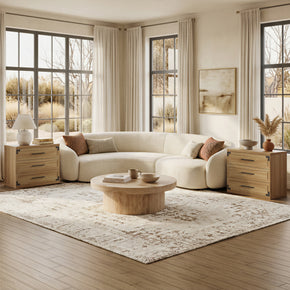
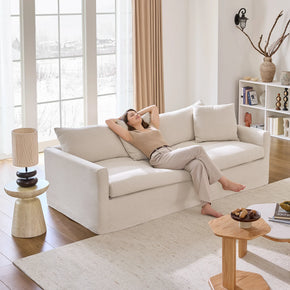
Rounded arms, deep seats, and a sculpted back take the edge off a room full of straight walls. A curved sofa also seats people at a slight angle to each other instead of lining them up in a row.
3. Cane and Rattan Accent Storage

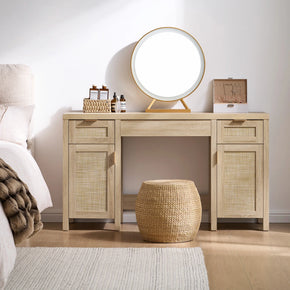
Small woven pieces carry a lot of texture for their size. A cane-front bedside table puts weave right where your hand lands for the lamp each night. It takes up no more floor space than a solid box.
4. Linen and Wool on the Big Pieces

Upholstery is the biggest surface in most living rooms. Fabric choice there outweighs any accent you add later. Linen creases and that is fine. Wool holds shape and hides wear. Both breathe in a way that tightly woven synthetics do not.
5. Stone and Cork Side Tables

Small pieces carry the least risk. A stone-topped side table or a cork stool drops a grounded material into a room you have no plans to redo. Easy to move, easy to live with.
6. Shelving Built Around Plants

Plants look accidental when they are perched on whatever surface is free. Open shelving, plant stands, and display cabinets with woven doors let you build greenery into the composition at several heights instead.
Put a saucer under every pot. Damp wood and damp cane both fail the same way.
7. Modular Pieces That Follow the Light

Light moves through the day, and fixed furniture cannot follow it. Modular seating, light chairs, nesting tables, and stools on casters let you follow morning sun into one corner and evening light into another. People underrate how much that flexibility does.
Styling Biophilic Furniture, Room by Room
The principles stay the same. Only the lead element changes.
Living Room

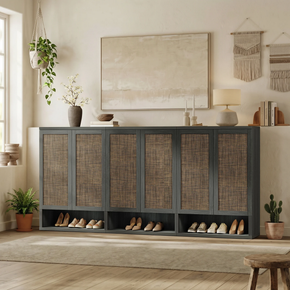
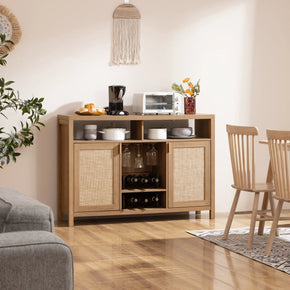
Start with one substantial natural anchor, then layer around it. A wood coffee table does it, and so does a curved sofa. A rattan-door sideboard set against the wall works too. It lifts the weave to eye level and costs you no floor.
Then a wool rug. Linen cushions. One big plant. Keep the window sightline clear.
Bedroom

Bedrooms reward restraint—soft forms, quiet earth tones, natural bedding, and storage that hides the clutter. A six-drawer woven dresser handles the storage while adding texture to what would otherwise be a flat wall of drawer fronts.
Skip the bright greens in here. Muted tones suit a room meant for sleeping.
Home Office

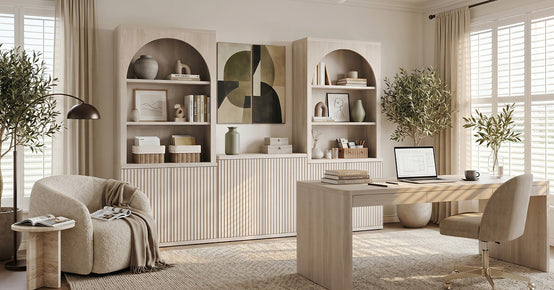
Home offices go sterile faster than any other room. Pair a tactile chair with desks with natural wood tops, set the desk so you can look up at something living, and put one plant inside your peripheral vision.
Facing a blank wall all day is the single most common mistake.
Dining Area
A timber table, woven or cane chairs, and a sculptural pendant in rattan or paper. Sit the table so daylight crosses it rather than landing behind the people eating. Nobody enjoys eating into a glare.
What Biophilic Design Actually Does for You
The research is real, but marketing copy stretches it. Worth separating the solid from the shaky.
The Calm Is Well Supported
Contact with nature and natural views is linked to lower stress, better mood, and improved focus in many studies. That is the strongest leg the whole field stands on, and it holds up.
The Air-Purifying Claim Is Overstated
Nearly every article on this subject says indoor plants clean your air. US Environmental Protection Agency guidance is much more skeptical of the idea. Plants strip pollutants out at a rate that cannot compete with an open window or decent ventilation.
That same guidance flags a second risk. Planters left too wet grow mold and microbes, and then the air gets worse instead of better.
Keep the plants. Keep them for how they look and how they make you feel. Do not buy them as an air filter.
Light and Views Do More Than Decor
Daylight feeds your body clock, which in turn shapes sleep, mood, and how alert you feel. Moving a chair toward a window costs nothing and likely does more for you than any single purchase in this article.
How to Get There Without Replacing Your Furniture
Throwing out working furniture to buy natural furniture is a strange way to honor nature. Work in this order instead.
- Move things before you buy anything. Point seating at a window, at greenery, at whatever the best view in the room happens to be. Costs nothing, undoes in a minute, and often the biggest change you will make.
- Add one natural material at a time. A wool rug this month, a wood side table next season. Slower, kinder to the budget, and easier to live with.
- Let plants work with the furniture. Group them at different heights around shelves and corners, so they read as part of the layout.
- Swap textiles before frames. Linen covers, wool throws and cotton cushions shift how a sofa feels for a small slice of what a new one costs.
- Clear the clutter. Clear sightlines and empty space calm a room more than any extra accessory ever could.
Renting changes nothing here. Every step on that list is reversible, and none of it needs a drill.
Common Biophilic Furniture Mistakes

These come up again and again in real rooms.
Treating Plants as the Whole Plan
Greenery is one pattern out of many. A room with fifteen plants, laminate furniture, and no daylight is not biophilic. It is a room with fifteen plants.
Buying Wood-Effect Instead of Wood
Printed grain and embossed rattan-look film photograph beautifully and feel like nothing. Read the material spec rather than the styling shot. Veneer over real timber is a fair middle ground and often more stable.
Filling Every Surface
Too much texture stops being restful. Woven walls, a jute rug, rattan chairs, a stone table and dried grass in every corner produce visual noise, not calm. Restraint is part of the method.
Ignoring Maintenance
Natural materials ask for a little upkeep. Wood dislikes very dry, heated air; cane dislikes damp; and stone marks from acidic spills. Indoor humidity around 40 to 60 percent suits most of them, which is close to the range museums maintain.
Forgetting Allergies and Pets
Nobody else mentions this. Some houseplants are toxic to cats and dogs, damp soil attracts fungus gnats, and heavy planting can lift pollen and mold spores for allergy sufferers. Check the species before you commit.
Final Takeaway
Biophilic furniture works when several things line up. Honest natural material, a shape that borrows from nature, texture you can feel, color drawn from a landscape, room for something living, and a position that keeps daylight and a view in play.
Miss most of those, and you have a beige room with a fern in it.
Start by moving what you already own. Add real materials slowly, buy pieces built to be repaired, and stay honest about what plants can and cannot do for your air.
FAQs
What are the three pillars of biophilic design?
The widely used framework splits biophilic design into three groups:
- Nature in the Space, meaning direct contact through plants, water, daylight, airflow, and animals
- Natural Analogs, meaning indirect references through natural materials, patterns, colors, and biomorphic shapes
- Nature of the Space, meaning layouts that copy how we feel in a landscape, such as refuge, open outlook and a hint of mystery
Furniture sits mostly in the second and third groups. Material and form cover the analogs, while placement creates the refuge and the outlook.
What are the 14 patterns of biophilic design?
Terrapin Bright Green set out fourteen patterns in 2014, and the list has become the standard reference:
- Visual Connection With Nature, Non-Visual Connection With Nature, Non-Rhythmic Sensory Stimuli, Thermal and Airflow Variability, Presence of Water, Dynamic and Diffuse Light, Connection With Natural Systems
- Biomorphic Forms and Patterns, Material Connection With Nature, Complexity and Order
- Prospect, Refuge, Mystery, Risk or Peril
Worth noting that the tenth-anniversary edition added a fifteenth pattern called Awe, which most articles haven't caught up with yet. Furniture contributes most through Material Connection, Biomorphic Forms, Refuge, and Prospect.
What is a famous example of biophilic architecture?
Bosco Verticale in Milan is the usual answer. The two residential towers by Stefano Boeri Architetti carry roughly 800 trees, 15,000 perennials, and 5,000 shrubs across their terraces, which is about the vegetation of a small forest stacked vertically. Biophilic architecture works at building scale. Biophilic furniture applies the same thinking at room scale.
What is the concept of biophilic design?
Biophilic design is an approach to buildings and interiors that treats contact with nature as a human need rather than a decorative extra. It works through direct natural elements, indirect references to nature in materials and patterns, sensory variety, daylight, and spatial layouts that feel like good outdoor places.
Who is the father of biophilic design?
Two names matter, and articles often merge them by mistake. Edward O. Wilson popularized biophilia as a biological idea in the 1980s. Stephen R. Kellert, a professor at Yale, turned that theory into design practice and is usually credited as the founding figure of biophilic design itself.
What are the disadvantages of biophilic design?
Genuine natural materials cost more than laminate lookalikes, and they need upkeep. Plants need watering, right light, and someone paying attention. Damp planters can encourage mold, some species are toxic to pets, and heavy planting can bother allergy sufferers. A lot of shallow green styling also adds cost and clutter without improving how a room actually works.
What are the 9 values of biophilia?
Stephen Kellert described nine ways people value the natural world: utilitarian, naturalistic, ecologistic-scientific, aesthetic, symbolic, humanistic, moralistic, dominionistic, and negativistic. The list is academic rather than practical. For furniture, aesthetic, humanistic, and symbolic values show up in real design choices.
What are the key principles of biophilic design?
In plain terms: direct contact with nature, indirect references through material and pattern, natural shapes rather than rigid geometry, sensory variety instead of flat uniformity, daylight and outdoor views, and spaces that offer both an open outlook and a sheltered spot to retreat to. Choosing furniture in real materials and placing it toward the light covers most of that at home.
Sources
- Terrapin Bright Green – 14 Patterns of Biophilic Design
- Yale Environmental Humanities – Stephen R. Kellert, Nature by Design and the Practice of Biophilic Design
- Stefano Boeri Architetti – Bosco Verticale, a Prototype for the Architecture of Biodiversity
- US Environmental Protection Agency – Indoor Air Pollution, an Introduction for Health Professionals
- US Environmental Protection Agency – Introduction to Indoor Air Quality
- National Library of Medicine – House-Plant Placement for Indoor Air Purification and Health Benefits
- American Museum of Natural History – Impact of Temperature and Relative Humidity on Collections


Looking for something else?

Burl Wood Furniture: The Complete Buying Guide
LEARN MORE
What Is a Hope Chest? Meaning, History, and Modern Uses
LEARN MORE
What Is a Foyer? Meaning, Purpose and Design Guide
LEARN MORE
GREENGUARD Gold Certified Furniture: What It Really Means for Your Home
LEARN MORELooking for something else?

How to Clean a Mirror Without Streaks: Simple Step-by-Step Guide
LEARN MORE
21 Above-Bed Decor Ideas for a Stylish Bedroom Wall
LEARN MORE
Furniture Materials Guide: Picking the Right Material Room by Room
LEARN MORE


Further reading

18 Decorative Storage Box Ideas That Hide Clutter Well

How to Store Comforters Without Losing Space or Loft


