



26 Bedroom Coffee Bar Ideas That Actually Work at Home
A bedroom coffee bar can be a tray on a dresser or a plumbed cabinet with a sink—both count. The real difference is how much you build and how much you are willing to clean.
The ideas below run from a ten-minute setup to a full renovation. Each one names the furniture it needs and the catch that comes with it.
Power, water, and cleanup decide most of this. Not budget. Those three come up again and again, so they get their own sections after the list.
Is a Bedroom Coffee Bar Actually Worth It?
Worth asking before you buy anything. Plenty of these setups get built and then quietly go unused.
It Earns Its Place When the Kitchen Is Far Away
Upstairs bedrooms win here, along with large primary suites, guest rooms, and any house where the coffee run means stairs. A balcony off the bedroom makes the case even stronger.
It May Be Pointless in a Small Home
Kitchen twenty feet away? The walk is not the problem. A permanent cabinet, a fridge, and plumbing solve very little in a compact house, and you still carry the mug back.
Plan the Cleanup, Not Just the Brewing
Used mugs. Wet grounds. Milk that needs a fridge. Water refills. Every bedroom coffee station creates a small chore loop, and the ones nobody plans for are the ones that fail.
26 Bedroom Coffee Bar Ideas
Sorted roughly from easiest to most involved.
1. Start With a Narrow Console

Depth is the usual problem in a bedroom, not width. Narrow console tables slide along a wall without eating walking space, and the drawers swallow pods, spoons and filters.
Measure the machine first. Lid clearance catches people out.
2. Use a Sideboard for Hidden Storage

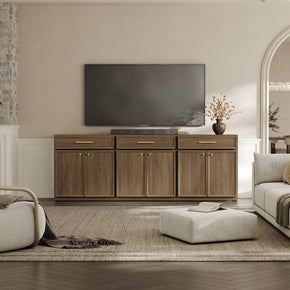
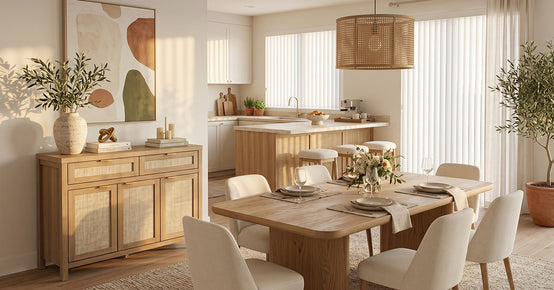
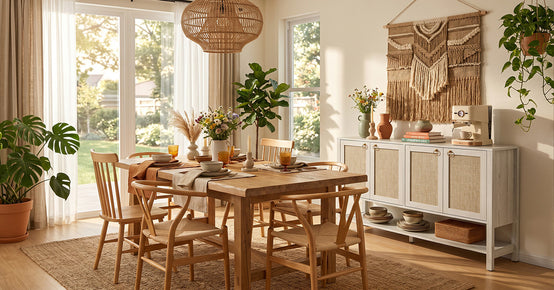
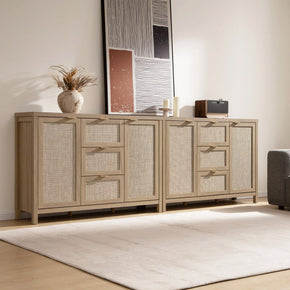
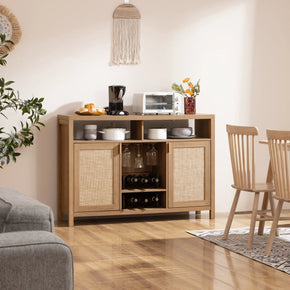
Doors are the difference between a coffee corner and a countertop mess. A two-door sideboard bar cabinet hides mugs, beans, and spare filters behind a closed front, so the bedroom stops reading like a kitchen.
3. Repurpose a Dresser You Already Own

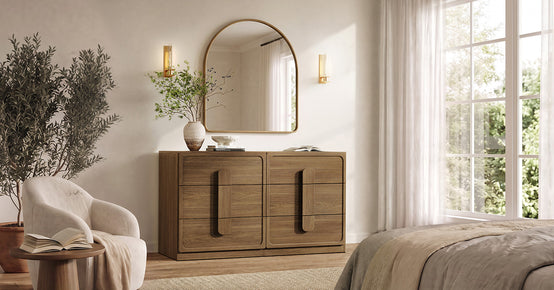
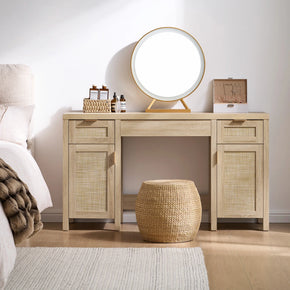
Easiest route by far. Clear the top, lay down a washable tray, and give up one drawer to coffee supplies. A horizontal chest with open drawers does the same job with the supplies visible instead.
Protect the wood. Heat rings and drip marks are permanent.
4. Roll It In on a Bar Cart

Renters, this one is yours. A cart moves, needs no wall fixing, and rolls out of the way when guests come. Look for locking casters and a frame that does not wobble under a full kettle.
5. Keep It to a Single Tray

The whole station on one tray. Kettle, pour-over cone, two mugs, a small canister. Lift the tray to clean underneath. Nothing else in this list is easier to undo if you change your mind.
6. Claim an Empty Corner

Awkward corners are usually dead space. Fill one with a two-tier console with open shelving, add a small lamp and a chair, and the corner turns into a defined morning zone.
7. Put It Beside the Balcony Door

Coffee outside is the actual goal for a lot of people. Position the station within a step of the balcony or terrace door, and you'll use it every warm morning instead of twice a year.
8. Pair It With a Reading Chair

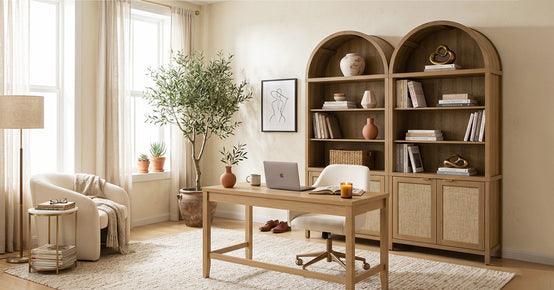
A machine on its own is an appliance. Add a comfortable chair, a side table, and decent light, and it becomes a routine. That is the difference between a coffee bar and a coffee bar you use.
9. Fold It Into the Bedroom Sitting Area

Big primary suites often have a lounge zone nobody sits in. Anchoring the coffee station there gives that space a job, and it keeps brewing noise away from the bed.
10. Build It Into a Wall Niche

Recessed niches take up no floor space. A shallow one can hold a machine, a shelf, and a canister row. Check the depth against your machine before anyone cuts into the drywall.
11. Convert an Unused Closet

A spare closet already has walls, a door, and often a nearby outlet. Add a counter at hip height, a shelf above, and the whole station disappears when you shut the door.
Ventilation matters here. Steam in a closed closet has nowhere to go.
12. Hide It Behind Pocket Doors

Pocket doors slide back into the cabinet body, so nothing swings into the room. Brew with the doors open, close them afterward, and the bedroom goes back to looking like a bedroom.
13. Build an Appliance Garage

A simpler version of the same trick. A closed-door storage cabinet with the machine inside works as an appliance garage when a recessed built-in isn't realistic.
Pull the machine forward before you brew. Steam inside a closed box is a bad idea.
14. Hang Floating Shelves Above

Wall height is free storage. Two floating shelves above the station hold mugs, tea, canisters, and a small plant while the work surface stays clear for the machine and a cup.
15. Add Mug Hooks Under the Shelf

Hooks free up an entire cabinet. Mount them under a shelf where nobody walks into them, and use screws into studs or proper anchors rather than adhesive strips carrying ceramic.
16. Fit Pull-Out Drawer Organizers

Shallow drawers with dividers beat a jumbled basket every time—one slot for pods, one for tea, one for spoons and sugar. Morning brain does not want to hunt for anything.
17. Add a Mini Fridge for Milk

Milk and creamer belong in a fridge, not on a shelf beside a warm machine. A compact under-counter unit handles that plus cold brew and bottled water.
Leave the ventilation gap the manufacturer asks for. Boxed-in fridges run hot and die early.
18. Keep It to Coffee and Water

Skip refrigeration entirely. Black coffee drinkers only need the machine, beans, and a water source. A filtered jug or a few bottles removes the whole trip downstairs without adding an appliance.
19. Run Coffee and Tea Together

Households rarely agree on the morning drink. Split the storage: beans and pods on one side, tea bags, infuser, and honey on the other. One kettle serves both.
20. Turn It Into a Breakfast Station

Shelf-stable only. Granola bars, packaged pastries, a sealed jar of nuts. Anything perishable needs the fridge, and crumbs in a bedroom bring problems that coffee never does.
21. Coffee by Day, Drinks by Night

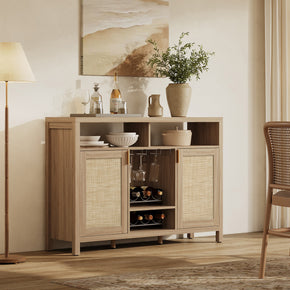
The same cabinet can serve twice. Bar and wine cabinet designs give you a coffee surface in the morning and a proper drinks setup in the evening, which makes the footprint much easier to justify.
22. Go All the Way With a Wet Bar

Sink, counter, cabinetry, water supply, drain. This is a renovation, not a weekend job, and it needs a licensed plumber and electrician. Worth it in a large suite. Overkill almost everywhere else.
23. Slot In an Under-Counter Beverage Fridge

Neater than a freestanding mini fridge, and it disappears into the cabinet run. The clearance rule still applies, so follow the airflow specs in the manual rather than guessing.
24. Use the Closet-to-Bathroom Transition

Walk-through closets are the smart location nobody thinks of. Water is right there in the ensuite, the noise stays out of the sleeping area, and you are already standing there getting dressed.
25. Give the Guest Room Its Own Station

Early-rising guests hate creeping around a dark kitchen. A small tray with a kettle, sachets, two mugs, and bottled water solves it, and it costs almost nothing to set up.
26. Make It Match the Bedroom

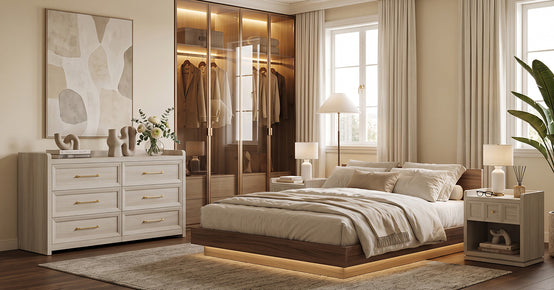
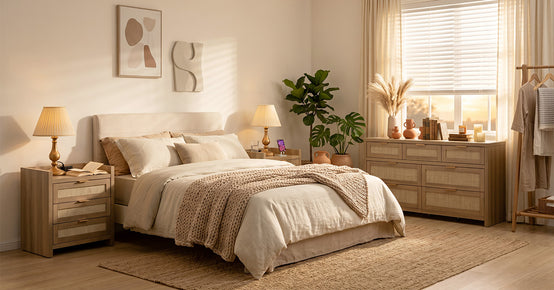
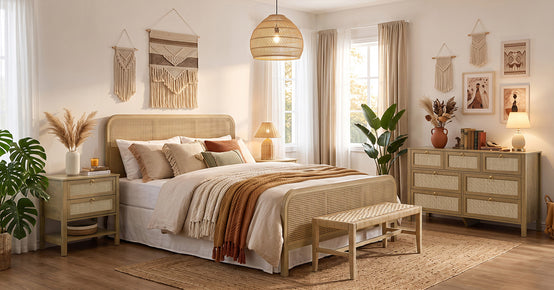
The best bedroom coffee bar does not announce itself. Repeat the wood tone, handles, and finish from your nightstands. Done right, it reads as furniture rather than an appliance shelf.
Bedroom Coffee Bar Essentials
Strip away the styling and the list is short.
Something to Brew With
Drip machine, pod machine, espresso maker, French press, or a kettle with a pour-over cone. Pick for your actual routine. Espresso machines need the most depth and the most cleaning.
Mugs and the Basics
Two or three mugs, spoons, napkins. Resist stocking a second kitchen up here. Every extra item is one more thing to carry back down.
Sealed Coffee Storage
Air, moisture, heat, and light are what stale coffee. An opaque airtight canister in a cool spot handles all four, which is exactly what coffee industry storage guidance recommends.
A Water Plan
An en suite tap, bottled water, a filter jug, or plumbing. Decide this early, because a station with no water source quietly sends you downstairs anyway.
Cold Storage If You Take Milk
Not optional. Dairy left at room temperature should be in the fridge within two hours under federal food safety guidance, and within one hour if the room is above 90 degrees.
Pick the Right Furniture for a Bedroom Coffee Station
Furniture choice decides how the whole thing looks and works.
|
Furniture |
Best For |
Storage |
Watch Out For |
|
Console table |
Narrow walls and small machines |
Open or a drawer or two |
Shallow depth limits the machine |
|
Sideboard |
Hiding clutter behind doors |
Large and closed |
Needs real wall length |
|
Dresser |
Using what you already own |
Deep drawers |
Water marks on the top |
|
Bar cart |
Renters and changing layouts |
Two or three open tiers |
Stability under a full kettle |
|
Built-in cabinet |
Permanent setups with a fridge |
Fully integrated |
Cost and ventilation planning |
How Much Space Does a Bedroom Coffee Bar Need?
No universal number exists, whatever Pinterest tells you.
Start With the Machine, Not the Furniture
Measure your machine including the lid swung open, the water tank slid out, and the bean hopper filled. That total is your minimum depth. A pod machine may need twelve inches. A bean-to-cup needs far more.
Counter Depth Follows Function
Built-in coffee stations often use kitchen-style depth because appliances are deep. A console can be shallower when the machine genuinely fits. Copying one number off an article is how people end up with a machine that overhangs the edge.
Leave Room to Stand
You need floor space in front to lift a full mug without knocking anything. Keep the station clear of the bed, the wardrobe swing, and the main walking route through the room.
Safety Rules Most Coffee Bar Guides Skip
This section is the one competitors leave out, and it matters more in a bedroom than in a kitchen.
Plug It Straight Into the Wall
Kettles and coffee machines are heat-producing appliances. Electrical safety guidance is clear that these should go directly into a wall outlet, never an extension cord or a multi-outlet adapter.
One heat-producing appliance per outlet. That rule catches people who run a machine and a kettle side by side.
Keep It Away From Fabric
Bedding, curtains and upholstery sit closer here than in any kitchen. Nothing hot should be within reach of a duvet edge or a curtain that moves when the window is open.
Watch the Steam and Damp
Bedrooms have less airflow than kitchens. Steam trapped in a closed cabinet or a converted closet raises moisture, and persistent damp is exactly what mold needs to start.
Crack a door. Run the machine with the cabinet open.
Anchor Anything Tall
Tall coffee cabinets and shelving units tip. Safety agencies recommend anchoring tall furniture to the wall, which takes a bracket and five minutes.
Give the Milk a Real Fridge
Refrigerators should be set at or below 40 degrees Fahrenheit, per FDA guidance. A cool bedroom is not refrigeration, and a jug left out overnight is not safe to use in the morning.
Set a Daily Dish Rule
Mugs go down every morning. Grounds get emptied. Without that habit, the station becomes a collection point, and a bedroom is the worst possible place for one.
How to Style It So It Does Not Look Like a Kitchen
The whole risk with a bedroom coffee station is that it looks transplanted.
Echo the Furniture You Already Have
Match the wood tone of the nightstands. Use the same handle finish. A coffee cabinet in a completely different material will always read as an add-on.
Edit the Surface
Daily items stay out. Everything else goes behind a door. A machine, a canister, and two mugs look intentional. Eight syrup bottles look like a break room.
Get the Light Right
A small warm lamp or a strip under the shelf beats the overhead light at six in the morning. It also makes the station look like part of the room rather than a work zone.
Add One or Two Details
A small plant. A framed print. A woven tray. That is enough. Piling decor around a hot appliance creates clutter and a hazard.
Coffee Bar Accessories and Toppings Worth Keeping
Short list. Coffee gadgets multiply if you let them.
- Opaque airtight canister, which does more for flavor than any other purchase here
- A washable tray to catch drips and corral the small items
- Milk frother, only if lattes are a real part of your routine
- Grinder, when you buy whole beans rather than preground or pods
- Drawer dividers for pods, tea, spoons and sweeteners
For toppings, keep the shelf-stable ones upstairs: sugar, sweetener, cinnamon, cocoa, sealed syrup bottles. Milk, cream and whipped toppings need the fridge, no exceptions.
Bedroom Coffee Bar Mistakes to Avoid
Putting the Machine on a Nightstand
A nightstand already holds a lamp, a phone and a glass of water. Adding a hot appliance next to a pillow invites a spill in the worst possible spot.
Boxing In the Fridge
A beverage fridge with no airflow works harder, runs hotter and fails sooner. Read the clearance numbers in the manual before building the cabinet around it.
Forgetting Where the Water Comes From
The most common failure. A beautiful station that still needs a trip to the kitchen tap every morning stops getting used within a month.
Overbuilding on the First Try
Live with a tray for a few weeks before you commit to cabinetry. Most people discover their real routine is smaller than the one they imagined.
Letting It Become a Dish Pile
Nothing ruins a bedroom retreat faster than four cold mugs and a used filter. The setup only works while it stays clean.
Final Takeaway
Match the build to the routine you actually have: a tray, a console, a sideboard, a built-in cabinet, a full wet bar. Every one of those is a legitimate bedroom coffee bar, and the smallest version that removes the morning trip is usually the right one.
Sort out power, water, and cleanup first. Style comes after.
Get those three right, and you'll still use the station a year from now.
FAQs
What is a good coffee bar for a bedroom?
A good one has a stable surface at a comfortable height, a wall outlet within reach, enough depth for your machine, closed storage for supplies, and a workable water source. Add refrigeration only if you take milk. Everything past that is styling.
Can you use a coffee table in a bedroom?
Yes, though not as the brewing station. Coffee tables sit low, usually around 16 to 18 inches, which puts a hot machine near knee height and near the floor. Use one in a bedroom sitting area to set your cup down, and brew on something taller.
How do you create a coffee bar at home?
Five steps cover it:
- Pick a spot with a wall outlet and no fabric nearby
- Choose furniture deep enough for your machine with the lid open
- Add sealed storage for beans, pods, tea, and sweeteners
- Sort out water and refrigeration before you buy anything else
- Set a daily rule for mugs and grounds going back to the kitchen
How do you style a coffee bar table?
Let the machine anchor one side, group the small items on a tray, and hide the rest. Two or three mugs out, everything else away. Finish with one plant or one framed print and stop there.
What are some good accessories for a home coffee bar?
An opaque airtight canister, a washable tray, drawer dividers, mug hooks, a grinder if you buy whole beans, and a frother if you drink lattes. Skip the rest until you miss it.
What are some ideas for a small coffee bar in my kitchen?
The small-space tricks transfer directly:
- A narrow console or shallow cabinet against an unused wall
- One tray on a counter corner that lifts out for cleaning
- Floating shelves above to move mugs off the countertop
- A rolling cart that tucks beside the fridge between uses
What toppings should you keep on a coffee bar?
Sugar, alternative sweeteners, cinnamon, cocoa powder, and sealed flavored syrups all sit happily at room temperature. Milk, cream, and whipped toppings need refrigeration. Keep the selection to what you actually use, since a bedroom is not a pantry.
What is a good depth for a coffee bar?
There is no single correct depth. It has to fit your specific machine, plus enough clearance to open the lid, remove the water tank, and reach the controls. Measure the appliance, add a few inches, then shop. Built-in stations often use kitchen counter depth because appliances are deep, but a slim console can work for a compact pod machine.
Sources
- National Coffee Association USA – How to Store Coffee
- Electrical Safety Foundation International – Home Electrical Safety Guidance
- Electrical Safety Foundation International – Extension Cord Safety Tips
- US Food and Drug Administration – Are You Storing Food Safely?
- USDA Food Safety and Inspection Service – Steps to Keep Food Safe
- FoodSafety.gov – Cold Food Storage Chart
- US Environmental Protection Agency – Mold and Moisture in the Home


Looking for something else?
Small Dining Room Ideas: 15 Tips for a Small Dining Space
LEARN MORE
25 Fall Decorating Ideas for Your Front Porch That Feel Cozy, Not Cluttered
LEARN MORE
How to Choose the Right Shower Curtain (Size, Fabric, Style)
LEARN MORE
Fall-Inspired Living Room with Autumn Colors: Decor Ideas 2026
LEARN MORELooking for something else?
How to Choose Dinnerware: The Ultimate Dinnerware Sets Buying Guide
LEARN MORE
Velvet 101: How to Care for Velvet (Complete Care Guide)
LEARN MORE
How to Decorate a Narrow Bedroom: 13 Narrow Bedroom Ideas and Layout Tips
LEARN MORE


Further reading

How to Choose a Wardrobe That Fits Your Room and Your Clothes
26 Bedroom Coffee Bar Ideas That Actually Work at Home


