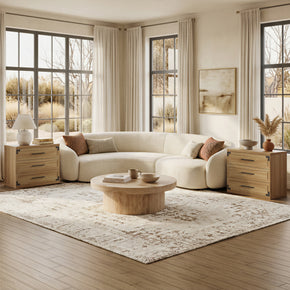
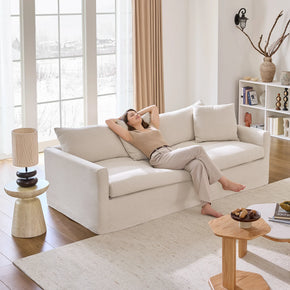


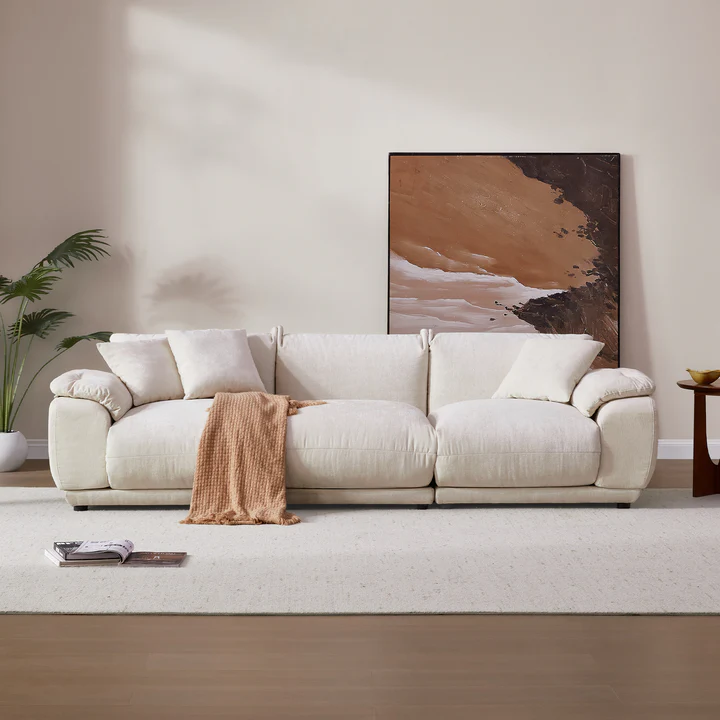

What Is a Modular Couch/Sofa? (Modular vs Sectional Explained)
Choosing a sofa used to be simple: you picked a three-seater, perhaps added a matching armchair and called it a day. But as our living spaces have evolved becoming more open-plan more compact or more multi-functional our furniture has had to keep up.
If you’ve been browsing for a new centerpiece for your living room you’ve likely run into the terms "modular sofa" and "sectional sofa." While they look similar at first glance they offer very different experiences in terms of flexibility assembly and long-term use.
In this guide we’ll break down exactly what a modular couch is how it differs from a traditional sectional and how to decide which one is the right fit for your home.
What Is a Modular Couch?
At its core a modular sofa is a seating system made up of individual independent units called "modules." Think of it like Lego blocks for your living room.
The Concept of "Individual Pieces"
Unlike a standard couch that arrives as one solid frame a modular sofa is composed of several separate pieces:
- Armless Chairs: The middle sections.
- Corner Units: Pieces with two backs to create turns.
- Ottomans: Footrests that can also act as "chaise" extensions or extra seating.
- Left/Right Arm Units: The "end caps" of your sofa.
Because each piece is fully finished on all sides (usually) you have the freedom to buy as many or as few as you need. You can arrange them into a classic long sofa today and split them into two separate loveseats tomorrow.
Why Is It Called "Modular"?
The term refers to the interchangeable nature of the furniture. These pieces are designed to be moved added to or subtracted from. This makes modular furniture a "living" investment it grows and changes alongside your lifestyle.
Modular vs. Sectional: What’s the Real Difference?

The terms are often used interchangeably by shoppers but in the furniture industry there is a distinct difference in flexibility.
Configuration: Fixed vs. Fluid
- Sectional Sofas: These are typically designed with a predetermined shape. When you buy a sectional you usually choose a "Left-Arm Facing" or "Right-Arm Facing" L-shape or U-shape. Once it’s bolted together that is its permanent shape.
- Modular Sofas: These have adaptable arrangements. There is no "fixed" side. Since the modules are independent you can move the chaise from the left side to the right side in minutes.
Assembly and Transport
- Sectionals often arrive in two or three very large sections. This can make maneuvering through tight apartment hallways or narrow staircases a nightmare.
- Modular sofas arrive as individual seats. This makes them the ultimate "apartment-friendly" furniture. Each box is manageable allowing you to navigate even the most awkward floor plans with ease.
Ease of Reconfiguration
If you enjoy rearranging your room every few months a modular couch is your best friend. Sectionals often have "hidden" unfinished sides where the pieces connect meaning they must stay connected to look good. Modular units are usually finished on all sides allowing them to stand alone as individual armless chairs if you decide to break up the set.
The Benefits of Going Modular

Why are modular couches suddenly everywhere? It’s because they solve the most common "pain points" of home decorating.
Endless Versatility
Life changes. You might move from a sprawling suburban house to a cozy urban loft. A traditional sectional might not fit the new layout but a modular sofa can be shrunk or expanded. Need more seating for a growing family? Just buy two more armless modules and slot them in.
Perfect for Entertaining
When you’re hosting a movie night you want a deep connected L-shape where everyone can pile on. But when you’re hosting a cocktail party or a formal conversation you might want to pull the modules apart to create separate seating "islands." A modular sofa allows for this "dynamic" use of space.
Easier to Move and Clean
Because the pieces are separate modular sofas are significantly easier to move. If you spill a drink on one cushion it’s much easier to treat or move that one specific module than to struggle with a massive heavy sectional. Many modular designs also feature removable covers making them ideal for homes with pets or children.
How Do Modular Couches Stay Together?

One of the most common questions people ask is: "If the pieces are separate won't they slide apart when I sit down?"
Manufacturers have solved this using integrated connector clips. Most modular units come with heavy-duty "alligator clips" or "U-clips" hidden underneath the frame. Once you’ve decided on your layout you simply snap the clips together. They stay rock-solid during daily use but can be easily unclipped when you’re ready for a change.
Can You Sleep on a Modular Sofa?
Absolutely. In fact modular sofas are often better for sleeping than traditional pull-out sofa beds.
Because the pieces are deep and usually the same height you can push several modules together (for example putting an ottoman in the "crook" of an L-shape) to create a massive flat sleeping platform. This creates a bed-like surface that is often much more comfortable than the thin mattresses found in traditional hide-a-beds.
Is a Modular Couch Right for Your Space?
For Small Living Rooms
Don't let the "grand" look of showroom sofas fool you; modular options are great for small spaces. You can start with a simple 2-seater and an ottoman (creating a "chaise" sofa). This provides the comfort of a sectional without overwhelming the room. If you move to a larger place later your sofa can grow with you.
For Unconventional Layouts
If your living room has an awkward fireplace a low window or a strangely placed door a modular sofa is the only way to "fit the puzzle." You can build the sofa around the room's quirks rather than trying to force a standard sofa into a space where it doesn't belong.
Comparing the Two: A Quick Reference
|
Feature |
Sectional Sofa |
Modular Sofa |
|
Shape |
Predetermined (L or U) |
Endless possibilities |
|
Flexibility |
Limited once assembled |
High (pieces move easily) |
|
Moving House |
Can be difficult in tight spots |
Very easy (individual boxes) |
|
Look |
Unified and structured |
Bespoke and adaptable |
|
Best For |
Large open rooms |
Dynamic lives & odd layouts |
Explore Modern Seating at SICOTAS
At SICOTAS we believe your furniture should adapt to your life not the other way around. Our collection of sofas and couches is designed with the modern homeowner in mind balancing the "Boho-chic" aesthetic with the rugged durability needed for daily life.
Whether you're looking for a structured sectional to define your open-plan living area or a versatile modular setup that can handle your next big move we offer high-quality "Simplicity-first" designs that don't break the bank.
Frequently Asked Questions
What is considered modular furniture?
Modular furniture refers to any piece sofas shelving or desks designed with interchangeable components. These components can be added removed or rearranged to suit different needs.
Is modular furniture durable?
Yes provided it is built with quality materials. Look for modular sofas with solid wood or reinforced metal frames and high-density foam. Because they are designed to be moved they are often built to be quite robust.
What is the difference between a modular sofa and a regular couch?
A regular couch is one single piece with a fixed width. A modular sofa is a collection of "seats" that can be rearranged into different shapes or sizes.
Why choose a modular sofa over a sectional?
Choose modular if you value flexibility if you plan on moving in the future or if you have a uniquely shaped room. Choose a sectional if you want a specific "fixed" look and don't plan on changing your room's layout.
Final Thought
Your sofa is the "anchor" of your home. It’s where you relax after work where you bond with family and where your guests feel welcomed. By choosing a modular design you aren't just buying a piece of furniture, you're buying a versatile tool that will adapt to every new chapter of your life.


Looking for something else?

How to Choose a Nightstand for a CPAP Machine
LEARN MORE
Buffet Cabinet Size Guide: Width, Depth, and Dining-Room Clearance
LEARN MORE
Bookcase Weight Capacity: How to Prevent Sagging Shelves
LEARN MORE
How Deep Should a TV Stand Be? A Guide for Consoles, Cables, and Ventilation
LEARN MORELooking for something else?

Are Soft-Close Dresser Drawers Worth It? A Practical Buying Guide
LEARN MORE
Best Nightstand Height and Placement for an Adjustable Bed
LEARN MORE
Why Adjustable Shelves Matter When Buying a Shoe Cabinet
LEARN MORE


Further reading

Mid Century Sideboard Guide: How to Choose the Right Size, Wood and Style
11 Best Mid-Century Modern TV Stands for Style and Real Storage