






41 Industrial Bedroom Ideas for a Raw, Cozy Space

Most people hear “industrial bedroom” and picture something they’d never actually want to sleep in. Cold concrete, a bare pipe running across the ceiling, a single Edison bulb doing nothing useful. That version exists, and it’s not great.
But that’s not what a well-done industrial bedroom looks like. The real version has a dark walnut dresser with chunky iron hardware. A jute rug that’s soft enough to step on barefoot. White linen piled up on a matte black metal frame. Warm amber light from a cage pendant that makes the exposed brick behind the bed look genuinely beautiful. It’s raw, yes — and it’s also one of the coziest bedroom styles when someone’s actually thought it through.
These 41 industrial bedroom ideas cover every part of the room — bed frames, lighting, wall treatments, color, furniture, textiles, and the finishing touches that make it feel lived-in rather than staged. Some of these are big changes. Most take a weekend. All of them are things you can actually do. If you’re looking for furniture that fits this style without being aggressively themed about it, Sicotas’s modern bedroom furniture collection is a good place to start browsing.
What Is an Industrial Bedroom?

The short answer: it’s a bedroom that borrows its look from old converted factories and warehouse lofts. Cities like New York, Chicago, and London had thousands of these buildings by the mid-20th century — places where someone looked at the exposed brick and bare iron ceiling beams and decided to leave them exactly as they were, rather than renovating them. The result was spaces with a particular atmosphere. Heavy, honest, raw in a way that most designed rooms aren’t.
What that means practically: dark or neutral colors, materials that look like what they actually are, hardware you can see rather than hide. If there’s grain in the wood, it stays visible. If the metal has patina, that’s a feature, not a flaw. The style values things that look like they’ve been somewhere.
The part people underestimate is how important the soft stuff is. A room full of raw materials and no softness is cold, not cozy — and the industrial bedrooms worth emulating always have both sides working together. The brick wall and the chunky knit throw. The iron bed frame and the heavy linen duvet. The concrete paint and the jute rug. Strip out the softness, and you’ve got a room that photographs well, and nobody wants to sleep in.
One more thing worth noting: this style mixes well. Push it toward Scandinavian, and it gets lighter and more restrained. Push it toward rustic and the timber gets heavier, the surfaces more worn. Either direction still reads as industrial. That adaptability is a big reason it works in so many different homes.
How to Make a Room Look Industrial (Quick Starter Guide)
You don’t need to own a converted warehouse or plan a major renovation. Most industrial bedrooms come together from a handful of targeted changes that cost less than a new piece of furniture and take a weekend at most. Here’s the order that makes the most sense.
1. Sort the wall behind the bed first
This is where the atmosphere comes from, and it’s where most of the visual character lives. If you’ve got real brick under the plaster, exposing it is obviously the move. If not, concrete-effect matte paint in a mid-grey is cheap, convincing, and easy. Brick-look wallpaper is better than it used to be — worth another look if you wrote it off a few years ago, especially for rentals. One wall is all you need. The headboard wall, specifically. Do that wall well, and the rest of the room has something to respond to.
2. Change every bulb before you buy anything else
Cold white light is the single biggest reason industrial bedrooms look wrong in photos and feel worse in person. Dark metal, rough brick, aged timber — these materials all absorb light rather than bounce it. One cold overhead fixture turns the whole room grey and flat in a way that no amount of good furniture will fix. Swap every bulb to warm amber, 2700K or lower. Add at least one pendant or sconce with visible metal hardware. Do this before you spend anything else, and you’ll see a bigger difference than almost any furniture purchase.
3. Get the bed frame right
Matte black metal is the obvious starting point, and it’s obvious for good reason — it pairs with almost anything, it doesn’t date, and it reads as industrial without being theatrical about it. If a pure metal frame feels too cold for a room you’re trying to actually sleep in, look for something that combines a dark wood headboard panel with metal legs. Reclaimed-looking oak with black metal base hardware is a combination that keeps appearing in well-done industrial bedrooms because it keeps working.
4. Establish the color base
Industrial bedrooms run on near-black or charcoal, a warm neutral somewhere in the tan-cream-camel range, and white for the bedding. You’d be surprised how far swapping the bedding gets you before you touch a wall. Go genuinely white on the duvet — not off-white or warm cream, actually white — throw a dark chunky blanket across the foot of the bed, and see what the room looks like before you open a paint tin.
5. Add rugs and throws last, but actually add them
The rug is not optional. Industrial bedrooms in magazines always look clean on bare floors. Real industrial bedrooms always feel better with a rug. Get one big enough to extend past both sides of the bed — 8x10 in most rooms — in natural fiber: jute, sisal, or flat-weave wool. No pattern. Then, a chunky knit or rough-woven throw on the bed. These two things are what stop the room from feeling like a mood board and start making it feel like somewhere you actually live.
Two of these, done properly, beat five, done halfway. Start small and build from there.
Industrial Bed Frame Ideas (1–7)
Everything else in the room responds to what the bed looks like. Get the frame wrong, and no amount of good lighting or interesting wall treatment will fix it. Get it right, and even a fairly basic room has something to work with.
1. Matte Black Metal Bed Frame

This is the default starting point for a reason. Matte black metal is understated; it pairs with almost every color and textile you can throw at it, and it doesn't date. Buy it once, use it for a decade. If you genuinely don't know where to begin with an industrial bedroom, this is the frame to start with.
2. Wood and Metal Mixed Bed

Pure metal frames can feel stark — especially in rooms without much natural light. A bed that mixes a wood headboard panel with metal legs and hardware brings enough warmth to make the room actually comfortable. Reclaimed oak or dark walnut against black metal is the combination that keeps showing up in well-designed industrial bedrooms, and it keeps showing up for a reason.
3. Low Platform Bed

Remove the box spring and lower the bed to the floor. Low platform beds emphasize the horizontal lines of the room, which makes spaces feel larger and more deliberate — especially if you've got decent ceiling height. The contrast between a low bed and a high ceiling is something you can't fake with regular bed frame heights. It either works spatially or it doesn't, and in rooms where the geometry is right, it's one of the most effective things you can do.
4. Upholstered Headboard in Charcoal

Sounds wrong for an industrial bedroom. It isn't wrong. A charcoal, dark grey, or warm brown upholstered headboard introduces soft texture directly against whatever hard material is behind the bed — brick, concrete effect, dark painted wall. The contrast is the point. It also makes the bed noticeably more comfortable to lean against, which matters quite a lot for a piece of furniture you sit in for hours reading.
5. Dark Iron Canopy Frame

Four-post canopy in black iron, no fabric draping. That's it. Leave the posts exposed — the bare structural frame is exactly what industrial design values, and covering it with fabric defeats the purpose entirely. This works best in rooms large enough to carry it without the frame dominating every sightline. Not the right choice for a small bedroom.
6. Wooden Slat Bed

Dark-stained wood with visible grain brings warmth that metal simply can't replicate — and that warmth matters more than people expect when the rest of the room is running dark and structural. A slatted wooden base looks clean and intentional. If the lower section has built-in storage drawers, that practicality is completely on-brand for a style that values usefulness over decoration.
7. Metal Bed with Grid Footboard

A black metal grid or horizontal bar footboard visually closes off the bed and prevents the frame from looking unfinished. Industrial bedrooms benefit from clear boundaries around the sleeping area — without them, the stripped-back quality of the style can drift into looking merely incomplete rather than intentionally spare.
Industrial Bedroom Lighting Ideas (8–14)
Most people put in one overhead light and stop there. That's why so many industrial bedrooms end up looking flat and slightly depressing — dark surfaces and neutral tones absorb light rather than reflect it, so a single fixture just casts shadows. Three sources minimum. And every single bulb in the room should be warm: 2700K or lower. You put cold white bulbs in an industrial bedroom, and it looks like a police station.
8. Cage Pendant Light

The exposed-bulb cage pendant is the most immediately recognizable industrial lighting choice. Metal cage, visible filament, hardware that looks factory-made. Hang one large pendant or two smaller ones at different heights above the bed. The filament bulb inside should be warm amber — this fixture isn't compatible with bright white bulbs.
9. Edison Bulb Bedside Lamp

Black iron or copper pipe base, exposed filament bulb, no shade. Simple, works well, doesn’t cost much. Let the bulb be the visual point rather than hiding it. This kind of lamp looks good on a nightstand next to almost any dark wood or metal bed frame without requiring any particular effort from you. One of the lowest-cost and most reliable choices in industrial lighting.
10. Adjustable Wall Sconce

Wall sconces on either side of the bed free up the nightstand surface and provide directional reading light that ceiling fixtures can't provide. An adjustable arm sconce in black or antique brass suits the industrial palette and adds a piece of functional hardware to the wall. Sort out the wiring situation before you commit to placement — moving a wall-mounted fixture after the fact is a genuine pain.
11. Copper Wire Table Lamp

Most people go for black metal across the board in industrial bedrooms and end up with rooms that feel a bit one-note. Copper is an underused option. A lamp with a copper wire base or copper-finish hardware introduces warmth that black simply can’t produce, and it ties into the amber-rust tones already present in aged brick, iron, and warm timber. Particularly good in corners where the room needs a bit of life without a major intervention.
12. Industrial Tripod Floor Lamp

A floor lamp with a tall black metal tripod base and a directional shade goes in a corner and solves two problems at once: vertical interest in a room dominated by low horizontal furniture lines, and useful ambient light in a space that would otherwise be dead. Angle it for reading, swing it toward the wall for something softer. Easy to move when you’re still working out the room layout.
13. Pendant Lights on Either Side of the Bed

Hanging pendants in place of bedside table lamps is an immediately recognizable loft move. It completely frees the nightstand and gives the room a specific height. The drop measurement matters a lot — the bottom of the shade at roughly shoulder height when you’re sitting up in bed. Too high and it’s useless for reading. Too low and you’ll knock it several times a week until you hate it. Get the measurement right before ordering.
14. Warm String Lights on a Feature Wall

Warm white string lights draped along an exposed brick wall or above a wooden headboard panel create a diffused, ambient quality of light that no point-source fixture can replicate. Don't use cold or cool-white bulbs — they kill the effect entirely. One run along a single wall is enough. More than that, and it stops looking like a considered detail and starts looking like a festive decoration.
Industrial Bedroom Color Palette Ideas (15–20)
The materials in an industrial bedroom make most of the color decisions for you before you even start. Brick is warm reddish-brown. Concrete is grey. Steel and iron are dark. Wood runs from honey-warm to near-black. What you’re deciding is where to go darker, where to add warmth, and what to use for contrast. Commit to a direction rather than hedging across several.
15. Black, White, and Natural Wood

Charcoal is more interesting to live with than straight black. It has depth and shifts slightly depending on the time of day and the warmth of the light. Bring warm tan in through a leather cushion, a camel throw, a sisal rug, or a piece of honey-toned furniture. Rooms in this palette tend to look noticeably better by lamplight in the evening than they do in flat daylight. Good to know if you’re photographing the space.
16. Charcoal and Warm Tan

Charcoal is more interesting than plain black — it has real depth, and it reads differently depending on whether the room light is warm or cool. Bring in warm tan through a leather pillow, a camel-colored throw, a sisal rug, or wood furniture with a honey finish. Rooms built around charcoal and warm tan tend to look significantly better by lamplight than they do in broad daylight. Worth knowing.
17. Moody Grey with White Bedding

Grey is already native to industrial spaces — it’s the color of concrete, metal, and plaster. Lean into it rather than fighting it, then anchor the room with genuinely white bedding rather than off-white or warm cream. The bed becomes the brightest point and everything else recedes. One grey tone throughout — mixing three or four different greys in the same room just looks like indecision with a dark palette.
18. Rust and Brown Warm Tones

Oxidized metal is rust-colored. Aged brick is rust-colored. Old leather is rust-colored. A bedroom palette built around rust, terracotta, deep brown, and warm copper uses colors that are completely native to industrial design, which is partly why it works so naturally. If the typical grey-and-black industrial bedroom feels too cold for a room you're trying to sleep in, this direction is the fix.
19. Olive Green and Natural Wood

Olive doesn't look "green" next to dark wood furniture and matte black hardware — it looks earthy and organic in a way that suits the raw material ethos of industrial design. It's a gentler entry point for people who find the standard industrial palette too stark. Keep the rest of the room quieter than usual and let the olive do most of the color work.
20. Navy Blue with Dark Metal

Bold choice. Deep navy with black metal accents is genuinely dramatic, and it looks incredible in the right room. The right room means: genuine natural light during the day, very pale bedding, and multiple warm light sources at night. In a poorly lit bedroom with small windows, navy walls will make the space feel like it's closing in. Check your lighting situation honestly before you commit.
Industrial Bedroom Furniture Ideas (21–27)
You're not shopping for showroom pieces here. The industrial style rewards furniture that looks like it was built to do a job — real materials, visible hardware, proportions that make sense. Browse the modern bedroom furniture collection to see options that work in both industrial and more contemporary bedroom contexts without forcing you to pick a lane.
21. Dark Wood Dresser with Metal Hardware

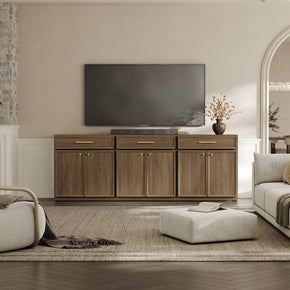
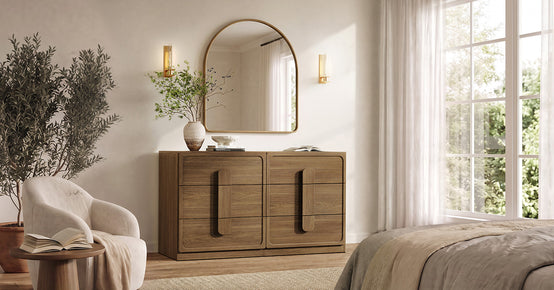
A wide dresser in dark-stained wood with matte black or iron hardware does more for an industrial bedroom than most people expect. The dark wood brings warmth and texture, the metal hardware ties into the industrial palette, and the storage capacity keeps the rest of the room cleaner. The Savanna Wood Chest of Drawers hits that combination — six wide soft-close drawers in a clean profile with hardware that suits both modern and industrial spaces.
22. Open Metal Pipe Shelving

Black metal pipe shelving mounted on a wall with reclaimed wood boards is one of the more DIY-friendly industrial bedroom ideas — and it looks much more intentional and considered than most DIY projects. Use it for books, plants, and a few carefully chosen accessories. Don't pack it tight. Industrial shelving looks best with actual breathing room between the objects on it.
23. Mixed Wood and Metal Nightstand

A nightstand that combines a wood top or drawer panel with a metal base or legs captures the core material tension of industrial style in a compact piece — two materials that have no business looking this good together somehow always do. Keep it simple functionally: one or two drawers, a flat surface, nothing elaborate. The Crescent Nightstand with Drawers has the right proportions and material finish to sit cleanly beside most industrial-style bed frames.
24. Freestanding Wardrobe Closet

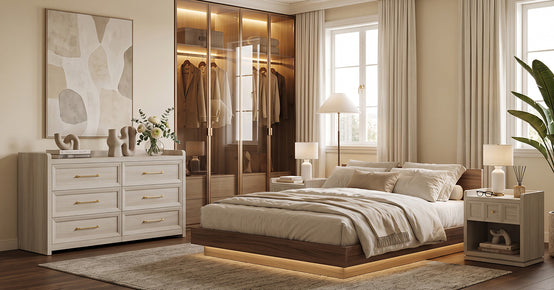
Older buildings and loft conversions — the spaces where industrial style feels most natural — frequently have inadequate built-in closet space. A freestanding wardrobe handles that without any renovation. The Savanna 71-Inch Wardrobe Closet provides a full hanging rod, built-in drawers, and adjustable shelves in a single unit that you can place wherever the room needs it: no installation, no contractors, no wall modifications.
25. Metal and Wood Bench at the Foot of the Bed

A bench at the foot of the bed is one of those pieces that sounds slightly formal but is genuinely useful every day — it's somewhere to put tomorrow's clothes, somewhere to sit when you're putting shoes on, and something that grounds the layout of the room. A bench with a metal frame and a wooden or leather seat fits the industrial palette without drawing too much attention to itself.
26. Reclaimed Wood Desk

If the bedroom needs to function as a workspace, a reclaimed-wood desk is the right industrial solution. The worn grain and imperfect surface of genuine reclaimed timber reads as authentic in a way that new wood with an artificial distressed finish doesn't — and in a style that values honest materials, that authenticity counts. Match it with a simple metal task lamp and a chair in dark leather or black fabric.
27. Multi-Drawer Industrial Dresser

When storage is the priority over visual drama, a dresser with multiple drawers and clean metal hardware earns its place. The Stria Modular Tall Dresser is taller and more compact than a wide dresser — useful in rooms where floor space is limited — with a stackable modular design and quiet-glide drawers. The profile works in both industrial and more contemporary bedroom setups.
Industrial Wall and Texture Ideas (28–33)
The walls are where the industrial atmosphere either gets established or doesn't. Get one wall right and the whole room shifts. And despite what you'd expect, most of these don't require an original Victorian warehouse.
28. Exposed Brick Accent Wall

If you have a genuine brick in the room, don't cover it up. That's it. That's the whole idea. If you don't have original brick, brick-effect panels, or quality wallpaper, you can get reasonably close. One wall is enough; behind the headboard is the right placement. A whole room of brick starts to feel more like a pizza restaurant than a bedroom, which is probably not the goal here.
29. Concrete-Effect Paint or Wallpaper

Concrete is cooler and quieter than brick — it brings the industrial atmosphere without the warmth or texture. A good concrete-effect matte paint in mid-grey just sits there and lets the furniture and lighting do the work, which is the right behavior for a wall in this style. If you're renting and can't paint, concrete-look wallpaper has gotten considerably more convincing in recent years. Worth reconsidering if you dismissed it a few years ago.
30. Weathered Wood Panel Wall

Horizontal planks in a grey-washed or dark-stained finish bring a warmth that neither concrete nor brick can match. Used behind the headboard, a wood-paneled wall creates a natural focal point without requiring any special lighting. It's also the most forgiving of the three main industrial wall treatments — warm wood is hard to make feel cold accidentally.
31. Brick-Effect Wallpaper

Better than its reputation. Particularly in white or light grey brick patterns, modern brick wallpaper is close enough to fool a casual observer. It's the most practical route for renters and anyone avoiding permanent wall changes. Pair it with simple, clean furniture — if the wallpaper is doing the character work, the furniture doesn't need to compete.
32. Dark Statement Wall Behind the Bed

One dark wall behind the headboard — charcoal, deep green, navy, or matte black — changes the atmosphere of a bedroom more dramatically than almost any other single change you can make. The bed feels anchored. The room gets depth. And it costs what paint costs, which is not much. This is probably the highest-impact, lowest-effort idea on this entire list.
33. Pipe Shelving on the Wall

Black iron pipe brackets with reclaimed wood shelves arestraightforwardly industrial in a single wall-mounted piece. The exposed hardware and raw pipe against plaster or brick reads as workshop-inspired without being over-designed. Use it for books, plants, and a few things you actually want visible. Leave it less than two-thirds full — packed industrial shelving looks chaotic rather than curated.
Industrial Bedroom Textile Ideas (34–38)
Here's where people talk themselves out of the most important part. Rugs and throws feel too soft for an industrial bedroom, they think. They're not. They're the thing that makes the room actually work. Without them, you have a room full of interesting materials that nobody wants to spend the night in.
34. Layered Neutral Bedding

White or pale grey bedding against a dark bed frame and dark walls glows in a way that makes the whole room look more deliberate. It's a simple contrast that works every time. Layer it up — a fitted sheet, a proper duvet, and a woven or textured throw at the end of the bed add depth without adding any color you'd later want to change.
35. Chunky Knit or Woven Throw

A throw draped over the bed or folded on a chair does more visual work per square inch than almost anything else in this list. Coarse, tactile, organic texture against a bed frame made of metal or dark-stained wood — that contrast is the whole point of the style. Keep the color neutral. A cream, grey, or tan knit throw is the right call here, not a pattern.
36. Large Area Rug

Industrial bedroom photos always look good on bare floors. Industrial bedrooms always feel better with a rug. Get a big one — 8x10 minimum in most bedrooms, extending past both sides of the bed — and use a natural fiber: jute, sisal, or a flat-weave wool in grey or a natural tone—nothing with a pattern. The rug's job is to add warmth and anchor the furniture, not to be a visual feature on its own.
37. Linen or Simple Cotton Curtains

Bare windows look appropriately industrial and are completely impractical in a bedroom. Linen or simple cotton curtains in white, cream, or raw natural tone let in light when open, block it when closed, and add softness that balances the harder elements in the room. Black metal curtain rod. That's the only hardware that makes sense here. While you're sorting the bedroom setup, the bedroom storage dressers section is worth a look.
38. Leather or Faux-Leather Accent Pillow

Leather is native to industrial design — it's honest, ages visibly, and gets better looking with use rather than worse. You don't need a whole leather chair or a leather headboard to get this material into the room. Two dark brown or cognac leather pillows on the bed, against pale bedding, are enough. The contrast reads as considered rather than accidental.
Finishing Decor Ideas (39–41)
These are the details that make a room feel lived-in rather than assembled. They're also, for what it's worth, the things that cost the least and are the easiest to change later if they stop working for you.
39. Indoor Plants

Plants have no industrial precedent. That's the point. Living organic shapes and fresh green color against metal, brick, and dark wood is a contrast that makes the room feel inhabited rather than staged. A tall fiddle-leaf fig in the corner or a few trailing plants on a shelf is enough. Concrete pots, matte black planters, or raw terracotta — keep it simple.
40. Large Industrial Wall Clock

A large metal wall clock with a visible mechanism fills a wall without taking up much space. It's functional, properly scaled for an industrial bedroom wall, and reads as intentional without being a themed prop. Get one that's genuinely large — at least 24 inches across. Smaller clocks disappear on industrial walls. Bigger ones actually work.
41. Black and White Photography Wall

Urban architecture, street photography, industrial landscapes, personal travel — a wall of black-and-white photography in consistent dark metal frames adds a genuine point of view to a room that might otherwise feel like a stylized set. The monochrome palette fits the industrial color scheme directly. And unlike generic prints that "go with" the room, your own photography actually says something about who lives there.
Industrial vs. Modern Bedroom Style
People put these in the same category because the palette overlaps — both run neutral, both lean minimal. But the difference in how each style treats surfaces is the whole ballgame.
Industrial design leaves surfaces showing what they are. Brick stays brick. Concrete stays rough and grey. Metal shows its patina. Wood keeps the grain and knots. According to Architectural Digest, this commitment to structural honesty — treating the building's bones as the design rather than something to hide — is what the industrial style is built on. As Sauder describes, combining distressed wood, mixed metals, and sleek hardware produces that vintage workshop feel the style is known for.
Modern design finishes its surfaces. Plaster over the brick. Paint that conceals the concrete. Hardware minimized or built in. The goal is for things to look designed from scratch rather than built from raw materials. Both styles use neutrals, but modern keeps them pale and refined, while industrial keeps them dark and willing to show age. They mix well, which is why modern industrial is popular right now—same destination, different starting philosophy.
FAQs
What is an industrial room?
An industrial bedroom takes its design cues from factories, warehouses, and converted loft buildings — spaces where architects left the structural materials exposed rather than covering them up. Exposed brick, rough concrete, metal fixtures, reclaimed wood, and visible hardware are the hallmarks. The materials show what they actually are rather than pretending to be something else.
What are the types of bedroom styles?
The main bedroom styles include modern, traditional, farmhouse, rustic, coastal, minimalist, bohemian, Scandinavian, mid-century modern, industrial, and contemporary. Industrial sits between modern and rustic in practice — it takes the practical furniture proportions of modern design and the raw, aged materials of the rustic direction, with a darker neutral palette that reflects its factory and warehouse origins.
What’s the difference between industrial and modern?
Industrial is textured and shows its age — worn metal, exposed brick, rough concrete, timber with visible grain and history. Modern is smooth and polished — clean finishes, concealed hardware, everything looking freshly made. Both use neutral palettes, but modern keeps them light and refined while industrial goes darker and accepts visible imperfection. Related aesthetics, different attitudes toward how things should look.
How to make a room look industrial?
Four changes that work in almost any room:
- Pick one wall and give it a raw treatment — concrete-effect paint, brick-look wallpaper, or wood planks behind the headboard.
- Replace every bulb with warm amber (2700K or lower) and add a pendant or sconce with visible metal hardware.
- Swap the bed frame for matte black metal, or a wood-and-metal combination if you want more warmth.
- Put down a large natural-fiber rug and use crisp white bedding. The contrast between the raw surroundings and the clean bed is what locks the look together.
Two of these done properly beat four done halfway.
What is industrial interior style?
A design approach that developed out of factory and warehouse conversions in 20th-century cities. Instead of renovating away the industrial character of those buildings, architects kept the exposed brick, visible steel beams, and concrete floors and built around them. The structural fabric became the aesthetic. That approach spread from converted lofts in New York and London to ordinary homes of all sizes, where people recreate the material language without needing to live in a former factory.
What is an example of an industrial area?
Literally: factories, warehouses, distribution facilities. In design terms, the reference is usually to converted versions of those spaces — SoHo loft apartments in New York, warehouse studios in London’s East End, repurposed meatpacking buildings in Chicago. Those conversions are where the interior style originated and where it still looks most at home.
What is an industrial area?
A zone designated for manufacturing and commercial operations. In interior design, the term refers loosely to spaces that borrow their visual language from those environments, regardless of whether the building itself was ever actually industrial. The style takes the materials, colors, and structural honesty of real industrial buildings and makes them work in everyday homes.
Is industrial style modern?
Industrial style can look contemporary, but it’s not the same as modern design. Industrial draws from 20th-century factory and workshop aesthetics — worn surfaces, visible structure, materials that carry their history. Modern design comes from Bauhaus and Scandinavian traditions that prioritize precision and clean form. They share a neutral palette and combine easily, which is why modern industrial is common right now. Similar outcome, different starting point.
Final Thoughts
Industrial bedrooms hold up because they don't require deception about what materials are. Brick stays brick. Metal stays metal. The palette comes from the actual colors of those materials rather than a seasonal color trend. In a design world where surfaces are constantly pretending to be other surfaces, that straightforwardness is worth something.
Pick two or three ideas from this list. The bed frame and lighting are usually the best starting points for visible impact. Get the rug sorted early — you'll feel the difference. Add the smaller details gradually. Industrial bedrooms assembled all at once tend to look like sets. The ones that build up over time look like someone actually lives there.
Resources
- Sauder: Industrial Bedroom Furniture — Design Overview — Overview of industrial bedroom furniture with distressed wood, mixed metals, and sleek hardware for a vintage workshop aesthetic.
- Architectural Digest: Industrial Interior Design 101 — Origins of industrial interior style, key design principles, materials, and balancing raw elements with comfort and livability.
- Living Spaces: Industrial Bedroom Ideas for 2026 — A Guide — 49 industrial bedroom ideas covering bed frames, dressers, lighting, textiles, and how to combine raw materials with cozy decor elements.
- Design Cafe: Industrial Bedroom Design Ideas — 7 Inspired Looks — Practical ideas covering moody grey palettes, brick wallpaper, warm industrial styling, and how to mix materials for a lived-in feel.
- Home Designing: Industrial Style Bedroom Design — The Essential Guide — Visual design guide covering color palettes, wall treatments, lighting, and material combinations across different industrial bedroom styles.
- At Home Touch: 22 Industrial Bedroom Designs That Look Great — Practical breakdown of 22 industrial bedroom ideas from statement pieces to small decor touches, with guidance on making the look work in any home.


Looking for something else?

Furniture Materials Guide: Picking the Right Material Room by Room
LEARN MORE
How to Mix Wood Tones Without Making a Room Look Mismatched
LEARN MORE
18 College Apartment Furniture Ideas That Save Space and Money
LEARN MORE
Types of Entertainment Centers: 11 Designs and How to Pick One
LEARN MORELooking for something else?

Curio Cabinet Decor Ideas: How to Style a Display Cabinet Without the Clutter
LEARN MORE
Curved Furniture: How to Style, Measure, and Buy It in 2026
LEARN MORE
What Is Rattan Furniture? A Buyer Guide to Types and Care
LEARN MORE


Further reading

How to Choose a Nightstand for a CPAP Machine

How to Choose a Shoe Cabinet for Men's Sizes, High-Tops, and Bulky Shoes


