




How to Style a Bookshelf: Pro Designer Tips & Ideas
Styling a bookshelf looks simple until you’re staring at a wall of empty shelves. Where do the books go? How do you mix in objects without clutter? And if you don’t have many books, how do you style a bookshelf without books and still make it feel intentional? This guide answers all of that with a calm, step-by-step approach that works for modern, boho, classic, and minimalist spaces alike. We’ll cover color, scale, composition, the all-important “negative space,” and specific frameworks for how to style a bookshelf both with books and without books. When you’re ready to explore shapes, sizes, and finishes that suit your room, browse current options in the bookcases.
The Designer Mindset (Before You Place a Single Thing)
Start by taking everything off the shelves. A clean slate makes better decisions possible. Look around your room and note the dominant tones—wood, metal, wall color, rug palette. Choose a simple styling palette that echoes the room: two to three main colors, one metal or accent finish, and one natural texture. You’ll repeat these deliberately across the shelves to create cohesion.
Next, think in terms of visual weight. Heavy items—dark colors, large boxes, dense clusters—tend to live toward the bottom or in the center. Lighter pieces—pale ceramics, glass, small frames—float higher. This is how you create stability without making the composition feel rigid.
Finally, plan to leave space. A styled bookshelf isn’t a storage locker. Designers protect roughly a third of every shelf as breathing room. That negative space turns a collection into a composition.
A Simple Framework: Anchor • Layer • Edit
Anchor the arrangement with a few substantial elements: a sculptural vase, a stack of art books, a pair of woven bins. Distribute these anchors across the bottom and middle rows to set the rhythm.
Layer supporting pieces around those anchors using height variation and depth. You might lean a framed print at the back, set a medium object mid-depth, and place a small piece at the front edge to create shadows and dimension.
Edit before you step away. Remove one item from each shelf—even if you love it. The moment everything has room to breathe, the entire bookcase reads more sophisticated.
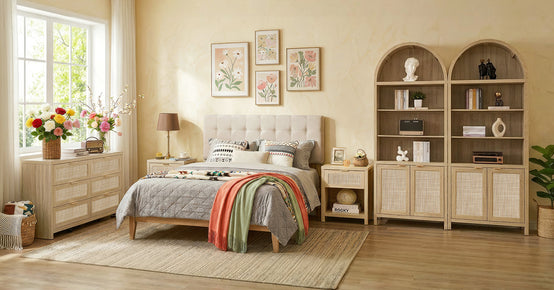
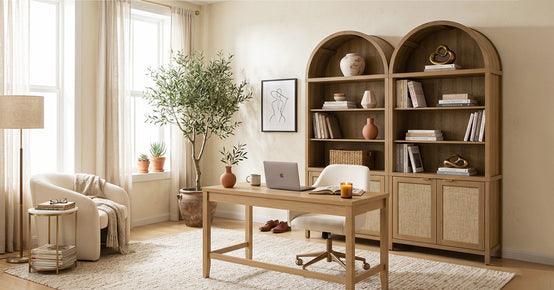
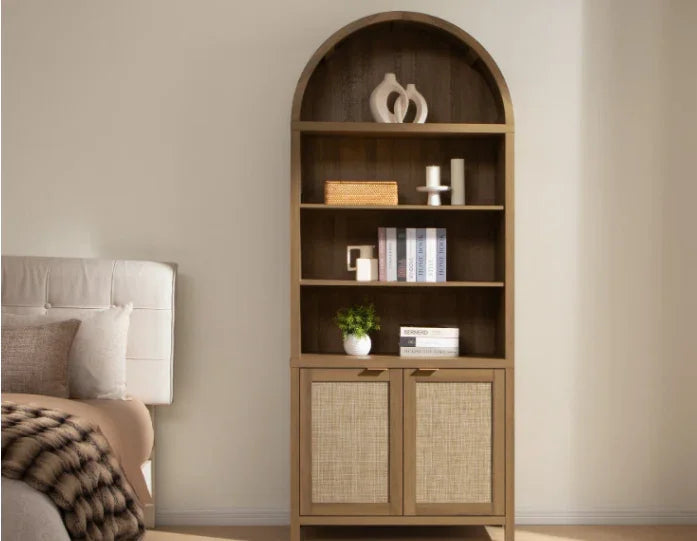
This framework works for any SICOTAS bookshelf—tall cabinets with doors, open étagères, narrow towers for small spaces, and wider living-room units. If you’re pairing two cases, style them as siblings: not identical, but clearly related by palette and repetition.
How to Style a Bookshelf With Books (and Make It Look Effortless)

Begin with your actual reading. Keep series and daily-use titles in the most accessible zone—between knee and eye level. Stand most books vertically for quick scanning, but break the line with a horizontal stack on each shelf. That horizontal moment is where a small object or bowl can sit comfortably without feeling like an afterthought.
Vary spine color intentionally. If you love an even, quiet backdrop, group neutral and darker spines together and limit bold hues to a couple of strategic areas. If you enjoy color blocking, try it in one section and then give the eye a rest on the next shelf with calmer tones. A single shelf of coordinated art or design books becomes a visual pause between brighter sections.
Add a few bookends but avoid using them everywhere. The goal is rhythm, not repetition. A solid stone or metal end on one shelf, a simple L-bracket on another, and a tall vase acting as an end on a third shelf gives functional variety without clutter.
How to Style a Bookshelf Without Books (Curated, Not Empty)
No rule says shelves require books. Think of each shelf as a small stage. On the bottom row, use closed storage—lidded boxes, woven baskets, or sculptural storage jars. The visual weight near the floor grounds the whole piece.
On the middle rows, move to form and silhouette. Mix a cylinder with a footed bowl and a low stack of magazines. A single art object centered on an otherwise spare shelf can be more persuasive than five smaller tchotchkes. Add greenery sparingly; one trailing plant can soften the upper corner of the bookcase without taking over.
On the top rows, keep the lightest touch. A narrow vessel, a small framed print leaning at the back, and an airy object like a glass knot or minimal sculpture is enough. When you step back, you should see a gentle progression from substantial to delicate as your eye moves upward.
Styling the Top of the Bookcase (The Crown of the Composition)
The top is not storage; it’s a vignette. Use one to three larger pieces rather than many small ones. If your ceiling is standard height, leave at least several inches of air between the tallest object and the ceiling line. In taller rooms, anchor the top with a bigger object or lean a framed artwork behind a shorter element so the mass reads from across the room.
Keep the top connected to the shelves below by repeating a finish—a metal tone from a bowl, the warm wood seen in picture frames, or a color lifted from the rug. This is how a single bookcase becomes part of the room’s story rather than an isolated tower.
Depth, Shadows, and Sightlines
Flat styling makes shelves look like retail displays. Instead, create depth by placing something near the back on selected shelves, something mid-depth, and something near the front. The layered shadows make the composition feel architectural. You don’t need this on every shelf—just enough to keep the eye moving.
Think about sightlines from the main seating position. The shelf at eye level across the room should carry your strongest composition—a confident object, a small plant, and a tidy horizontal stack of books or magazines. That middle shelf is the billboard for the entire bookcase.
Balance Without Symmetry
Perfect symmetry can feel stiff. Instead, aim for balance. If the left side of a shelf holds a grouping of two objects and a book stack, let the right side carry a single taller piece. Repeat this idea across the next shelf in reverse. The brain recognizes the pattern and relaxes, even though nothing is mirrored exactly.
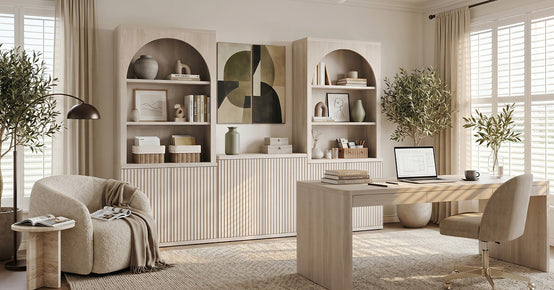
If you’re styling a pair of bookcases, balance them as a conversation. Let the left case hold a framed print on the second shelf; echo that gesture on the right case one shelf higher or lower. The relationship will read clearly without becoming predictable.
Choosing Objects: Scale, Texture, and Tone
Scale matters more than quantity. One generously sized bowl or vase can do more work than three tiny items. Larger pieces also help you maintain that essential negative space. Aim to mix a few substantial items with a handful of smaller companions.
Texture prevents monotony. Combine matte ceramic with glossy glass, natural fiber with smooth metal, and warm wood with painted objects. If your bookcase finish is dark, brighter objects and reflective metals add sparkle; if your bookcase is light, introduce a few deeper tones so the shelves don’t wash out under daylight.
Tone ties the look to the room. Pull a color from the rug or artwork and repeat it gently on three shelves at different heights. The repetition is subtle but powerful.
Practical Storage That Still Looks Designed
Real life includes remotes, chargers, notebooks, and keepsakes. Contain these in boxes and bins, but treat the containers as part of the design. Two matching boxes side by side are calmer than a scatter of mismatched organizers. Place storage low and keep open display higher so the practical needs of the room blend into the composition.
If you’re working with a SICOTAS bookcase that includes closed doors on the lower half, let that cabinet area hold the unglamorous items. Keep the open shelves for the curated story. This high-low mix is especially effective in living rooms and home offices.
Lighting for Warmth and Focus
Light changes how objects read. A small LED picture light above the bookcase, a discrete strip light tucked at the top interior, or even a nearby floor lamp aimed upward can lift the entire arrangement. You’re looking for a soft wash, not a spotlight. Avoid harsh points of light that create glare on glass or glossy glazes.
If your shelves include glass doors, lighting becomes even more important. A gentle glow can bring depth to ceramics and metallic accents while keeping reflections under control. Keep cords hidden behind the case or routed through cable clips so the styling stays clean.
Troubleshooting: Fast Fixes for Common Styling Problems

When a shelf looks crowded, remove one object and pull the rest slightly forward to create a slim shadow line at the back. If everything is the same height, introduce a taller element every other shelf and let smaller pieces gather on a horizontal stack to raise them subtly.
If the arrangement reads too busy, limit the number of materials. Perhaps you keep wood, woven fiber, and ceramic, and set metal aside. That edit alone can calm a restless shelf. If the bookcase feels top-heavy, move darker or larger pieces to the bottom two rows and replace them above with lighter tones or glass.
How to Style a Bookshelf Like a Pro: A Room-By-Room View
Living Room: Keep the center shelf compelling. This is the zone guests will see from the sofa. A confident piece centered on that shelf with two supporting elements on either side sets the tone. If your bookcase flanks a TV, use the shelves to soften the tech with texture and warmth—woven bins low, greenery at mid height, a few art books near the top.
Home Office: Function drives the styling. Binders and reference books live where you can reach them easily. Hide peripherals and cables in closed storage or boxes. One shelf devoted to personal items—a travel memento, a small framed photo, a plant—keeps the workspace human without becoming sentimental clutter.
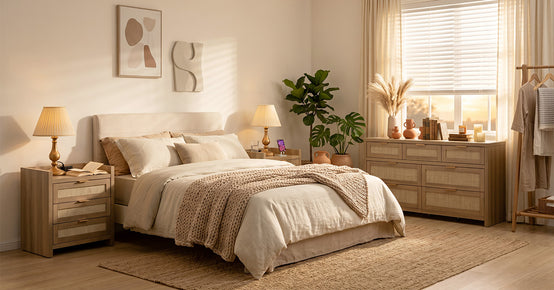
Bedroom: Quiet is the goal. Favor closed boxes, fewer bright colors, and softer materials. If you’re placing a bookshelf near the bed, let a low shelf hold a small stack of reading with a simple bowl for jewelry or glasses. The calmer the palette, the more restful the room feels.
Entry or Hall: Depth is scarce, so choose shallow or narrow cases and avoid protruding objects at the front edge. A pair of slim baskets on the lower shelf for hats or mittens, a tray for keys, and a single framed piece leaning against the back will do all the work you need.
For each of these scenarios, you’ll find shapes and dimensions that fit in the bookcases collection. Matching the scale of the case to the room is half the styling battle.
Seasonal Refreshes Without Starting Over
You don’t need to rebuild the arrangement every season. Swap a handful of pieces and shift the palette slightly. In spring, introduce a sprig of greenery and a lighter vessel; in fall, a textured bowl and deeper colors. Keep the anchors in place and exchange the small supporting cast. The bones stay strong while the mood evolves.
Safety and Stability That Don’t Compete With Style
A beautifully styled bookshelf still needs to be safe. Anchor tall units to wall studs with the provided hardware. Place the heaviest items low so the center of gravity stays near the floor. Keep glass up and out of reach if you have kids or lively pets. Good styling and good safety habits are entirely compatible.
A Short, Repeatable Styling Routine
Clear the shelves. Choose the palette. Place anchors on the bottom and center rows. Layer supporting pieces with varied heights and depths. Add a single plant where the composition needs life.
Step back and remove one item from every shelf. Adjust the top with one to three larger elements and leave air to the ceiling. You’re done—until next month when you swap a couple of pieces for a subtle refresh.
Frequently Asked Questions
What’s the simplest way to style a bookshelf if I’m overwhelmed?
Use the anchor • layer • edit routine. Start with a few substantial pieces, add supporting objects with varied heights, and then remove something from each shelf. Keep about a third of the shelf empty.
How do I style a bookshelf with books and objects so it doesn’t feel messy?
Alternate vertical rows of books with occasional horizontal stacks. Tuck smaller objects onto those stacks and keep larger items as anchors. Repeat your palette three times across the bookcase.
Can I style a bookshelf without books and still make it feel authentic?
Yes. Treat each shelf as a vignette: closed storage low, sculptural forms in the middle, light and airy pieces up top. Use texture and scale to tell the story.
How much negative space is enough?
Aim for roughly thirty to forty percent open space per shelf. It sounds generous, but that breathing room is what makes the styling look professional.
Bringing It All Together
Learning how to style a bookshelf comes down to a handful of decisions repeated with confidence: choose a palette tied to your room, ground the case with substantial elements, mix heights and textures, layer for depth, and protect generous negative space.
Whether you’re figuring out how to style a bookshelf like a pro, paring back to essentials, or exploring how to style a bookshelf without books for an airy, gallery feel, the steps above will carry you from empty shelves to a composition that looks considered and lives easily.


Looking for something else?

Burl Wood Furniture: The Complete Buying Guide
LEARN MORE
What Is a Hope Chest? Meaning, History, and Modern Uses
LEARN MORE
What Is a Foyer? Meaning, Purpose and Design Guide
LEARN MORE
GREENGUARD Gold Certified Furniture: What It Really Means for Your Home
LEARN MORELooking for something else?

How to Clean a Mirror Without Streaks: Simple Step-by-Step Guide
LEARN MORE
21 Above-Bed Decor Ideas for a Stylish Bedroom Wall
LEARN MORE
Furniture Materials Guide: Picking the Right Material Room by Room
LEARN MORE


Further reading

18 Decorative Storage Box Ideas That Hide Clutter Well

How to Store Comforters Without Losing Space or Loft


