




End Table vs Side Table: What’s the Difference and Which One Should You Buy?
Almost every shopper hits the same wall. End table vs side table: which one do you actually need? Both are small. Both parksare next to your seating. Stores swap the names without blinking, and even furniture references admit the labels blur. The gaps are real, though. They show up in placement, in size, and in what the table is really for. One leans against a sofa or bed. The other roams, happy in a corner, a hallway, or next to a reading chair.
Get the size wrong, and your lamp ends up at a weird height. Get it right, and the room just works. Knowing that one end table vs. a side table saves you from a lamp at the wrong height or a piece that looks off. We will keep this plain, with real sizes, placement tips, and a fast way to choose. Browse the full living room range while you read for a head start.
Quick Answer: End Table vs Side Table in One Line

Short version, the side table vs end table call comes down to three things:
- End table: it sits at the end of a sofa or armchair, and its job is purely functional; your stuff is within reach while you sit.
- Side table: same job, but it wanders, doubling as a handy surface and a bit of decor wherever it lands.
- Which to pick: a fixed helper parked by your seat, or a piece you can pick up and move around the house?
What Is an End Table?

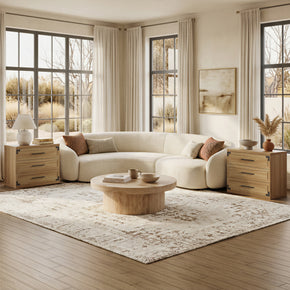
You know the small table at the "end" of a sofa, loveseat, sectional, armchair, or bed? That is an end table. The name says it all. Its whole reason to exist is to keep your everyday stuff within arm’s reach while you sit. The quiet helper of the living room, basically.
End Table Meaning and Common Uses
The job is simple enough. Think of a lamp, the remote, your phone, a mug, and your reading glasses. Maybe a small tray. The Merriam-Webster definition of an end table says the same thing. A small table that goes beside a chair or sofa. Plenty of people also press a compact end table into service as a nightstand alternative by the bed. Same surface, same logic.
Where End Tables Usually Go

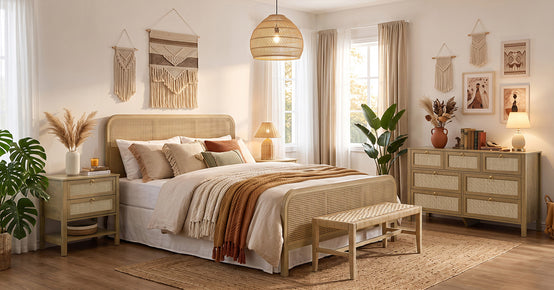
A few spots come up again and again. One on each side of a sofa is the classic move. A single one slots neatly between a sofa and a wall. They also tuck in beside a recliner or fill in as a bedside table when the room is tight. Something boho, like the Savanna rattan end table withopen shelves, handles the couch-side and bedside job without missing a beat.
Typical End Table Size and Height
Compact is the theme. Most land is around 12 to 18 inches wide, or the same across when they are round. Width matters less than height here, honestly. You want the top sitting level with the sofa or chair arm, or an inch or two under it, so a drink goes down without you reaching up. Design pros at Homes & Gardens lean on that exact armrest rule when they arrange a living room. Worth copying.
Plain version: an end table is a small, low table that sits at the end of your sofa or chair, keeping everyday things within reach.
What Is a Side Table?

Flip it around. A side table holds your stuff too, but it goes anywhere and isn't chained to the end of a sofa. That freedom is the whole reason people call it a side table instead of an end table. One day, it serves as a work surface. Next, there is a pure accent table sitting in a corner, doing nothing but looking good.
Side Table Meaning and Common Uses
What do they carry? A lamp, a plant, books, candles, and a tray of drinks. Put one in an entryway, and it holds your keys and mail. Move it next to the bed, and it becomes a bedside table. The role keeps changing, so the name does as well. You will hear the same piece called an occasional table, a lamp table, a chairside table, or a drink table. Depends entirely on what you ask it to do.
Where Side Tables Usually Go

Flexibility is the point. You find them all over the house. One can sit beside an accent chair, next to a sofa, under a window, or in a quiet reading nook. It fills an empty corner of the living room without the bulk of a console. It can even hold down a hallway by itself. The Cas two-tier open-storage side table travels easily between rooms, mostly because its open shelf keeps it light and genuinely useful wherever it lands.
Typical Side Table Size and Height
Side tables usually run a little bigger than end tables—figures18 to 26 inches wide or round, though designs are all over the map. Height is lower as well. Lots match armrest height near seating, but you will also find taller and shorter ones built to show off a shape. And when a side table is just sitting there as decor? Then height stops being a rule and becomes a styling choice.
Plain version: a side table is a small, movable table you can place anywhere, useful one moment and pure decoration the next.
End Table vs Side Table: Key Differences

This is the part that actually settles the end table vs side table difference. Yes, they overlap. But each one leans a certain way, and five things do the separating: placement, function, size, design, and storage.
Difference by Placement
End tables stick to the ends of seating, almost without exception, because the whole idea is to keep a surface right where you sit down. Side tables roam wherever you put them. That is the cleanest line between the two.
Difference by Function
One is built to be reached. End tables keep things practical and at hand. Side tables can be practical, decorative, or both at once. That is why they feel harder to pin down.
Difference by Size
Small and compact, that is the end table. Side tables go the other way. Wider, taller, sometimes sculptural, depending on the look you are after.
Difference by Design
End tables usually match a seating set and fade into the background on purpose. Side tables go bolder—bigger shapes, mixed materials, finishes that pull your eye across the room.
Difference by Storage
Drawers and lower shelves are common on end tables, handy for remotes and chargers. Side tables sometimes add a shelf. Often, they skip it, trading the storage for a cleaner silhouette.
End Table vs Side Table Comparison Chart

Want it all in one place? The chart below lines the two up side by side so you can choose between an end table and a side table in about 10 seconds.
|
Feature |
End Table |
Side Table |
|
Best placement |
At the end of a sofa, sectional, or beside a bed |
Almost anywhere: chairs, corners, hallways, bedrooms |
|
Main purpose |
Function first, daily-use items in reach |
Function and decoration, often an accent piece |
|
Typical size |
About 12 to 18 inches wide or round |
About 18 to 26 inches wide or round |
|
Height rule |
Level with or just below the armrest |
Flexible, but the armrest height works well near the seating |
|
Storage |
Often has a drawer or lower shelf |
Sometimes a shelf, many skip storage for style |
|
Style role |
Blends into a seating set, low-key |
Stands out, bolder shapes and materials |
|
Best room |
Living room and bedroom |
Living room, bedroom, hallway, reading nook |
|
Small spaces |
Great, slim, and tucked beside the seating |
Great, fills awkward gaps without bulk |
When Should You Choose an End Table?

An end table makes sense when you want a steady helper right beside your seat. A few situations make the call obvious.
Sitting on a sofa or in an armchair, and you want daily items within reach? That is the textbook case. Need the room to feel balanced? A matching pair will bookend a sofa and bring instant symmetry. You can also lean on an end table for a stable lamp surface, with a drawer or shelf swallowing the clutter underneath.
Small living rooms benefit most. A slim end table tucks between a wall and the sofa. It never takes over the floor.
When Should You Choose a Side Table?

Reach for a side table when flexibility beats having a fixed role. Picture this.
Maybe you want one table that can move between the living room, the bedroom, and the hallway. Or you want a piece that works as decor on its own. Something round, a pedestal, marble, glass, or metal that looks good with nothing on it. Got a single accent chair in a reading corner? It pairs really well with a side table.
And those awkward empty corners or hallways? A side table fills them without the heft of a console table.
Can You Use an End Table as a Side Table or Bedside Table?
The short answer is yes. People do it all the time. The label matters far less than fit and function. If the size and height suit the spot, an end table works well as a side or bedside table. No furniture police will stop you.
When It Works Best
Swapping roles works best in small apartments, reading corners, compact living rooms, and bedside setups. The lighter a piece is, the easier it moves. And that gives you more options as your layout changes over time.
End Table vs Nightstand

There is a real nuance here. A nightstand is typically bedroom-specific and offers more storage. An end table is simpler and more flexible. For bedside use, height is what matters. You want the top close to mattress level. That way, a lamp, phone, or glass of water is easy to grab when you are half-asleep. A charging-ready option like the rattan nightstand that doubles as a couch-side end table handles both jobs, so you do not have to pick.
When It May Not Work
Not every end table travels well, though. Too short, too narrow, too storage-heavy, or too obviously matched to one sofa set, and it can look stranded in another room. Measure first. Then move it.
What Size Should a Side Table or End Table Be?
Most buying mistakes happen right here. Nail the height and width, and everything else falls into line. A few rough rules do the trick.
Height first, because it is the one people botch. Keep the top level with the sofa or chair armrest. Or just below it. Then reaching feels easy. Width comes next. End table size usually ranges from 12 to 18 inches across, while a side table is wider at 18 to 26 inches, and a roomier space calls for a larger top. Side table height follows the same armrest rule: level with your seat or a touch below, so nothing feels off when you reach for a drink.
Depth matters in tight spaces. Go for a narrow end table or a C-table that slides under your seating, and save the deeper tops for larger areas—one last thing. Leave enough surface for what you actually use: a lamp, a drink, a remote, a small decor tray—no more than that.
Different Types of Side Tables and End Tables

People always ask what the different types of side tables are. The category is wide. These are the ones worth knowing before you spend anything.
Slide-In and Space-Savers
- C-tables have a C-shaped base that slides under a sofa. Great for laptops and snacks when space is short.
- Need extra surface only sometimes? Nesting tables stack together and spread out when you host.
- Round side tables soften sharp layouts and suit tight walkways.
- Tiny room, no floor to spare? Wall-mounted shelves do the side-table job without ever touching the ground.
Decorative and Accent
- Pedestal side tables. Compact, decorative, and a natural next to an accent chair.
- For visual weight in a seating area, a drum side table adds a solid, sculptural element.
- Tray tables stay light and portable, are great for drinks, and are easy to shift across a room.
Everyday Function and Storage
- Standard end tables sit beside a sofa or chair and usually come with a shelf or a drawer—the default.
- Storage side tables hide remotes, cables, and small clutter behind drawers or a cabinet.
How to Style an End Table or Side Table
A table looks better with a light touch. You really do not need much.
Lean on the rule of three. Pick three items at different heights. A lamp, a short stack of books, and a small plant work well. The surface then looks balanced, not busy. Just leave a gap for a drink or a phone, so the table still does its actual job.
Materials set the mood. Wood warms a room. Metal sharpens it. Glass keeps things airy, and stone feels refined. Then hide the boring stuff. Chargers, coasters, remotes, all of it goes in a drawer or a small basket.
Common Buying Mistakes to Avoid
A couple of small slips can turn a smart buy into a daily irritation. Watch for these before you check out.
Height is the big one. Too tall feels clumsy; too low makes drinks and lamps a hassle. Size trips people up next, in both directions: a tiny top that cannot hold your essentials, or a bulky side table that blocks walkways and shrinks the room.
Storage gets ignored a lot, too. Homes with remotes, chargers, and kids’ odds and ends usually need a drawer somewhere. And do not forget flow. Leave some walking space around the sofas, chairs, and tables. The room needs to breathe.
Final Takeaway: End Table or Side Table?

It is simpler than it looks. Go with an end table when you want a practical surface beside a sofa, chair, or bed. The kind of spot that holds lamps, drinks, and remotes. Go with a side table when you want a flexible, good-looking piece. One that can move around or fill a gap. Plenty of rooms use both: end tables do the heavy lifting, while a side table adds the style. The sizes and tips here hold up through 2026, so you can buy once and not keep second-guessing it. Ready to compare real pieces? You can compare end tables and side tables for small spaces to get started. And if you want a center-of-room anchor to tie everything together, a round piece like the Stria mid-century round coffee table finishes off the seating area.
FAQs
What is the difference between a side table and an end table?
An end table sits at the end of a sofa or chair, remains practical, and is about 12 to 18 inches tall. A side table moves around freely, serves as a surface or purely decorative piece, and tends to be larger,measuring 18 to 26 inches. Placement, function, size, that is the whole difference.
What are side tables called?
Loads of names, honestly. The same piece gets called all sorts of things depending on the job it does:
- Accent table, when it is there,is mainly for looks
- Occasional table or lamp table, near a sofa or chair
- Chairside table or drink table, pulled up beside one seat
- Just a small table, the catch-all most people use
What are the different types of side tables?
Quite a few, and each one fits a different spot. These are the main styles worth knowing:
- C-tables that slide under a sofa for laptops and snacks
- Nesting tables and tray tables for flexible, movable surfaces
- Pedestal tables and drum tables are perfect when you want a decorative, sculptural look
- Storage tables, round side tables, and wall-mounted shelves, when rooms are tight
What size is a side end table?
Roughly 12 to 18 inches wide for most end tables, and 18 to 26 inches wide for side tables. Height is the part that matters, level with or just below the sofa or chair armrest, so reaching never feels awkward.
How many items should you put on an end table?
Keep it light. The rule of three works almost every time, so aim for three pieces at different heights:
- Something tall, like a lamp or a slim vase
- Something medium, like a short stack of books
- Something low, like a small plant or a tray, with room left for a drink
Can a side table be taller than the sofa?
It can, and sometimes it should. A side table with flexible height works well next to a low sofa or as a standout accent in a corner. Near the seating, though, the armrest height is still the easiest to reach.
Can you use an end table as a bedside table?
Yes, easily. An end table works as a bedside table when it sits close to mattress height and has enough surface for a lamp, phone, book, or glass of water. A drawer or shelf is a nice bonus for bedside storage.
Sources
- Merriam-Webster – End Table Definition
- The Free Dictionary – End Table Meaning
- Wikipedia – Table (Furniture) Overview
- Wikipedia – Coffee Table History and Use
- Collins English Dictionary – Coffee Table Definition
- Cambridge Dictionary – Coffee Table Meaning
- Homes & Gardens – Arranging Living Room Furniture


Looking for something else?

Burl Wood Furniture: The Complete Buying Guide
LEARN MORE
What Is a Hope Chest? Meaning, History, and Modern Uses
LEARN MORE
What Is a Foyer? Meaning, Purpose and Design Guide
LEARN MORE
GREENGUARD Gold Certified Furniture: What It Really Means for Your Home
LEARN MORELooking for something else?

How to Clean a Mirror Without Streaks: Simple Step-by-Step Guide
LEARN MORE
21 Above-Bed Decor Ideas for a Stylish Bedroom Wall
LEARN MORE
Furniture Materials Guide: Picking the Right Material Room by Room
LEARN MORE


Further reading

18 Decorative Storage Box Ideas That Hide Clutter Well

How to Store Comforters Without Losing Space or Loft


