




10 Colors That Go With Gray Furniture (Designer-Tested Pairings for 2026)
Most people don't realize their gray furniture has a hidden personality until they bring home the wrong throw pillows. The pillows look gorgeous in the store. They look strange against the furniture at home. That mismatch is almost always an undertone problem. It's also the single biggest reason choosing colors that go with gray furniture trips up homeowners during a redecorating project. Gray is never just gray. The shade you bought is leaning cool toward blue, or warm toward brown, or sitting perfectly neutral in the middle.
Each of those reacts to accent colors in completely different ways. A blush pink that warms up charcoal furniture can look chalky and weird against cool silver pieces. A navy that anchors a warm beige bedroom set can wash out a cool dove-gray dresser. The trick is to match the undertone first, then choose the color. For inspiration straight from real homes that pulled this off well,Apartment Therapy's roundup of bold gray color combinations is worth a scroll. The pairings ahead are the ten that interior designers reach for most often when working with gray furniture, plus wall paint picks and a short list of colors best skipped entirely.
Why Gray Furniture Is the Easiest Neutral to Decorate Around

Think about what gray furniture actually does in a space. It hangs back. Not black, not white, somewhere in the middle, so it's never the thing your eye jumps to first. The walls get to talk. So do the art, the pillows, the rug, the lamps. And the gray? It just holds the floor, keeping the room from coming apart, never once asking you to notice it. A gray sofa or gray dresser is essentially a stage. You're the set designer. Walls, art, throw pillows, rug - all carry the personality.
Range is the other thing nobody mentions. Pale dove-gray bedroom furniture? Soft and airy in morning light. Same family scaled up to charcoal? Suddenly moody, sophisticated, gentleman 's-club energy. One neutral, two completely different moods. Why haven't designers quit on it after fifteen years?
Identify Your Gray's Undertone Before Choosing Colors
Quick test before you pick anything. Drag your gray piece over to a bright window. Stand back. Look hard. What's the gray secretly trying to be? Trade secret nobody mentions - pure gray doesn't exist. Underneath the surface color, every gray shade pulls slightly toward blue, green, purple, or brown. That underlying tint is what determines whether your accent colors look like they belong in the room or like someone dropped them off at the wrong house.
Light Grays (Mostly Cool Undertones)

These are the ones with poetic names. Pearl. Dove. Fog. Silver. Platinum. Sounds like a jewelry catalog. Light grays almost always pull cool, with undertones drifting toward blue, lavender, or pale green. Pair best with other cool tones. Powder blue—Sage green. Blush pink. Even a crisp white. The thing light grays have going for them? They never feel heavy. Drop one into a tiny studio with one north-facing window, and the room still breathes.
Medium Grays (Warm or Neutral Undertones)

Middle-range grays got the boring names. Putty. Pewter. Flannel. Greige. Elephant gray. Sounds like a hardware-store deck. Undertones lean slightly warm with hints of brown or taupe, or stay neutral. This middle group is the easiest to design around by a long shot—bridges cool and warm palettes. Throw almost any accent color at a medium gray, and it lands somewhere flattering.
Dark Grays (Rich Brown or Cool Undertones)

Then there are the heavyweights. Charcoal. Iron. Steel. Slate. Almost always carry brown undertones, which gives them warmth despite how dark they read. Going dark has one big upside - bold accent colors stop feeling risky. Mustard yellow against charcoal reads confident, not loud. Burnt orange feels rich rather than garish. Even emerald green and cherry red stand their ground. Dark grays also pull magic on small rooms. Cramped starts feeling intimate.
10 Colors That Go With Gray Furniture
Ten interior design pairings that designers actually lean on when working around gray furniture. Each with a styling note and the room it belongs in.
1. Crisp White

Honestly, this one is the safe bet almost everyone underestimates. White and gray never goes out of style because the contrast does the heavy lifting. Keeps the room open. Keeps the light bouncing. The absence of competing colors makes your gray furniture feel like a real choice rather than the path of least resistance. Crisp white walls behind a gray sectional. White bedding over a gray upholstered bed. Both read closer to boutique hotel than starter rental.
One detail most people miss - white has temperature. Warm whites like Benjamin Moore Swiss Coffee belong with warm or medium grays. Pure, cool whites like Behr Ultra Pure White pair well with light, cool grays. Mix the temperatures and the room feels off, like a phone photo with bad white balance.
2. Soft Blush Pink

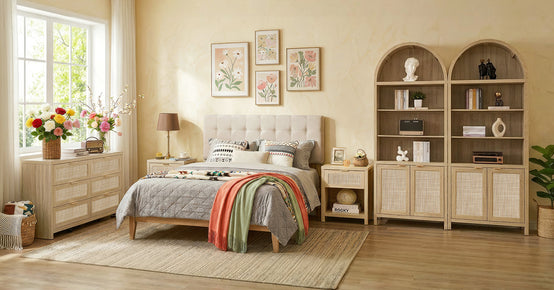
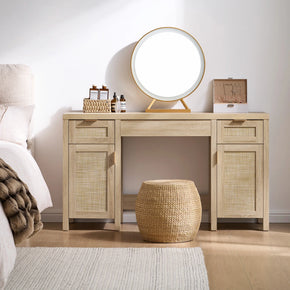
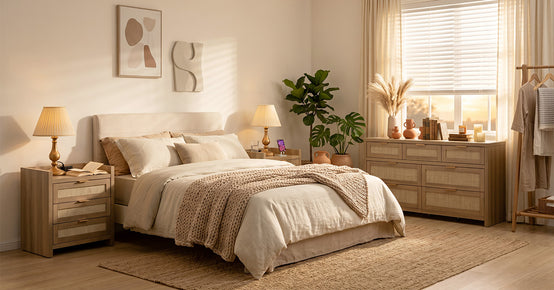
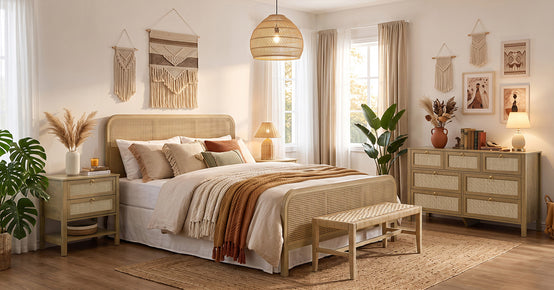
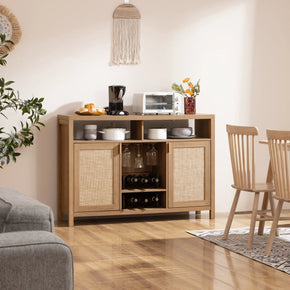
Don't skip this one, as everyone does. "Blush pink and gray" sounds like a kid's room when you say it, sure. But actually put it together and it looks more grown-up than you'd ever expect. Everything comes down to the pink. Pick a dusty, muted one with beige or brown undertones. Go candy-colored, and you've lost it, straight to juvenile. Some blush pillows on a charcoal sectional. A dusty pink wall behind a pale gray bed. Either way, you're adding warmth to a room that would otherwise feel cold. And thesix-drawer Savanna wood dresser belongs in a room like this. The rattan and natural wood on it keep that soft pink from tipping into anything too sweet.
3. Warm Mustard Yellow

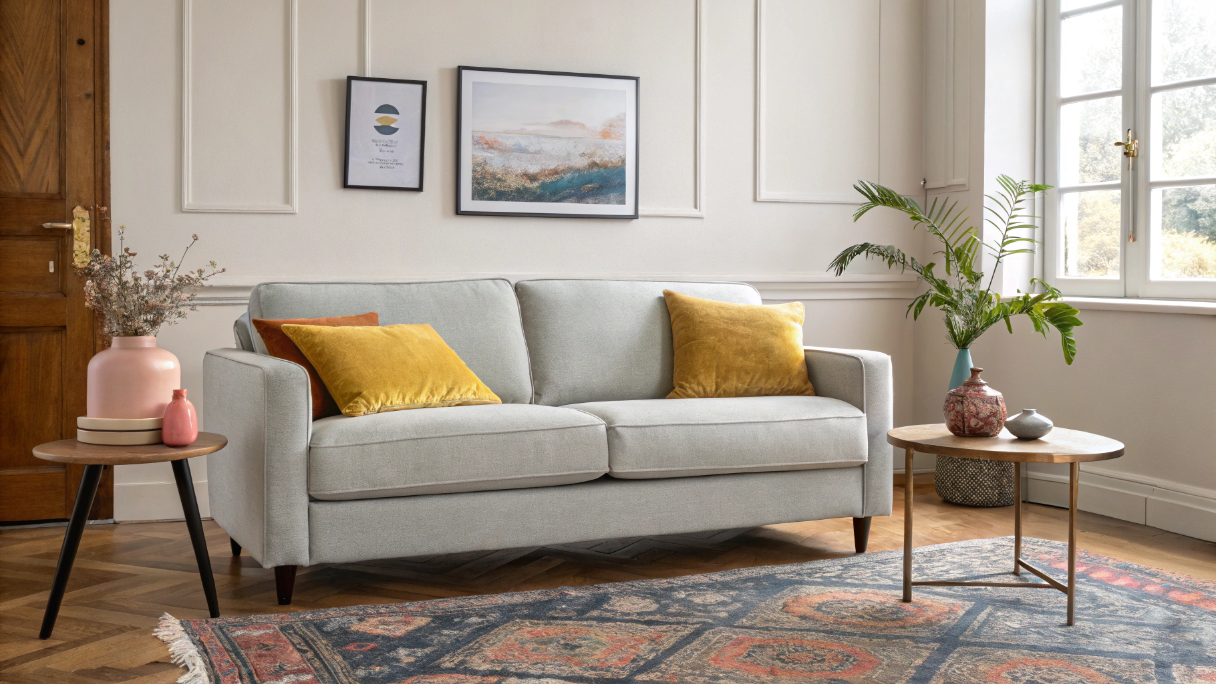
You know that feeling when a gray room just sits there, refusing to feel cozy? Mustard yellow is usually the fix. Drops energy into a gray space without shouting over the furniture. If your room leans cool (most rooms with gray furniture do), this is the easiest single color to inject warmth into a living room or home office. Start small. Throw pillows. An armchair. A graphic rug. A mustard accent wall against a charcoal sofa can work, but only with strong natural light. Darker rooms drift dingy by evening.
One last tip - mustard finds its best self next to warm wood. Light oak, walnut, and rattan all amplify the warmth mustard yellow brings to a gray-anchored space.
4. Deep Navy Blue

Designers have a name for navy and gray. They call it the perfect gentleman's study. Theatrical, but accurate. Rich. Sophisticated. Quietly luxurious. Picture a deep gray sectional against navy-painted walls. Or a gray upholstered bed wrapped in navy linens, with a brass lamp on the side table. The trick is to let one color dominate the large surfaces while the other serves as an accent. Reverse the ratio, and it turns to mud.
Want a less formal version? Swap navy for indigo or a softer denim-toned blue. Still reads as that classic gray-and-blue pairing, minus the old-world weight.
5. Sage Green

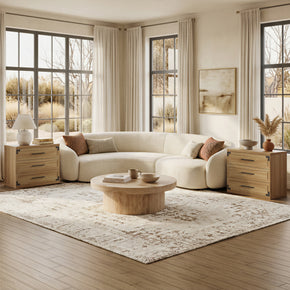
Open any Pinterest moodboard from the past two years, and you'll see this one over and over. Sage green and gray. Calming. Nature-inspired. The pairing that every designer's Instagram seems to have agreed on without a meeting. Both tones come from the same muted, organic family, which is why they layer without fighting. Sage green walls behind a gray bedframe is the obvious move. Sage velvet throw pillows on a charcoal sofa is the lower-commitment version. The three-drawer Crescent nightstand in its modern finish fits beautifully because its clean lines pick up where the soft sage leaves off.
6. Warm Caramel and Camel Tones

When a gray room reads cold, the fix is usually in this family. Caramel, camel, and tan tones are the timeless way to introduce warmth. Works especially well against darker grays because the temperature contrast creates depth without drama. A camel leather armchair next to a gray sofa. A tan area rug under a charcoal bedroom set. Either way, the room goes from new and stiff to lived-in and grown-up.
Side note: camel-toned leather brings a warmth that synthetic neutrals can't replicate. If you're adding leather to a gray-heavy room, this is the shade to choose.
7. Dusty Lavender

Lavender. Yes, I know how it sounds like an early-2000s prom dress. Like a color you'd never live with. But the dusty grown-up version is one of the most sophisticated pairings in modern interior design. Look for a lavender with gray undertones - sometimes labeled smoky lavender, sometimes wisteria. On a wall or as a velvet accent piece, it pairs gorgeously with light- to medium-gray furniture. Reads sophisticated, not juvenile.
Why does it work? Lavender and gray share cool undertones. Same color family, basically. Add brass or polished nickel hardware to elevate the look another notch.
8. Burnt Orange and Terracotta

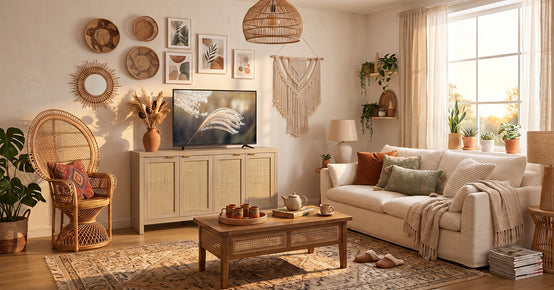
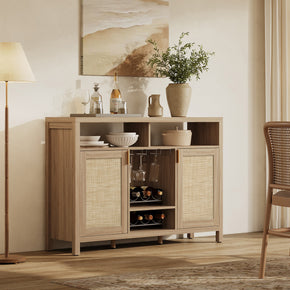
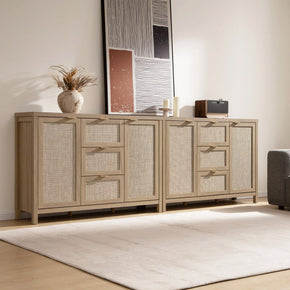
Burnt orange and terracotta don't get enough love when people are decorating around gray furniture. Walk through any home tour video on YouTube, and you'll spot these earthy oranges working overtime against gray walls and sectionals, but somehow the combination still feels like a secret. The reason it works comes down to how sun-bleached these shades actually are. Faded orange has built-in softness. A sharp tangerine doesn't. Hunter orange definitely doesn't. Both of those would scream against gray's cool undertones, but a dusty terracotta whispers instead. Easiest way to try this before committing? Buy two terracotta throw pillows. Throw them on your light gray couch. Wait two weeks. If the room feels warmer in the mornings, you've got your answer. Going bigger means a burnt orange rug pulled under a charcoal seating arrangement, which sounds dramatic on paper but mostly just makes the room feel like sunset got trapped inside. TheHelio glass-fronted sideboard fits this palette particularly well, since the glass front and lighter frame stop the warm tones from piling up too heavily on one side of the room.
9. Charcoal Black

Want your gray furniture to look like it was shot for a design magazine instead of pulled from a chain store? Add black. Not everywhere. Just enough. The trick is treating black like punctuation rather than a paragraph. Drop in a few black picture frames clustered on one wall. Set a slim black coffee table in front of your medium-gray sofa. Add a couple of black metal lamps on either side. Then layer two or three shades of gray throughout the rest of the space, plus a softer third neutral - cream or warm white or maybe soft taupe - so the whole thing doesn't read flat or one-note.
Black walls though? Different conversation. That's a real commitment, and it only pays off in rooms with high ceilings and serious natural light pouring through the windows. Most apartments end up feeling cave-like by sundown. For ninety percent of homes, treat black as an accent, not the main event.
10. Soft Cream and Ivory

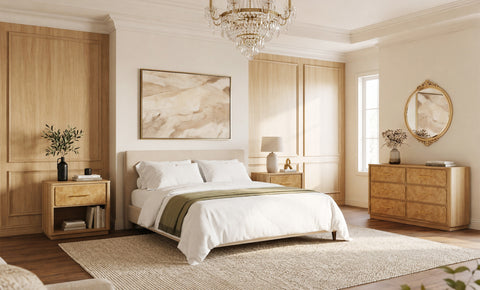
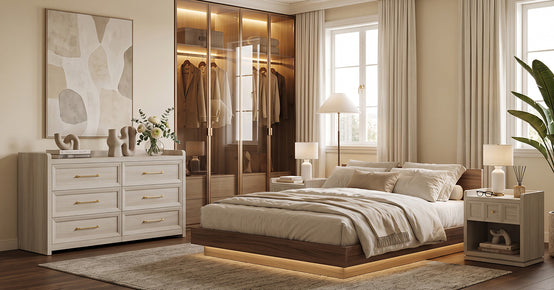
Last on the list, but not because anyone forgot about it. Cream and ivory are the colors people circle back to after trying every bolder option. The slight warmth in cream takes the edge off medium and dark gray furniture in a way pure white never quite manages. Gray with stark white can read clinical, like an Apple store had a baby with a hospital lobby. Cream softens all that. Bring it in through cream curtains, an ivory area rug tucked under the seating, and a few cream throw blankets draped casually over the back of the couch. TheCas modern 6-drawer dresser in a clean white finish pulls double duty here — real storage you need plus quiet reinforcement of that cream-and-gray palette across the bedroom.
Best Wall Paint Colors for Rooms With Gray Furniture
Choosing wall paint to pair with gray furniture tends to stump people more than the furniture itself does. Good news: a handful of shades come up in designer mood boards over and over, and they work in nearly any room. Warm whites are where most people start, and for good reason. Benjamin Moore Swiss Coffee. Sherwin-Williams Alabaster. Both of these read light and timeless without slipping into stark hospital territory. Greige is the next safe option (gray-beige hybrid shades like Sherwin-Williams Agreeable Gray) - cozy and warm without losing the neutral mood.
Want walls with more personality? Pale blue like Benjamin Moore Quiet Moments. Dusty green like Farrow & Ball Mizzle. Warm taupe like Benjamin Moore Revere Pewter. All three flatter gray furniture without competing. Rule of thumb: if your gray leans cool, balance with warm wall colors. If your gray leans warm, you've got flexibility either way.
Wall Colors to Avoid With Gray Furniture
When you're figuring out what color walls go with gray furniture, it helps to know which ones almost never work. A short list fights gray every time. Dark brown walls tend to make the room look muddy at first glance. Vivid purple, fuchsia, and primary red all feel a little juvenile or stuck in an earlier era. Peach with gray reads dated too, calling up old floral chintz prints that few people miss. Saturated orange is the obvious trap. A bright tangerine clashes with gray's natural coolness rather than working with it, whereas warm terracotta in the same family does the opposite. Black walls land in a different category. They genuinely work in a few specific cases, mostly rooms with tall ceilings and the kind of natural light that pours in all day, but the rest of the time, most average-sized rooms end up reading cave-like by evening. Safest path when you're stuck: keep the walls in a neutral range and let your accessories, textiles, and artwork carry the real color load.
How to Style Gray Furniture in Living Rooms vs Bedrooms

Living rooms lend themselves to bolder color pairings with gray furniture because the space is built for activity and conversation—a mustard armchair in the corner. A terracotta rug grounds the seating. One emerald green throw on the sofa. All earn their place in a gray-anchored living room. Layer in brass lamps, polished nickel hardware, or a small round mirror for subtle sparkle. Browse Sicotas's modern furniture lineup for additional storage and accent pieces that complement gray seating.

Bedrooms work the opposite way—with a softer, calmer color palette. Pair gray furniture with blush, sage, dusty lavender, or warm cream rather than the bolder colors that suit a busy living room. The point of a bedroom is a restful, sleep-friendly mood, so save saturated accents for small moments. A piece of art above the bed. A single throw pillow. The Sicotas dresser collection includes plenty of warm-wood options that bring genuine softness to a gray-toned bedroom.
FAQs
What color goes best with gray furniture?
The color that goes best with gray furniture, according to most working interior designers, is cream or soft white. Both shades pair with gray furniture across every undertone the color has, from the palest icy silver right through to deep charcoal. They've also held up through decades of changing design trends without ever feeling dated or tied to a specific era. Want something with a more visible personality? Blush pink, navy blue, and sage green each play well alongside gray furniture without throwing the rest of the room off balance.
What color walls go with gray furniture?
Soft warm whites, greige shades, and pale blue tend to be the most common dependable wall colors for rooms built around gray furniture. The pattern designers follow is straightforward when you break it down. Cool-toned grays look better against warmer walls like cream or taupe. Warm-toned grays come alive against cooler walls, such as pale blue or sage green. Skip dark brown, vivid purple, peach, and bright red entirely, since each of these tends to clash with gray in ways that pull the room into a dated decade.
What color throw pillows go with a gray couch?
The throw pillow colors that work best on a gray couch include mustard yellow, blush pink, sage green, navy blue, and terracotta. Layering two or three of these together with one patterned cushion creates visual depth across the seating area. Keeping at least one warm color and one cool color in the mix prevents the overall combination from feeling chaotic on the sofa.
What accent color goes with gray?
The right accent color for gray depends largely on the atmosphere you want in the room. Mustard yellow and burnt orange contribute warmth and visual energy to a space, whereas sage green and navy blue tend to create a calmer, more sophisticated mood. Blush pink and dusty lavender add softness, and metallic accents in brass or gold work effortlessly with every shade of gray.
Do gray and brown furniture go together?
Gray and brown furniture work together beautifully as long as their undertones complement each other. Warm-toned grays sit well alongside warm browns such as caramel, camel, or walnut. Cool-toned grays look better with deeper, cooler browns like espresso. Adding at least three distinct textures throughout the room helps the gray-and-brown combination feel intentional rather than mismatched.
Is gray furniture going out of style?
Gray furniture is not going out of style, despite the occasional trend forecast claiming otherwise. The category has remained popular in modern interior design largely because it adapts easily to different rooms and styles. What is shifting is the temperature of gray itself, with warmer variations like greige, taupe, and mushroom gaining ground on the cooler, starker grays from a decade ago.
What color rug goes with gray furniture?
Versatile rug choices for a room with gray furniture include cream, ivory, and light taupe, each of which warms the floor without overpowering the seating. Anyone wanting more visual drama in the space can choose a deep navy, charcoal, or rust-colored rug to ground the gray pieces with confidence. Patterned options in cream-and-blue, cream-and-rust, or muted Persian designs also work well, adding interest while staying respectful of the surrounding gray pieces.
How do you warm up a gray room?
Warming up a gray room takes a layered approach rather than any single fix. Wood tones do most of the heavy lifting, particularly when paired with brass or gold metal accents and woven natural fibers like jute or rattan. Warm color accents through mustard, terracotta, or caramel touches in throw pillows or art bring the temperature up further. Lighting plays a major role as well, so warm-toned bulbs spread across multiple fixtures usually matter more than a single ceiling light when keeping the room from feeling cold in the evening.
Sources
- Apartment Therapy. What Colors Go with Gray? 12 Bold Combos. Twelve real-home examples of color pairings with gray furniture.
- HGTV. 15 New Ways to Decorate With Gray. Designer-approved gray decorating ideas across rooms.
- Livingetc. 19 Combinations With Gray. Color pairings with gray, ranked by interior designers.
- Apartment Therapy. 12 Grey Bedroom Ideas. Real-home examples of gray bedroom color palettes.
- HGTV. 15 Chic Ways to Decorate With Slate Gray. Slate gray styling examples and pairings.
- Wikipedia. Gray. Background on the color gray, its undertones, and cultural meaning.


Looking for something else?

Furniture Materials Guide: Picking the Right Material Room by Room
LEARN MORE
How to Mix Wood Tones Without Making a Room Look Mismatched
LEARN MORE
18 College Apartment Furniture Ideas That Save Space and Money
LEARN MORE
Types of Entertainment Centers: 11 Designs and How to Pick One
LEARN MORELooking for something else?

Curio Cabinet Decor Ideas: How to Style a Display Cabinet Without the Clutter
LEARN MORE
Curved Furniture: How to Style, Measure, and Buy It in 2026
LEARN MORE
What Is Rattan Furniture? A Buyer Guide to Types and Care
LEARN MORE


Further reading

How to Choose a Nightstand for a CPAP Machine

How to Choose a Shoe Cabinet for Men's Sizes, High-Tops, and Bulky Shoes


