




16 Genius Awkward Living Room Layout Ideas for Any Shape
Picture the scene. You push the sofa against one wall. It blocks the doorway. You drag it to the other wall, but now the TV faces sideways, and the coffee table somehow ended up smack in the walkway. Sound about right? Every awkward living room has a version of that story. A floor plan that fights every furniture rule you’ve ever read. Here’s the thing nobody tells you up front, though. The fix isn’t a bigger room. It isn’t a brand-new sofa either. It’s just learning to work with the room you have, not against it. These awkward living room layout ideas come from designers who solve these rooms for a living, plus a few practical fixes from HGTV’s living room layout guide.
What Makes a Living Room Layout Feel Off?
Awkward rooms come in flavors. Sometimes the shape is the problem. A long rectangle. A slanted wall. That one weird column nobody asked for, and nobody can get rid of. Other times it’s the furniture you already own. Honestly, most of the time it’s both.
The usual suspects:
- Too many doors and walkways. They eat into the wall space you’d want for furniture.
- No clear focal point. The TV, fireplace, and windows all fight for the eye.
- Odd angles, columns, or sloped ceilings that don’t play nice with standard sofas.
- Out-of-scale furniture. A deep sectional in a 10x10 room. Tiny chairs are swimming in a long one.
- Traffic paths slice through the seating area, so conversation feels staged instead of natural.
Most fixes start with one question. What does this room actually need to do? Once you’ve got an answer, the layout falls into place faster than you’d think.
1. Anchor the Room With Your Largest Wall

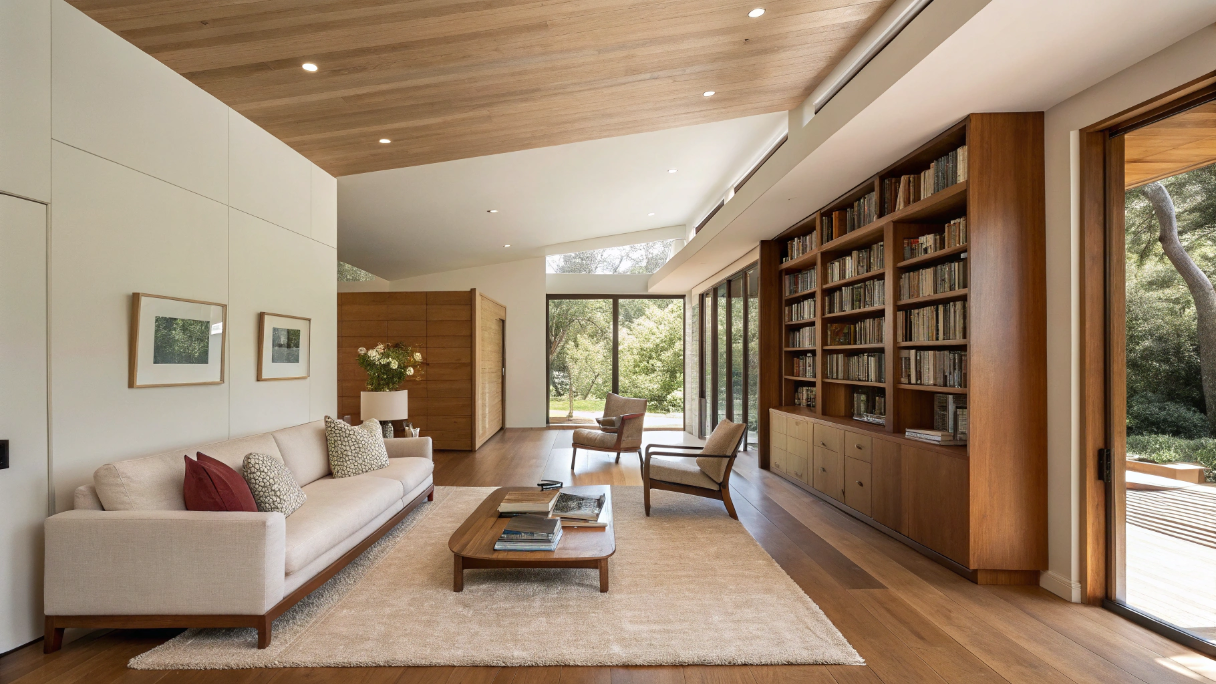
Step one: find your longest wall. That’s where the heavy piece lives—sofa, sectional, media unit, whichever one’s biggest. Everything else figures itself out from there. It’s the move designers default to when a room has three short walls and only one decent one. Anchor the room first, and the rest of the layout stops fighting you.
2. Float the Sofa to Create a Defined Seating Area

Sofa against the wall? That’s a habit, not a rule. Pull it out a couple of feet instead. Drop a rug under the front legs and slide the coffee table in front. Just like that, you’ve built a real seating zone where there wasn’t one before. Leave a 30-inch clear walking path behind the sofa so nobody knocks into your cushions on a coffee run.
3. Break the Room Into Two or Three Zones

Sometimes a weird room needs to stop being one room. Split it into two zones instead. A TV zone on one side, a reading or work zone on the other. Use rugs, lighting, or a sectional with its back to the wall to divide them. Smaller furniture wins here, by the way. The modern Sicotas living room collection is built around scale-friendly footprints, and that matters more than you’d think when you’re carving one space into two.
4. Use an Area Rug to Draw the Line

A rug is basically the cheapest wall money can buy. It marks a seating area without blocking sight lines or stealing square footage. Make it large enough for the front legs of every main seat to sit on it. That’s the rough rule. In tight or awkward rooms, two smaller rugs sometimes beat one giant one. And if your walls run at angles, try round or oval. The curves do something quietly nice for the room.
5. Choose Swivel Chairs for Split Focal Points

TV on one wall. Fireplace on another. The classic awkward standoff. Swivel chairs end the argument. Park them between the two focal points and let everyone pivot toward whichever one’s in use. In long, narrow rooms, swivels handle the daily mood swings too. TV at night. Conversation at Thanksgiving. Nobody has to drag furniture around to make it work.
6. Angle the Seating Instead of Squaring It

Perfectly square layouts look great in photos. They also waste corners. Turn the sofa or a pair of chairs at 30 to 45 degrees and watch the room open up. This trick works hard in rooms with a bay window, a diagonal fireplace, or any entry that doesn’t line up neatly with the seating wall. Sometimes the room’s shape is asking for an angle. Listen to it.
7. Let a Sectional Do the Dividing

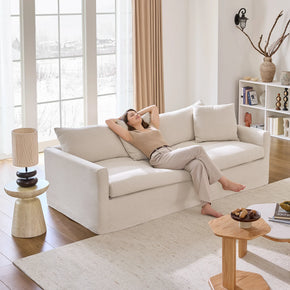
Think of a sectional with a chaise as a soft wall. Use the chaise end to slice a long room or open-plan space in half. Seating sits on one side. Dining or walkway flows around the other. Just watch the scale. Measure the wider dimension first. Leave three feet of clearance on the entry side. And whatever you do, skip the sectional that swallows the room. A piece that’s too big is worse than no piece at all.
8. Turn an Awkward Corner Into a Reading Nook

That corner you’ve been ignoring? Make it earn its keep. One armchair. A slim side table. A floor lamp. A small rug. Boom, reading nook. The main room can finally exhale. It’s not trying to do everything anymore. Conversation lives in the main zone. Quiet evenings live in the corner. Both feel like they were planned, not jammed in at the last minute.
9. Add Vertical Height With Tall Storage

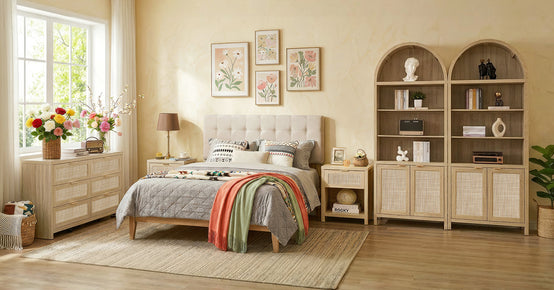
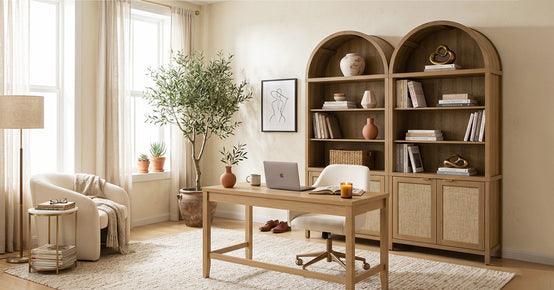
Storage problems aren’t always floor-space problems. Sometimes you just need to look up. A tall bookshelf uses wall space you weren’t doing anything with anyway. As a bonus, it lifts the eye in rooms that feel short or crammed. The Willow 75-inch-tall bookshelf was designed for narrow living rooms. Slim footprint. Full height. Real storage. Closed bins on the bottom (hide the mess). Open displays up top (show the good stuff).
10. Use a Slim Console Behind a Floating Sofa

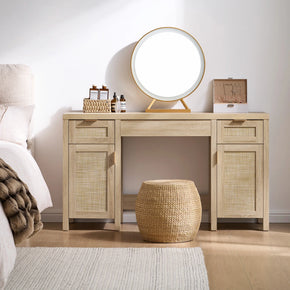
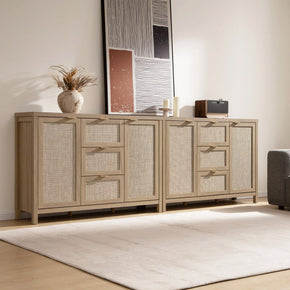
When the back of a sofa faces the doorway, the room can feel cut clean in half. A console table fixes that. It softens the back-of-sofa view, adds a surface for lamps and books, and quietly draws the line between seating and walkway—the Savanna console table with three drawers slides in nicely behind a floating sofa. You get drawer storage as a bonus. Add two table lamps, and the evening glow takes care of itself.
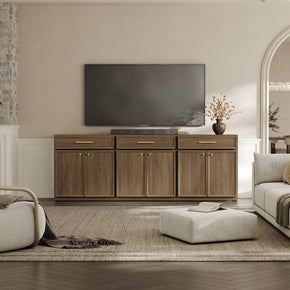
11. Mount the TV Above a Low Media Console

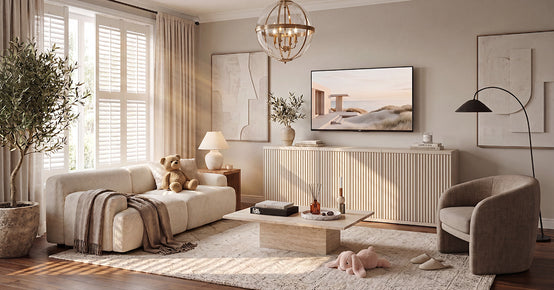
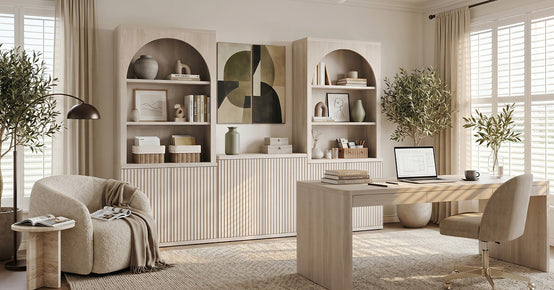
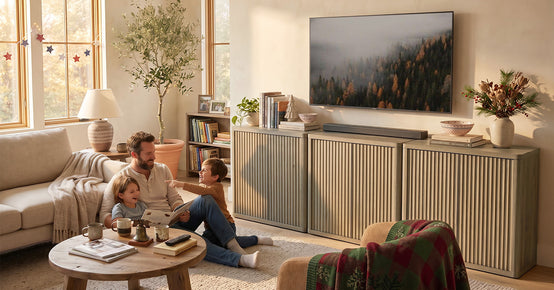
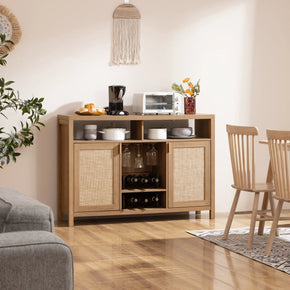
Wall-mounted TVs save floor space. But they leave a weird blank zone underneath if you don’t deal with it. A low media console fills that gap and balances the visual weight. The Stria sideboard cabinet with two doors works well for this. Clean lines, hidden storage for the cable mess, controllers, and the stack of stuff nobody wants to see. Keep the top simple. One lamp. One plant. A tray. That’s it.
12. Layer Lighting at Three Different Heights

One overhead light flattens a room. Awkward rooms can’t really afford to be flattened any further. Layer your light at three heights. Ceiling overhead. Table lamps at sitting level—a floor lamp in the dimmest corner. Floor lamps are clutch when you’ve got a tight corner that won’t fit a side table. Stick to warm bulbs around 2700K, too. Cool light makes weird rooms feel even weirder after dark.
13. Repurpose Closets, Niches, and Dead Nooks

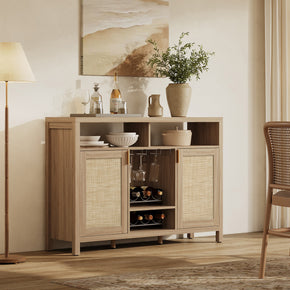
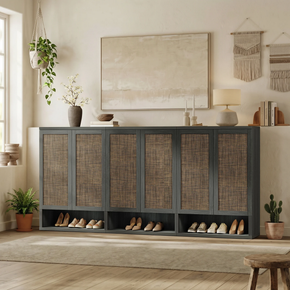
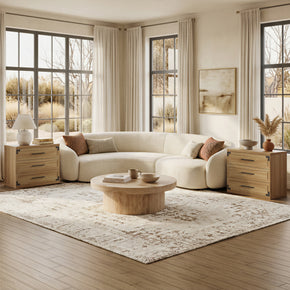
Old closets and wall niches get ignored because nobody knows what to do with them. So just do something. Take the closet doors off and build a mini home office. Or a coffee bar. Or just open shelving. A niche becomes display storage. The Helio decorative sideboard cabinet is a solid pick for shallow alcoves. Its slim depth actually fits in spots where bulkier accent cabinets stick out and make the wall look annoyed.
14. Pick Curved Pieces for Angled or Bow Walls

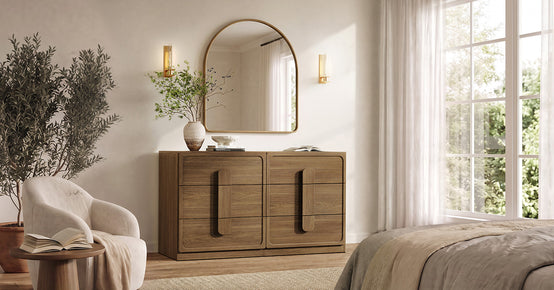
Bow windows. Rounded walls. Weird angles. Sharp furniture fights them. Curved furniture works with them. A round coffee table. A curved-back chair. A half-moon console. Suddenly,y the angles seem to relax. Bonus: you stop bumping your hip on sharp corners every time you cut through the room with a coffee in one hand and the remote in the other.
15. Style With the 3-5-7 Rule for Visual Balance

Group decor in odd numbers. Three. Five. Seven. Not four, not six. That’s the 3-5-7 rule, and honestly, it’s been around longer than design Instagram. Odd numbers just feel more natural to the eye than even ones. In a room with uneven walls or unbalanced corners, this little trick creates rhythm where the architecture refuses to give you any. Try it on a coffee table, a mantel, or a shelf. You’ll notice the difference inside a day.
16. Apply the 2/3 Rule for Better Proportion

Most “off-feeling” rooms have a proportion problem at their core. The 2/3 rule fixes it fast. Coffee table? Roughly two-thirds of the length of the sofa. Rug? Two-thirds of the seating area. Pendant light? Two-thirds the width of the table below it. None of these needs to be exact. Just close enough. Once the proportions click, the room stops looking accidental. It starts looking designed.
Where to Put the TV in an Awkward Living Room
TV placement is probably the single most-argued layout question in tricky rooms. The right wall isn’t always the pretty wall. It’s the one that lets people actually watch the show without glare, neck strain, or constant cushion-shifting.
What actually works in most homes:
- Aim for seated eye level. The screen’s center should land at the height of someone’s eyes while they’re sitting on the sofa, not standing in front of it.
- Watch out for window glare. If you can swing it, don’t put the TV directly across from a sunny window.
- Skip the “above the fireplace” default. It looks great in photos, but the viewing angle is usually too high for daily watching. Only do it if the seating distance softens the angle enough.
- Try a corner TV when a wall really works. A slim corner stand pairs well with angled seating in an oddly shaped room.
- Don’t stack the focal points. Spread visual weight across multiple walls so the room doesn’t feel front-heavy.
Before you drill anything, mark the TV outline on the wall with painter’s tape and live with it for a few evenings. Trust me, it's way easier than patching drywall later.
Common Living Room Layout Mistakes to Avoid
Bad layout will beat good furniture every single time. These five mistakes show up in almost every awkward room you find online:
- Pushing all the furniture against the walls. It makes the room feel flat and stretches your seats too far apart for natural conversation. Pull pieces inward instead.
- Blocking entry doors and walkways. The shortest path through the room should always stay clear. Anything less than 30 inches feels tight.
- Buying a sofa that’s too big. Oversized sectionals swallow small or awkward rooms whole. Measure twice. Depth matters as much as length.
- Using a rug that’s too small. A tiny rug under the coffee table makes the seating look disconnected. The rug should anchor the whole grouping.
- Letting two focal points compete. A TV, a fireplace, and a gallery wall on three separate walls is too much for one room. Pick one primary and let the others play backup.
Most of these cost nothing to fix—just a bit of patience with the furniture you already own. If you want a step-by-step layout method, HGTV’s floor plan and furniture layout guide walks through it well.
Quick Layout Checklist Before You Buy Furniture
Before you move anything (or click “add to cart” on a sectional with no return policy), run through this quick list:
- What’s the room’s main job? TV, conversation, reading, or all three?
- Where’s the natural focal point?
- Can you walk from every entry to every exit without zigzagging?
- Does every seat have a surface within arm’s reach?
- Does the rug actually touch every main piece of seating?
- Are the awkward corners doing real work? Storage, reading, lighting, plants, anything counts.
- Does the biggest piece sit on the biggest wall?
Final Takeaway

There’s no unfixable living room. Just rooms whose layout hasn’t been figured out yet. Awkward shapes, odd corners, weird walls. These aren’t problems to fight. They’re features to design around. Start with the function. Place the largest piece first. Let everything else fall in line from there. When you’re ready to swap in a few new pieces, the full Sicotas furniture lineup is built for real homes, not magazine spreads.
FAQs
How can I fix an awkward living room layout?
Honestly, the fastest fix is the boring one. Start with the function. Figure out what the room is actually for first. If it’s mostly a TV-watching space, your layout looks one way. If it’s for hosting friends or reading on slow Sundays, it’ll look completely different. Once you’ve got that nailed down, anchor the biggest piece against your largest wall, drop an area rug under the main seating, and keep at least 30 inches of clear walkway around it. Nine times out of ten, the awkward feeling just lifts once one major piece finally lands in the right spot.
What is the 3-5-7 rule in decorating?
It’s a styling shortcut that every interior designer eventually steals. Group decorative objects in odd numbers. Three. Five. Seven. Just stay away from fours and sixes. Odd groupings feel more natural and visually engaging than even sets, which is weirdly hard to explain but really easy to spot once you start noticing it. Try the rule on a coffee table or a mantle,l and you’ll see what I mean. It especially helps in awkward corners, where the architecture doesn’t offer any built-in balance to work with.
What is the biggest mistake in furniture placement?
Pushing every piece of furniture against the walls, hands down. Most people do it because it feels safer or because they think it makes the floor look bigger. What actually happens? The room feels flat. Conversation gets stretched across yards of empty floor space. Nobody really knows where to sit. Float the sofa even just a foot off the wall, pull a couple of chairs toward the center, and your seating area finally feels like a real one. Works in tiny rooms just as well as it does in big ones.
How do you use an awkward corner in a living room?
Give it a jo,b, and it stops being awkward. A tall floor lamp instantly fixes a dark corner. A potted plant warms up a cold one. A swivel armchair paired with a small side table turns the corner into a real reading nook. Even a slim accent cabinet works well if you’ve got bulk to hide. The only actually wrong move is leaving the awkward corner empty and hoping nobody notices.
How do I arrange furniture in a long, narrow living room?
Treat one room like tw—a TV zone on one end, a reading or conversation area on the other. Angle the sofa slightly so the eye doesn’t shoot straight down the room. That tunnel feeling is what makes long, narrow living rooms feel wrong in the first place. Each zone should have its own area rug and lighting. And whatever you do, don’t push the furniture flat against those long walls. That’s exactly what makes the room read like a hallway.
What size rug should I use in an awkward living room?
Big enough that the front legs of every main seat actually sit on it. That’s the rule designers tend to follow. If one giant rug feels off because of your room’s shape, go with two smaller rugs to mark separate zones instead. Round and oval rugs are quietly underrated for awkward living rooms with angled walls, bow windows, or any architecture that already has built-in curves. They soften the spacerather than compete with it.
Sources
The advice in this guide draws on designers whose work has shaped much of how modern interiors handle awkward rooms. Worth following any of them if you want to go deeper:
- Shea McGee, co-founder and chief creative officer, Studio McGee. Salt Lake City–based design firm; author of Make Life Beautiful and The Art of Home.
- Nate Berkus, founder and principal designer, Nate Berkus Associates. The Chicago-based interior design firm has been running since 1995.
- Bobby Berk, interior designer and television host, Bobby Berk. Best known as the design lead on Netflix’s Queer Eye, author of Right At Home.
- Amber Lewis, founder and principal designer, Amber Interior Design. LA-based studio; author of Made for Living and Call It Home.
- Kelly Wearstler, founder and creative director, Kelly Wearstler Studio. Los Angeles designer; AD100 Hall of Fame.
- Justina Blakeney, founder and creative director, Jungalow. New York Times–bestselling author of The New Bohemians.


Looking for something else?

Furniture Materials Guide: Picking the Right Material Room by Room
LEARN MORE
How to Mix Wood Tones Without Making a Room Look Mismatched
LEARN MORE
18 College Apartment Furniture Ideas That Save Space and Money
LEARN MORE
Types of Entertainment Centers: 11 Designs and How to Pick One
LEARN MORELooking for something else?

Curio Cabinet Decor Ideas: How to Style a Display Cabinet Without the Clutter
LEARN MORE
Curved Furniture: How to Style, Measure, and Buy It in 2026
LEARN MORE
What Is Rattan Furniture? A Buyer Guide to Types and Care
LEARN MORE


Further reading

How to Choose a Nightstand for a CPAP Machine

How to Choose a Shoe Cabinet for Men's Sizes, High-Tops, and Bulky Shoes


