




















How Tall Is a Nightstand? The Complete Bedside Height Guide
You use your nightstand more often than you realize—grabbing your phone in the morning, switching off the lamp at night, or reaching for that glass of water at 3 a.m. If it’s too low or too high, you’ll feel it every time. So, how tall is a nightstand, really? And what qualifies as a “standard” nightstand height? This guide explains everything—from functional comfort to aesthetic proportion—so you can find the bedside height that looks right and feels effortless.
When you’re ready to explore the perfect match for your space, visit the nightstand for sizes and styles designed around these exact principles.
The Short Answer: About 24 to 28 Inches Tall
The average nightstand height falls between 24 and 28 inches (61–71 cm). This range fits most standard beds and feels natural when reaching out from a lying or seated position.
If your bed is unusually low or extra tall, you’ll want to adjust the nightstand accordingly. The simplest rule:
The top of your nightstand should be level with the top of your mattress—or within two inches above or below.
This rule ensures easy access and balanced proportion. Anything significantly lower forces you to reach down; anything too tall looks imposing and feels awkward in use.
How Tall Is a Standard Nightstand?

A standard nightstand typically measures about 25 inches tall—perfect for most mattress heights in the 24–27 inch range.
- Low platform beds: Best paired with nightstands around 20–24 inches tall.
- Standard beds: Work well with 24–28 inch nightstands.
- High beds with box springs or thick toppers: Need taller tables, around 28–32 inches.
The goal isn’t just visual alignment; it’s ergonomic comfort. You want to reach sideways, not up or down, when grabbing something.
Why Nightstand Height Matters
Comfort. The right height makes bedtime effortless—no shoulder strain or spills. You can grab a book or glass without lifting or dipping your arm.
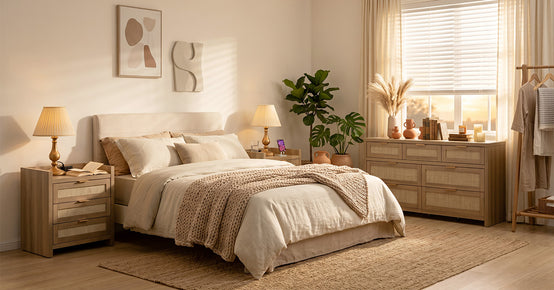
Balance. A nightstand that aligns with your mattress looks cohesive and intentional, anchoring your bed visually in the room.
Design. Height affects how your lamp, headboard, and wall art interact. Proper proportion creates that “designer” symmetry even if the pieces aren’t identical.
Safety. Lower nightstands increase the chance of knocking things over in the dark, especially if the surface sits below mattress height.
How to Measure the Perfect Height for Your Bed
- Measure the bed height. From the floor to the top of your mattress, not the frame. Include toppers or protectors—they add real inches.
- Note the number. That’s your reference for selecting or adjusting a nightstand.
- Match the surface height. Choose a nightstand that aligns or sits one inch higher than the mattress top.
- Check for balance. If you have a tall headboard or thick bedding, a slightly higher nightstand looks more natural than one that sits below the mattress line.
The beauty of this rule is its simplicity—it works for any bed style, from sleek platform to plush upholstered.
How Tall Is a Nightstand Supposed to Be Compared to the Bed?

Ideally, the nightstand top should align with the top of your mattress, or sit just above it by about one inch. Designers favor slightly higher tables because you’ll reach sideways rather than down.
If you’re going for a modern, minimal aesthetic with a low platform bed, a shorter nightstand is fine—just make sure the lamp still aligns with your seated eye level.
For extra-tall beds, a 30-inch table can look elegant, especially if it comes with multiple drawers or an open shelf for visual balance.
What About Nightstand Lamps?
Height relationships extend to lighting too. Many people ask not only how tall is a nightstand, but also how tall should the lamp be?
The answer is about ergonomics and proportion.
- Lamp height: Typically 24–30 inches, depending on your nightstand.
- Shade position: When you’re sitting up in bed, the bottom of the shade should be at or slightly below your eye level.
- Total combined height: From floor to top of lamp, aim for 58–64 inches.
This combination prevents glare and casts even, flattering light for reading or winding down.
If your nightstand is tall, choose a shorter lamp to keep the total height in harmony. If your table is low, go for a taller lamp to elongate the composition.
Floating and Wall-Mounted Nightstands
Floating nightstands—those attached directly to the wall—follow the same height principle. Mount them so the top surface is level with your mattress height or about an inch higher.
The advantage of floating designs is flexibility: they save floor space and let you mount lighting or cords exactly where you want. Just remember to measure before drilling. Tape the outline on the wall and test reach from bed to make sure it feels intuitive.
If you pair floating nightstands with wall sconces, position the sconce 55–65 inches from the floor, or with the shade bottom near your seated eye level.
Balancing Height with Headboard and Wall Decor
Think of your bed, nightstand, and lamp as one vertical composition. The eye reads it as a stack: mattress, table, lamp, wall. The key is to keep that rhythm gentle.
A nightstand that reaches about one-third to halfway up the headboard feels grounded but not bulky. If it’s much shorter, the headboard overwhelms it. If it’s taller than halfway, it competes for attention.
Your wall art or sconce should start a few inches above the lamp, continuing that upward flow. This balance is what makes bedrooms in magazines look calm and cohesive.
Common Nightstand Height Mistakes (and How to Fix Them)
1. Too low for the bed: If your table sits well below the mattress, it’s both uncomfortable and unsafe. Add a small platform base or switch to a taller model.
2. Too tall and bulky: A high nightstand can feel intrusive and overpower your bedding. Choose a shorter table or lower lamp to visually bring the setup down.
3. Inconsistent pair: If you use mismatched nightstands, keep their tops within about two inches of each other. Matching lamp heights will unify them instantly.
4. Lamp glare: A lamp that’s too tall for the nightstand shines directly into your eyes. Lower the lamp or use a deeper shade.
Design Considerations by Bed Type
Platform or low-profile bed: Choose a sleek, low nightstand (20–24 inches). The design should mirror the bed’s minimal aesthetic—think floating shelves or slim drawers.
Standard framed bed: A classic 25–28 inch nightstand fits almost universally. Pair it with a lamp around 26 inches tall for proportional symmetry.
Upholstered or canopy bed: These often sit higher. Opt for a nightstand 28–32 inches tall so your hand lands naturally on the tabletop.
Adjustable or smart bed: If you frequently raise the head, consider a slightly taller table—around 1–2 inches above the mattress when flat—to keep it accessible in all positions.
How to Shop for the Right Height
When browsing online, check the overall height listed in product details, and note whether it includes decorative tops or raised rails. Some models feature a lip or gallery edge that adds half an inch to the listed number.
If you’re unsure between two heights, err on the higher side. Reaching sideways and slightly up always feels better than dipping down.
Before checkout, confirm other dimensions—width, depth, and drawer configuration—to ensure proportions stay balanced in your room.
For reference, most designs in the nightstand include options across all common height categories, so you can pair them seamlessly with any bed frame.
Frequently Asked Questions
How tall is a nightstand on average?
Most nightstands measure 24–28 inches tall, aligning with standard mattress heights.
How tall is a standard nightstand in modern homes?
Around 25 inches, which suits most beds between 23 and 27 inches high.
How tall is a nightstand supposed to be compared to the bed?
Level with your mattress top, or up to two inches higher for easier reach.
Do both sides of the bed need nightstands of the same height?
Ideally yes, but you can mix shapes or finishes as long as the tops sit within two inches and the lamps are visually balanced.
Should the lamp be taller or shorter than the nightstand?
The lamp should bring the total floor-to-top height to about 60 inches for perfect bedside proportions.
The Takeaway: Comfort Meets Design
So, how tall is a nightstand? The short answer is whatever height matches your mattress—usually between 24 and 28 inches. But the longer answer is about balance: a height that aligns with your bed, supports easy reach, complements your lamp, and grounds the design visually.
Choose thoughtfully, and your nightstand won’t just hold your essentials—it will complete your bedroom’s flow.


Looking for something else?

20 Small Media Room Ideas for a Cozy, Space-Smart Setup
LEARN MORE
18 Jewelry Storage Ideas for a Tangle-Free Collection
LEARN MORE
10 Coffee Table Alternatives That Work Better in Small Living Rooms
LEARN MORE
15 Home Theater Furniture Ideas That Make a Room Work
LEARN MORELooking for something else?

Open vs Closed Floor Plan: Which Layout Suits Your Home?
LEARN MORE
Whitewashed Wood Furniture: Getting the Finish Right at Home
LEARN MORE
18 Accent Table Decor Ideas That Work in Real Rooms
LEARN MORE


Further reading

How to Choose a Dresser for Sweaters, Denim, and Bulky Clothes

Adjustable vs. Fixed Bookcase Shelves: Which Is Better for Real Storage?


