





Sectional Sofas for Open Concept Living Rooms: Layout Rules That Work
Anyone who has lived in an open concept floor plan past the move-in honeymoon knows the catch. This guide walks through how to lay out a sectional sofa in an open concept living room, so the space feels zoned and intentional instead of one big undefined room. The layout sells itself on freedom and natural light. Then you try to furnish it and realize nothing in the room is telling your couch where to go, nothing's telling your eye where the living area starts, and every piece of furniture is doing two jobs at once.
The fix is a properly sized sectional sofa. Get sizing and placement right, and the sectional becomes the wall that the open floor plan took away. Get it wrong, and the layout collapses into armchairs floating like strangers at a bus stop.
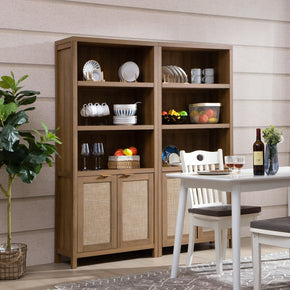
What follows is a working set of rules for sectional sofas in open-concept living rooms. To support these layouts, theSicotas modern living room furniture edit includes storage pieces that pair well with most of them.
Why a Sectional Works in an Open Concept Layout

A sectional in an open concept space does three jobs at once. Seating, room divider, and visual anchor for the entire living zone. That's why most designers start the open-concept living room layout with the sectional before they pick a coffee table or roll out a rug.
Wikipedia's entry on open-plan design defines the residential version as eliminating the barriers (walls, doors) that traditionally separated the kitchen, dining area, and living room into a single great room. Nice in theory. The catch is that those same walls were doing the quiet work of telling your eyes where one zone ends and another begins. Take them out, and the living area technically still exists, but visually it's nowhere to be found. A sectional puts the zoning back in without putting the walls back up.
How to Choose the Right Sectional Size and Shape
L-shaped sectionals: best for medium open spaces

An L-shaped sectional works in roughly nine out of ten open layouts under 400 square feet, full stop. The shorter arm faces whatever is on the other side of the living zone. The longer arm runs along the back wall or window. Two sides of seating, one open mouth pointing into the room. The shape does most of the room zoning work for you.
Go with an L-shaped sectional if your living zone is rectangular, there's one clear focal wall, and you want as much open floor as possible for a coffee table and area rug.
U-shaped sectionals: best for entertaining-heavy households

A U-shaped seat can accommodate seven or eight people and creates a genuine conversation pit feeling. It's a commitment. You give up some openness for a stronger sense of room. Worth it for households that host Sunday dinners. Wrong fit if your weeknight reality is takeout and a screen.
Use a U-shaped sectional if: the room is at least sixteen feet wide and the TV isn't the primary focal point.
Modular sectionals: best for layouts that may change

Modular sectionals are basically the LEGO version of upholstery. Each seat is its own piece. The pieces clip together however you want and come apart just as easily when life changes—renting, moving, expecting a kid, switching the chaise side. Modular handles it. Trade-off is honesty: visible seams between modules read slightly stiffer than a fixed-frame sectional.
Use a modular sectional if you rent, you move every few years, or you don't yet know how the room will be used in five years.
Where to Place the Sectional in an Open Layout
Float the sectional, don't push it against a wall.

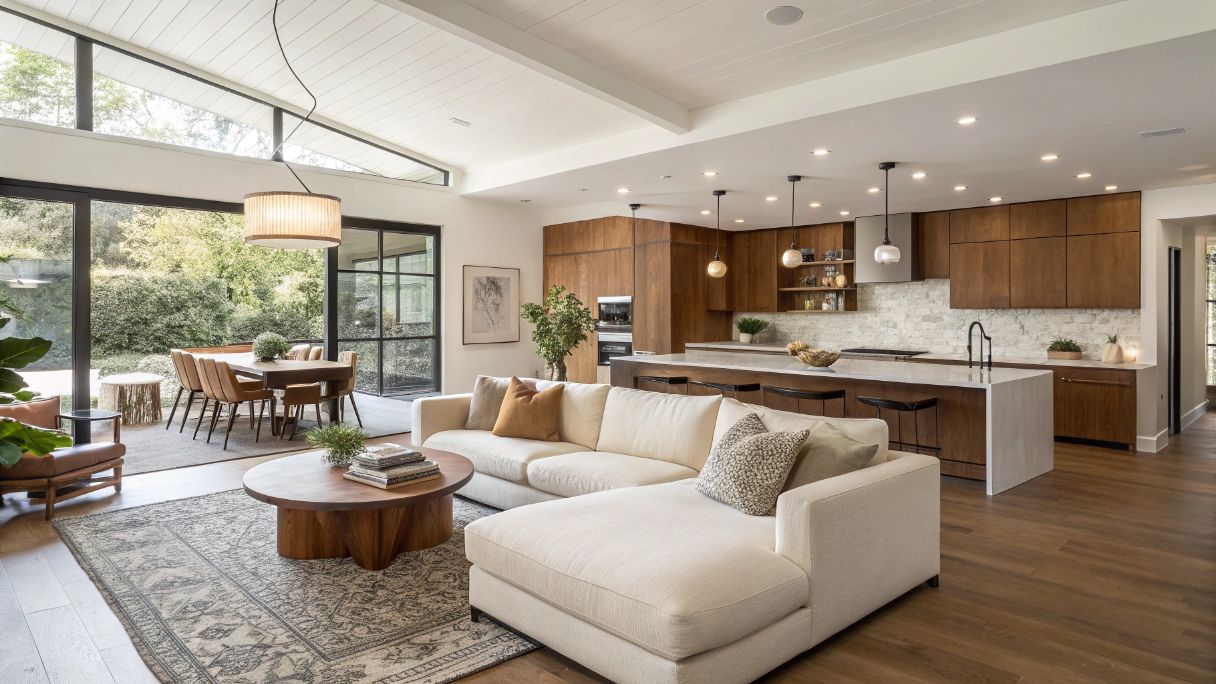
Stop shoving the sectional flat against the wall. Of every rule people break in open concept living rooms, this is the one. The sectional shouldn't sit flush against a wall, it should float out in the middle of the living zone. The wall's already pulling its weight. So give the sectional a different job: let it stand in as a fresh wall through the center of the room. Drag it out three or four feet, leave about 30 inches behind for people to slip past, and now the back of the sofa is what separates the living zone from whatever sits beyond it, maybe a kitchen island, maybe a dining table, maybe a hallway.
Add a console or sideboard behind the sofa.

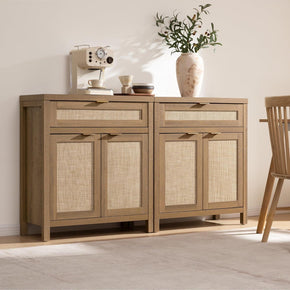
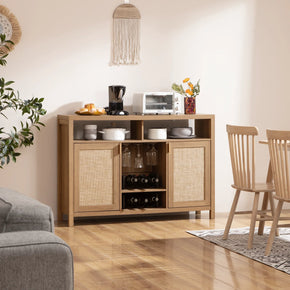
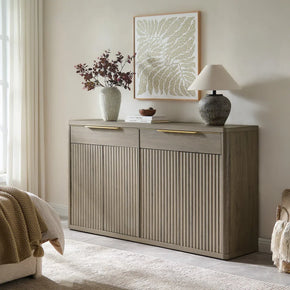
The minute you float the sectional, its back is exposed. Looks like the back of a sofa, which is to say not great. Fix it with something long and low behind the sofa. That piece tucks the cords out of sight, hands a lamp a spot to live, and quietly splits one zone from the next. TheSavanna sideboard with three drawers and two doors comes in at that standard 30-inch height that just works behind a sofa. Low enough to clear the back of the sectional, but tall enough that it still reads as a real piece of furniture.
Anchor the sectional to the longest light source.

Walk into the room and find the wall with the most glass in the windows. That's your light source. The long arm of the sectional wants to run parallel to that light rather than face it. Point it straight at the windows and you'll get glare on the TV, glare on whatever you're reading over on the chaise, and half the sectional sitting in shadow while the other half bakes in a sunbeam. Parallel to the light puts daylight on the seating from the side.
Pair the Sectional With Storage to Define the Living Zone
A long credenza along the focal wall

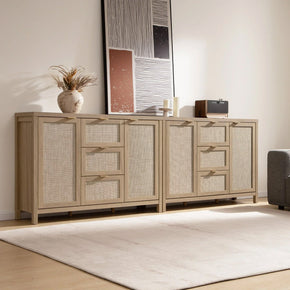
The wall the sectional faces is the focal wall, and it does heavy lifting in the living zone. TV, speakers, books, family photos. A tall, single TV stand breaks up the wall. A long, low credenza spans it and reads as one composition. The Zura modular nine-drawer dresserserves as the credenza here. Nine drawers absorb the board games, the gaming controllers, and the box of cords nobody remembers buying.
A console table between the living and dining zones

Between the living zone and the dining area is where most open concept rooms get sloppy. You can feel it walking through. A console table on that transition draws the line. Pick something narrow (12 to 16 inches deep), roughly the length of the dining side of the sectional. The Sicotas console and accent table collection has pieces sized for this transitional—style, simple: one lamp on each end, one ceramic in the middle.
A horizontal dresser as the TV stand

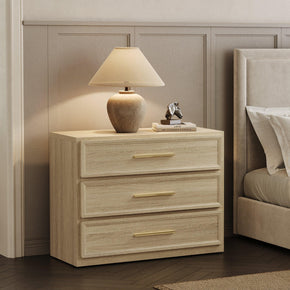
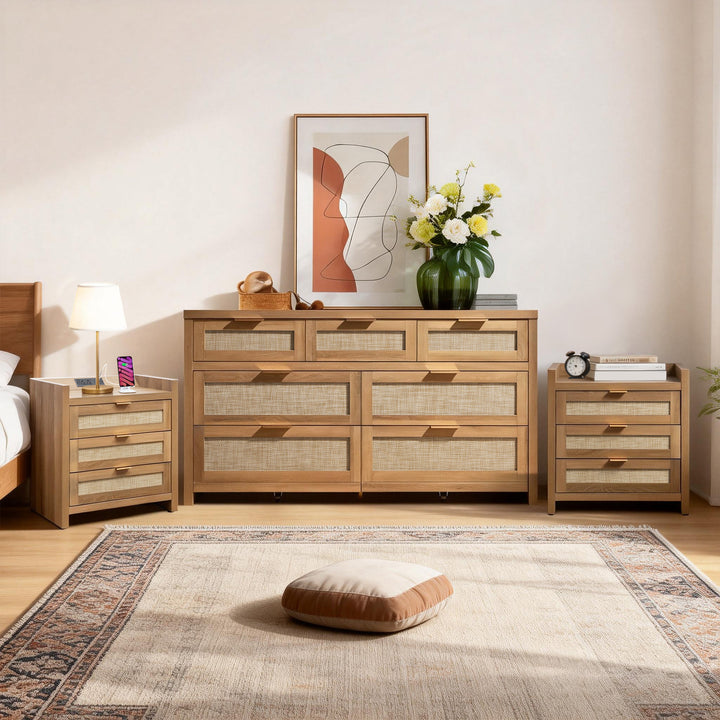
Most pieces sold as "TV consoles" don't hide that they're TV consoles: generic black, vented backs, fake cable-management cutouts. You can do better. A low horizontal dresser does the same job and looks like real furniture. The Savanna six-drawer dresser is the right height for most TV sizes and reads as a piece of furniture in its own right.
Lighting, Rugs, and Curtains That Reinforce the Zone

Rug first, and it has to be big. The front legs of the sectional go on the rug, every time. Not just under the coffee table. A 5-by-7 rug under a 110-inch sectional looks like a postage stamp dropped on a doormat. Most open-concept living rooms need a 9-by-12-foot rug at the very least.
At least three light sources in the living zone, and none of them overhead. Overhead is the worst light in any room. A floor lamp at the open end of the sectional, a table lamp on the credenza, plus sconces or a second floor lamp over in the opposite corner.
Curtains: only if the room's got a long window wall. If it does, run one ceiling-mounted track across the whole wall instead of separate rods for each window. That unbroken fabric makes the wall behind the sectional feel finished.
Common Mistakes in Open Concept Sectional Layouts
Pushing the sectional against a wall

The mistake that holds back many open-concept living rooms. Brand new space, no walls, endless possibilities, and then everyone reflexively shoves the sectional flat against the longest wall like it's 1995. Getting the sectional layout in an open concept living room right starts with breaking that one habit.Push the sectional against the wall, and you've recreated a traditional living room with one enormous doorway to a kitchen.
Buying a sectional that's too small
The sectional's competing for attention with the dining table, the kitchen island, the windows, and a whole lot of empty floor. A small loveseat-sized sectional just reads as furniture stranded in a parking lot. Rule of thumb: 110 inches minimum on the longest side in any open concept living zone over 350 square feet.
Skipping the entry storage

In an open layout, the front door and the living area flow together, since there's no hallway separating them. You know how it goes. Coats slung over the arm of the sectional. Shoes heaped up by the kitchen island. That one tote bag nobody's touched since Tuesday. Put a single piece of storage by the door, and most of that mess just disappears. TheCas black shoe cabinet barely takes up any floor space and holds the shoe pile for two adults without a problem.
FAQs
Where should you place a sectional sofa in an open-concept living room?
Float it. Take it off the wall and sit it in the middle of the living zone, back of the sofa turned to whatever's behind, the kitchen, the dining table, the hallway, take your pick. Here's the thing nearly everyone gets wrong: they slam the sectional flat against a wall and call it done. That leaves a hollow, dead patch in the middle of the room. A floating sectional sofa does the opposite. It pulls the whole living space in around it.
How big should a sectional be for an open concept room?
Honestly, you're gonna want it big. Way past whatever number feels safe in your head. The second your room goes over 350 square feet, the long side has to be 110 inches or more, full stop. And look at what it's fighting for attention with. A dining table hogs one end, a kitchen island takes the other, and there's this big empty floor running straight down the middle. Put a small sectional in there and it basically vanishes. Walk in the door and it'll read like someone left a kid's chair sitting in a ballroom.
What goes behind a sectional sofa in an open concept layout?
Something long and low. A sideboard or credenza around 30 inches tall is the sweet spot, low enough to tuck under the back of the sofa instead of looming over it. One piece, three jobs: it swallows up your cords, gives a lamp somewhere to sit, and quietly marks where one zone stops and the next begins.
Should a sectional face the kitchen or the TV?
The TV, usually. Just keep the kitchen in peripheral view from the main seat, since it's the social anchor in an open layout. An L-shaped sectional sorts this out almost by accident.
Can you split an open concept living room with a sectional?
You can, and it's one of the big reasons designers grab one. The sectional acts like a soft wall, dividing the space without creating a real barrier. Light still moves right through.
What size rug should go under a sectional in an open layout?
Big enough that the sectional's front legs land on the rug. For most open-concept living rooms, that's a 9-by-12-foot rug at the very least. Go smaller and the whole zone reads like an afterthought.
Is an L-shaped or a U-shaped sectional better for an open concept space?
L-shaped suits most open layouts under 400 square feet, especially when there's a clear TV focal wall. U-shaped is for rooms over 400 and households that entertain every week. Mostly TV: go L. Dinner-party room: go U.
Sources
Designers and references behind this guide:
- Sarah Richardson, Sarah Richardson Design. Toronto. HGTV designer (Sarah's House, Sarah's Cottage). Multiple home and decor book titles.
- Mark D. Sikes, Mark D. Sikes Inc., Los Angeles. AD100 designer. Books: Beautiful, More Beautiful, Forever Beautiful.
- Thom Filicia, Thom Filicia Inc., New York City. Queer Eye alum. AD100. Books on American style.
- Heidi Caillier, Heidi Caillier Design. Seattle and San Francisco. AD100. Featured in Architectural Digest, Wall Street Journal, Homes & Gardens.
- Leanne Ford, Leanne Ford Interiors. Pittsburgh. HGTV's Restored by the Fords. Author of Work in Progress.
- Jeremiah Brent, Jeremiah Brent Design. New York and Los Angeles. AD100. TLC's Nate & Jeremiah by Design. Author of The Space That Keeps You.




Stay In The Know
Expert advice. Very good deals. The absolute best (and worst) things we've tested lately.
Looking for something else?
How to Arrange Outdoor Furniture for Better Flow and Conversation
LEARN MORE
What Is Faux Leather Made Of? Materials, Types, and Care
LEARN MORE
Can Any Mattress Work With an Adjustable Bed?
LEARN MORE
California King Bed Size: Complete Dimensions, Chart & Buying Guide
LEARN MORERead more from Blogs
Looking for something else?
How to Steam Clean a Couch at Home Without Wrecking It
LEARN MORE
Best Vase for Tulips: A Florist's Honest Guide to Shape, Height, and Styling
LEARN MORE
41 Small Outdoor Living Spaces Ideas to Transform Even the Tiniest Patio
LEARN MORERead more from Blogs
You may also like


Further reading
Sectional Sofas for Open Concept Living Rooms: Layout Rules That Work

21 Contemporary Interior Design Ideas to Transform Your Home in 2026


