




9 Rectangular Long Narrow Living Room Layout Ideas That Actually Work
Long narrow rooms turn up everywhere. Railroad apartments, built and additions, colonial houses where the living room runs front to back. Most people try the same thing first because it's what a living room is supposed to look like: sofa against the longest wall, coffee table in front of it, two chairs nearby. Six months later, they still feel like something is wrong. Here's what's actually rectangular: a long, narrow living room layout doesn't need a renovation. It needs a plan. The nine draw on low-pull from real apartment makeovers and the kind of floor plans nobody warns you about. For more inspiration, Apartment Therapy keeps a solid run of designer-approved long living room layout ideas.
Why a Long Narrow Living Room Feels So Tricky
Most people blame the room. The room is fine. The setup is what's broken. A regular sofa-plus-two-chairs-plus-coffee-table arrangement works beautifully in a square living room. Drop the same furniture into a 12-by-24-long, narrow living room, and the whole thing falls apart. The chairs are too far from the sofa for anyone to hear each other. A walkway slices through the seating. Half the floors are sitting empty while the other half feels packed.
Most narrow rooms come loaded with obstacles,s too. Doors at both ends. A fireplace off-center (always). French doors out back. A kitchen pass-through cuts one wall in half. Designers who work on this kind of layout converge on the same answer. Stop fighting the length. Divide what you've got into zones.
9 Layout Ideas for a Rectangular Long Narrow Living Room
Nine layouts. Each one fits a different shape of narrow room. Read all of them before you commit; the right one might not be the one you'd guess.
1. Linear Sofa Layout With a Clear Side Path

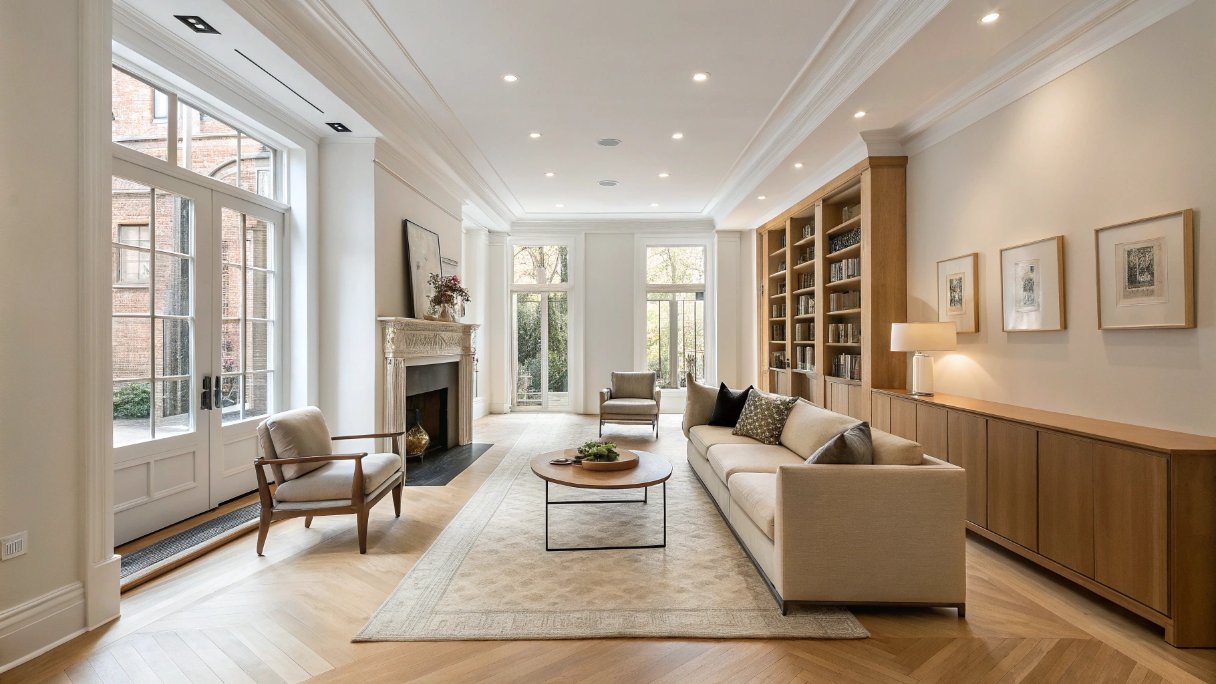
The easiest fix is to run traffic flow through your room. You push the sofa flat against one long wall, put the focal point (TV, fireplace, whatever you're anchoring the space around) on the wall directly opposite, and leave 30 to 36 inches of walkway along one side. Seating stays tight enough for conversation. The walkway stays clear of the TV. This is what most railroad-style apartments end up with, and pass-through living rooms, too. Oversized armchairs don't belong here. A slim coffee table or two small nesting tables will outperform anything bulkier.
2. Floating Sofa With a Console Table Behind It

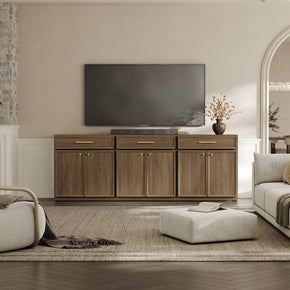
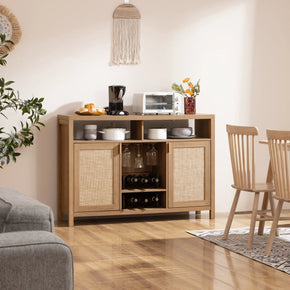
This is the move that changes everything. You pull the sofa away from the wall, let it float in the middle of the room, and slide a narrow console table against the back. Three things happen at once. The tunnel effect goes away. You've created a soft visual divider without putting up an actual wall. The console gives you somewhere to set lamps. Have a look through the Sicotas console table collection for narrow, low-profile options at sofa-back height. The space behind the console becomes useful real estate. A walkway. A desk corner. A reading nook. Open-plan rooms where the living area bleeds into a dining space benefit the most.
3. L-Shaped Sectional Tucked Into One Corner

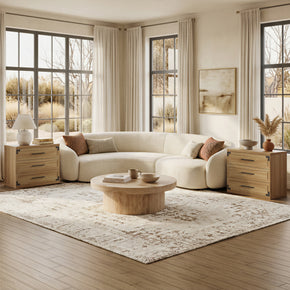
Slim-profile L-shaped sectionals work in narrow rooms. The long side hugs your long wall. Short side fits a short wall. That awkward,d dead corner everyone leaves alone? Now it's seating. Skip deep or overstuffed models; they take up too much floor space. For the coffee table, round or oval shapes fit nicely into the open part of the L, and the curves play well with the angle. Your opposite long wall stays totally clear for art, a media console, or shelving.
4. Split-Zone Layout: Living Area Plus Reading Nook

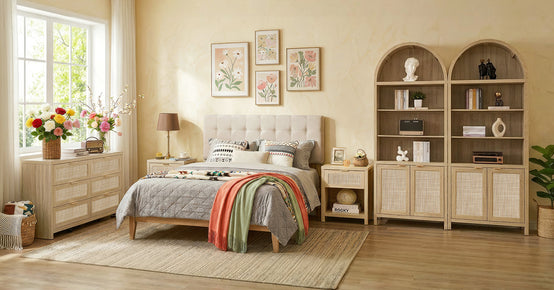
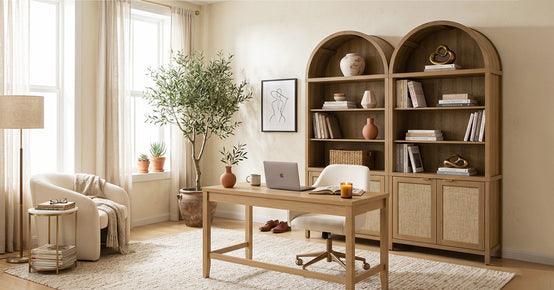
If the room is long, split it. Half the floor is devoted to the main seating area: a sofa, a coffee table, and a TV. The other half becomes a smaller zone, which can be almost anything. Two armchairs and a side table. A desk. A single comfy chair next to something tall. The second zone needs a vertical anchor to keep from looking like an afterthought, which is where the Savanna arched rattan bookcase earns its keep. Pulls the eye up. Gives you storage. Doesn't eat the floor space you need for walking. Two different rugs mark where one zone ends and the other begins. Right call for any room 20 feet or longer.
5. Centered Conversation Group Away From Walls

Floating everything sounds extreme,e but in the right room it's the cleanest solution. You pull the sofa, two chairs, and a coffee table into the room, leaving the sides empty as walking paths. The furniture becomes an island. Walkways flank it on both sides. The catch is the width. You need 24 inches of clearance on each side, which usually means a room around 12 feet wide. One large area rug under everything ties the group together. Works beautifully when the room has a natural focal point at one end.
6. Width-Wise Sofa to Cut the Tunnel Effect

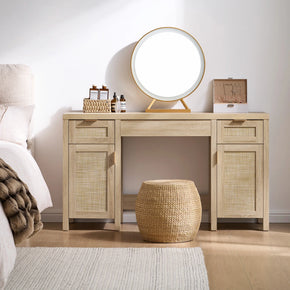
Most people never even think to try this. Instead of running the sofa along a long wall, you turn it sideways and place it across the width of the room. The sightline shifts completely. Side walls feel pushed apart, and the room reads wider than it is. A Savanna 3-drawer console table behind the sofa offers a spot for lamps. Whatever fits behind the console becomes the back half of the room. Desk. Credenza. A slim bench. Sofa length matters more than usual here; anything over 80 inches in a 12-foot-wide room looks squeezed. Right move for rooms that feel like hallways or rooms.
7. U-Shape With Seating Along Three Walls

Three pieces, three walls, one open side. A standard sofa anchors the longest wall. A loveseat or pair of chairs sits perpendicular on a second wall. A long bench or second loveseat closes the U on the third. Small round coffee table in the middle. Seating count goes up to four or five comfortably, conversation works because everyone's facing each other, and the center stays open. Watch the height of every piece. Tall furniture inside a U-shape boxes the room in fast. Shines in small railroad-style apartments with one doorway.
8. Multi-Zone Layout: Living Plus Dining or Workspace

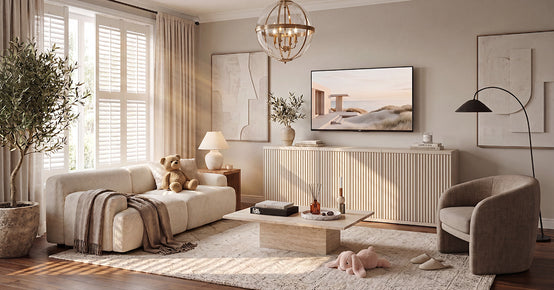
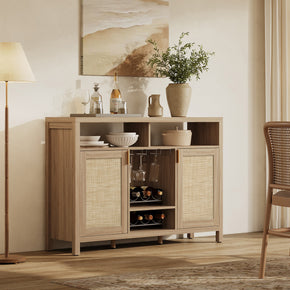
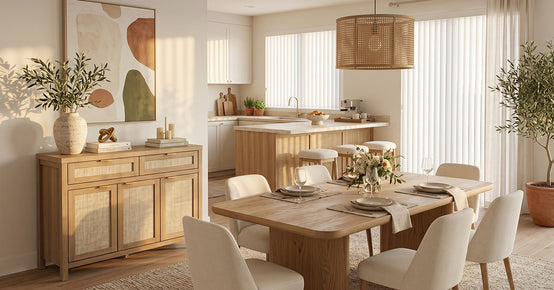
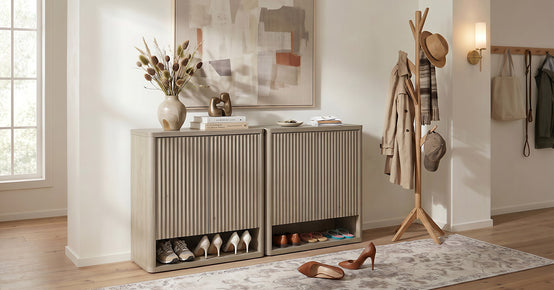
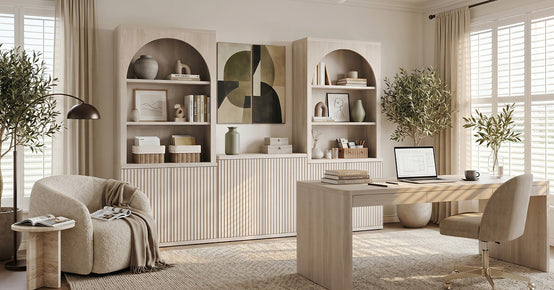
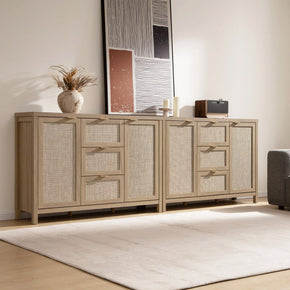
Past 24 feet of length, stop trying to make the space one room. Treat it as two. Main seating lives at one end. The other end gets a job: dining table, workspace, game table. The visual break between zones is where the Stria 2-door storage sideboard earns its keep. Adds closed storage to these rooms, creating a lack and a clean dividing line without blocking sightlines. Each zone gets its own area rug. Pendant lighting over the dining or work zone. Table lamps over the seating side.
9. Symmetrical Twin-Sofa Conversation Layout

Two matching sofas across a long coffee table, both perpendicular to your long walls. Symmetry is underused in narrow spaces. The mirrored pair pulls your eye into the center rather than letting it race to the back wall. Anchor one end with a side table or armchair. The opposite end usually faces a fireplace or media wall for a built-in focal point. Wa, check the scale though. Two 72-to-78-inch sofas suit a 12-to-14-foot-wide room better than two 90-inchers. Reach for this in formal rooms or anywhere a focal point of attention is needed.
Furniture Placement Rules That Make a Narrow Room Work

Picking your layout is part of it. The rest comes down to spacing once the furniture is in place. Three measurements do most of the work.
Walkways: Aim for 30 to 36 inches
Around 30 inches works for any walking path, though 36 feels better if you have the space. Once your walkway dips below 30, guests start twisting sideways to slip past the sofa. Most narrow rooms can't give 30 inches on both sides of the sofa anyway. So one side becomes the real walking path. The other gets blocked off with something pretty, maybe a fiddle leaf in a planter or a chunky woven basket.
Coffee Table to Sofa: 14 to 18 inches
Between your sofa and the coffee table edge, the fall distance is between 14 and 18 inches. Knees hit if it's closer. Drinks become a they're if it's further. Round and oval shapes outperform rectangles here, with no corners to catch a shin walking past.
Mixed Seating: Keep Heights Within 4 Inches
All seat heights should stay within 4 inches of each other. So your sofa, accent chairs, and any ottoman doubling as seating sit in the same range. Sofas usually run 17 to 20 inches off the floor. Pair anything significantly tall, er, or shorter, and somebody always ends up looking up at somebody else.
Visual Tricks That Make a Narrow Room Look Wider

Going vertical with storage is the fastest visual trick. The Willow 75-inch-tall bookshelf draws your eye upward and away from how far the floor stretches. Color works similarly. Long walls go lighter than the short end walls, and the room visually shortens. A mirror opposite a window pushes daylight deeper into the space than you'd expect. Rounded furniture beats rectangular—area rugs run across the room's width rather than along its length. As for lighting, one ceiling fixture is never enough for a long, narrow living room. You'll want a couple of table lamps plus a floor lamp at the back end.
Common Mistakes to Avoid

Narrow rooms go wrong in predictable patterns. Design experts call out the same mistakes again and again. Top of the list is shoving furniture flat against the perimeter walls. This makes the middle look emptier while the walls visually extend longer. Right behind is the oversized sofa problem. A 96-inch by 12-foot-wide room looks like someone wedged a couch sideways into a hallway. Mounting the TV on a short end wall is another classic, since the sofa gets pushed too far back to watch comfortably. A few other regulars: an area rug stretching end to end amplifies the tunnel effect, skipping a focal point leaves your eye nowhere to land, and cramming living, dining, working, and reading into one rectangle with no zoning gives you a room where none of it works.
Final Layout Checklist Before You Move Furniture

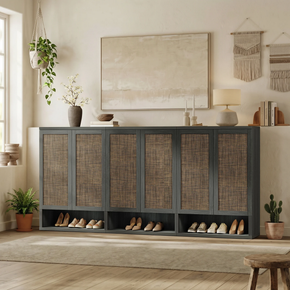
Sketch the room on paper first. Mark every door, window, and outlet. Figure out what the room is mostly for: TV, hosting, reading? Pick the dominant function and build around it. Choose one focal point and aim the seating at it. Trace where people walk through the room; that's where your walkway is. If width allows, pull one major piece away from a wall, usually the sofa. Each zone needs its own area rug and light source. The Sicotas living room furniture range has slim sofas, console tables, and storage built for tight rooms.
FAQs
How to make a long living room narrow?
Stop thinking of it as one room. Long narrow living rooms practically force you into a two-zone setup, whether you're working with a Brooklyn railroad walk-up or a 1970s ranch with an awkward addition tacked on. Anchor the main seating at the end with better light, or facing a fireplace if you've got one. The other end picks up whatever your home is short on, like a real reading corner, a small desk, sometimes even a tiny dining nook for two. A console table behind the sofa or a second area rug at the far end visually separates the zones.
What is the 2/3 rule for a living room?
A sizing shortcut. Your sofa fills about 2/3 of the wall or area rug behind it. The coffee table runs 2/3 the sofa's length. The rug stretches 2/3 of the way under the seating layout in a rectangular living room.
The focal point comes from the rectangular living room layout that ends up being the TV, but plenty of homes build the layout around a fireplace instead, or the biggest window if morning light is the selling feature. Whatever you pick, the main seating arrangement faces it. The classic mistake to dodge is lining every piece along the long walls, because that turns the room into a hallway with cushions. Smarter moves include turning the sofa width-wise across the room to break up the length, floating the sofa with a console table behind it, or wedging an L-shaped sectional into one corner.
How to make a long, narrow room look wider?
Cross the width with something solid, like a sofa, to break the long sightline. Paint long walls light, short end walls darker. Tall bookshelves pull the eye up. A mirror opposite a window throws daylight deep. Round shapes beat rectangles. Run area rugs across the room, never along its length.
What is the biggest mithe stake in the placement of furniture?
Pushing everything flat against the walls. Feels like C, creating space, but does the opposite. Pull one major piece, usually the sofa, into the room with a console table or area rug behind to anchor it.
What is the best way to arrange a living room?
First question to Whatwer: what does the room actually do? Movie marathons want one kind of arrangement. Sunday dinner parties want something else. A space mainly for curling up with a book wants something different again. Pick the activity that matters most and design backward from there. Then choose one focal point, aim your seating at a distance of 30 to 36 inches from the walkway around the placement, and park the coffee table 14 to 18 inches off the front of the sofa. Each functional zone deserves its own rug and a light source it can call its own.
Where should the TV go in a long narrow living room?
On one of the long walls. The sofa goes on the opposite long wall, facing it. With this setup, the view matches the room's narrower dimension, which is usually much closer to ideal than the room's full length. The guideline is somewhere between 1.5 and 2.5 times your T-distance diagonal away from the screen. So a 65-inch television wants 8 to 13 feet of viewing distance. Mount the TV on either short end wall and the sofa ends up so far back you'll feel like you're watching from somewhere near the kitchen sink.
Sources
- Apartment Therapy. Long Narrow Living Room: Layout Ideas From Designers. 12 designer-tested layouts.
- Homes & Gardens. Small Living Room Layout Ideas. Designer rules for tight floor plans.
- Camille Styles. Living Room Layout Mistakes. Designer interviews on placement errors.
- The Design Confidential. Long Narrow Living Room Layout Ideas. Layouts for rooms under 10 feet wide.
- JRL Interiors. Furniture in a Long Narrow Room. Case study for 12-to-15-foot-wide colonials.
- The Brain and the Brawn. 15 Narrow Living Room Designs. 15 floor plans by fireplace and TV setup.
- Wikipedia. Living Room. Background on the room's history.


Looking for something else?
What Is Rattan Furniture? A Buyer Guide to Types and Care
LEARN MORE
21 Nightstand Alternatives That Work in Real Bedrooms
LEARN MORE
26 Reading Nook Ideas for Adults That You Will Actually Sit In
LEARN MOREBiophilic Furniture: What It Is and How to Pick It
LEARN MORELooking for something else?
Color Coordinated Bookshelf: How to Arrange Books by Color Without Losing Track of Them
LEARN MORE
New Home Furniture Essentials: What to Buy First, Room by Room
LEARN MORE
26 Bedroom Coffee Bar Ideas That Actually Work at Home
LEARN MORE


Further reading

Why Adjustable Shelves Matter When Buying a Shoe Cabinet

Best Nightstand Height and Placement for an Adjustable Bed


