



















How Tall Should Nightstand Be? Complete Height & Lamp Guide
A nightstand seems like a simple piece—until you wake up at 2 a.m. and realize your water glass sits an inch too low. The right height makes all the difference between comfort and awkward reach, between design harmony and something that feels slightly “off.” This complete guide explains how tall should a nightstand be, how it should sit next to your bed, and even how tall should nightstand lamps be for the perfect reading and relaxation experience.
If you’re choosing a new setup or refreshing your space, explore bedside options and proportions that work with your room layout in the nightstand.
The Golden Rule: Match the Mattress Height
The simplest, most reliable answer to how tall should a nightstand be is this: the top of the nightstand should be level with the top of your mattress. Designers allow a comfort margin of about 1–2 inches above or below that line.
That small range keeps your reach natural—your hand glides sideways from bed to tabletop, instead of dipping down or stretching up.
Typical guidelines look like this:
- Low platform beds: 20–24 inches tall nightstands
- Standard beds: 24–28 inches tall nightstands
- High pillow-top or box spring beds: 28–32 inches tall nightstands
Anything lower than your mattress risks knocking things over at night. Anything much higher breaks visual balance and strains your arm.
How to Measure Your Bed Height (Before You Shop)
Grab a tape measure and check from the floor to the top of your mattress, not the frame. Include toppers or mattress pads if you use them—they add real height.
Once you have the number, that’s your target. You can stay exactly level or go up one inch for better reach, especially if you tend to sit up reading or sip water in bed.
How Tall Should a Nightstand Be Next to a Bed?
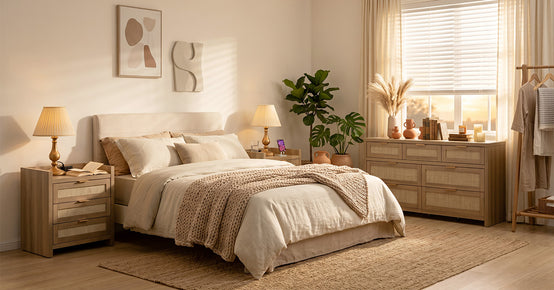
When the nightstand aligns with the top of your mattress, it feels custom-built. The eye reads a clean horizontal line, the lamp base sits at a comfortable level, and reaching for essentials feels natural.
If your bed is taller than average, a slightly higher nightstand (1–2 inches above the mattress) is better than a shorter one. This way, you don’t dip your arm downward in the dark.
Visually, this balance also supports your headboard. The nightstand should reach at least one-third of the way up the headboard but never surpass its midpoint. That ratio keeps the bedside composition grounded and proportional.
Proportion Rules: Nightstand, Headboard, and Wall
Height is only half the story—proportion is what makes the combination work. The nightstand, bed, headboard, and lamp form one visual stack.
Here’s a simple way to think about it:
- The nightstand top should align with the top of the mattress.
- The lamp height should bring the shade bottom to your seated eye level.
- The combined height from floor to lamp top usually looks best around 58–64 inches.
This total creates a soft vertical rhythm that feels calm whether you prefer minimal or classic bedroom styling.
How Tall Should Nightstand Lamps Be?

A great lamp height finishes the composition. Most bedside lamps measure 24–30 inches tall, depending on the table.
To find your ideal lamp height:
- Sit up in bed as if reading.
- Measure from the floor to your eye level.
- The bottom of the lampshade should land at, or just below, that point.
If your nightstand is shorter than your mattress, go with a taller lamp. If your nightstand is higher, choose a slightly shorter one.
This rule ensures that light hits your page or phone without glaring directly into your eyes. A shade that hides the bulb, but still diffuses light downward, gives that hotel-suite comfort at home.
What About Wall Sconces and Floating Nightstands?

Wall-mounted setups are becoming popular for modern bedrooms, and the same height logic applies:
- Floating nightstands should have their top surface aligned with the mattress height or up to an inch higher.
- For sconces, center the light source around 55–65 inches from the floor, with the bottom of the shade at seated eye level.
Always test placements with painter’s tape before drilling. You’ll see exactly how the scale feels from bed—no guesswork required.
Practical Examples for Real Beds
Let’s take three common setups and see how the numbers play out.
- Low platform bed (20" mattress height): Nightstand 22", lamp 28" tall. Together, they reach ~60" from the floor—perfect reading height.
- Standard bed (25" mattress height): Nightstand 26", lamp 26"—a balanced look that feels proportional to most headboards.
- Tall bed (30" mattress height): Nightstand 31", lamp 24"—the shorter lamp keeps the bulb out of sight and the total height near 61".
That “floor-to-lamp-top” total (58–64") holds across all three scenarios—it’s the quiet constant behind magazine-perfect bedrooms.
Design Tips: Height Meets Style
Low, modern nightstands create a grounded, airy look around platform beds. Choose simple lines, minimal legs, and a low lamp to preserve the visual flow.
Tall, traditional nightstands pair beautifully with higher mattresses and upholstered headboards. They frame the bed like architectural columns and let you hide bedside clutter in deep drawers.
If you mix and match styles, remember this: the visual weight should sit in the same horizontal plane as the mattress top. It’s what keeps your bedside arrangement cohesive even when the furniture isn’t identical.
Common Mistakes (and Easy Fixes)
Nightstand too low: Reaching down causes spills and looks visually “sunken.” Fix by raising the tabletop 1–2 inches or switching to a taller model.
Nightstand too high: Feels imposing and throws off symmetry with the headboard. Lower the lamp profile or replace bulky décor with a smaller tray.
Lamp shade too high: If you see the bulb from bed, you’ll squint every night. Lower the shade or choose a deeper one.
Mismatch between sides: If two nightstands differ slightly in height, correct visually by matching lamp heights and keeping surfaces within a two-inch range.
How to Check Comfort Before You Commit
When your nightstand arrives (or before mounting a floating one), test it in context. Sit in bed with the lamp placed. Reach for your glass, phone, or switch. You shouldn’t lift or lower your shoulder noticeably.
Then turn off the room light and look at how the bedside composition glows. If the lamp beam spills across the bed evenly and you can reach everything easily, the height is perfect.
Styling the Surface: Function Follows Height
Good height also makes styling easier. A table at mattress level lets you layer objects comfortably: a lamp toward the back, a small tray near the center, and a decorative accent (plant, candle, or photo) to one side.
If the table is too tall or too short, you’ll crowd the lamp or lose usable area. Proper height means the surface acts like an extension of the bed—a visual and functional continuation of your nightly routine.
Choosing the Right Nightstand Online
Shopping for furniture online? Product listings usually show overall height in inches or centimeters. Check that against your measured mattress height—not the store’s idea of “standard.”
In the SICOTAS nightstand, each design includes clear dimensions so you can match proportions precisely to your space. When browsing, consider:
- Height: Match to mattress ±2 inches
- Width: About one-third of your bed width for balance
- Depth: 12–18 inches for most rooms; shallower in tight spaces
- Storage: Drawers for essentials, open shelves for décor or books
- Finish: Match or contrast the bed frame for cohesion
Even subtle changes in height—an inch or two—can make a big difference in comfort and flow.
Frequently Asked Questions
How tall should a nightstand be for a standard bed?
Around 24–28 inches works best for most standard beds, keeping the surface level with your mattress top.
How tall should nightstand lamps be?
Choose lamps about 24–30 inches tall so the shade bottom sits at or slightly below your seated eye level.
Should both nightstands be the same height?
Ideally yes, but if they differ, keep surfaces within 2 inches and balance the look with matching lamp heights.
What about platform or low beds?
Opt for nightstands around 20–24 inches tall and smaller lamps (22–26 inches) to keep proportions consistent.
Do floating nightstands follow the same rules?
Yes. Mount them so the top surface aligns with your mattress or is up to an inch higher for ease of reach.
Final Thoughts
The perfect bedside setup starts with proportion and ends with comfort. The answer to how tall should a nightstand be isn’t complicated: align the top with your mattress, choose a lamp that meets your eyes when you sit up, and make sure both work together visually with your headboard.
That single guideline transforms your nightstand from just another table into an extension of your bed—practical, elegant, and restful.


Looking for something else?

Burl Wood Furniture: The Complete Buying Guide
LEARN MORE
What Is a Hope Chest? Meaning, History, and Modern Uses
LEARN MORE
What Is a Foyer? Meaning, Purpose and Design Guide
LEARN MORE
GREENGUARD Gold Certified Furniture: What It Really Means for Your Home
LEARN MORELooking for something else?

How to Clean a Mirror Without Streaks: Simple Step-by-Step Guide
LEARN MORE
21 Above-Bed Decor Ideas for a Stylish Bedroom Wall
LEARN MORE
Furniture Materials Guide: Picking the Right Material Room by Room
LEARN MORE


Further reading

18 Decorative Storage Box Ideas That Hide Clutter Well

How to Store Comforters Without Losing Space or Loft


