




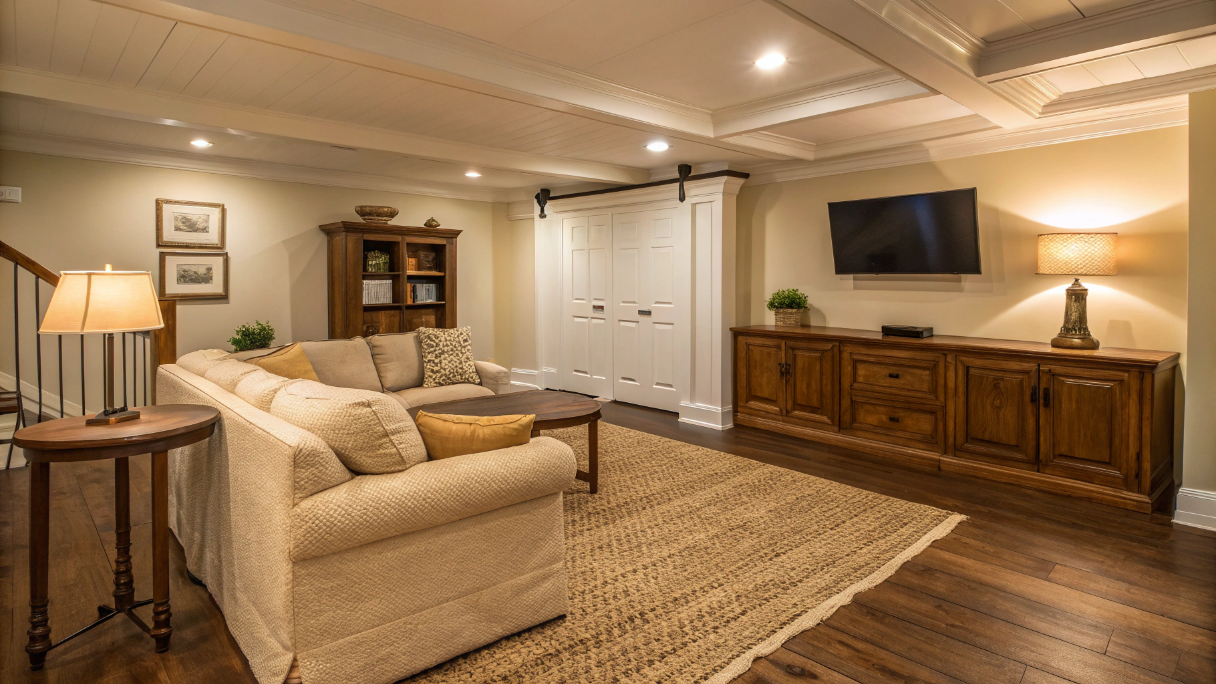

12 Basement Furniture Ideas for a Cozy Downstairs Space
The standard finished basement goes wrong in the same way every time. Not because of the furniture itself — most of it is fine — but because of the sequence. Sofa goes down first, then the TV, then nothing else gets decided, and the rest of the room fills in by default: old bookshelves that didn't make the cut upstairs, a card table, bins stacked in the corner. The room technically has basement furniture. It doesn't feel like a room.
Twelve ideas below. They're in a rough order — the ones near the top should happen first, before money gets committed in the wrong direction. The ones near the bottom are the finishing layer. Read the list through before doing anything.
1. Figure Out What the Room Is Before You Shop

Not loosely. Specifically. Because "a place to hang out" is not a room brief — it's the reason basements end up half-finished for years.
Is this the family movie room? The place teenagers disappear to, so you know where they are? A home bar with actual barstools? A guest room with a pull-out? A game room with a pool table that requires eight feet of clear space on every side? Write it down. Actual words. Because a sectional that works perfectly for movie nights is exactly the wrong piece if the pool table is coming. And the pool table measurements aren't something to work out after you've bought the sofa.
Everything else in this list branches off this decision. Get it specific before spending anything.
2. Measure the Stairwell — Then Buy the Sectional

A friend bought a sectional a couple of years back. Nice piece. Right size for the basement, right price, right color. Sat in the living room of the delivery truck for forty minutes while four people tried to figure out how to get it around the L-turn at the bottom of the stairs. It didn't fit. Had to go back.
That turn — the 90-degree angle where the staircase meets the basement floor — is the actual measuring problem. Not the room. Not the door. The width of the staircase at that point, the ceiling height directly above it, and whether the sectional comes apart into sections or ships as one piece. Modular sectionals that uncouple for delivery are worth looking for specifically. They cost a bit more in some cases. They fit.
Low profile while you're at it. Shorter back cushions, slimmer arms, and legs that keep the frame close to the floor. A basement with an 8-foot ceiling — which most basements have, some have less — reads as bigger with low furniture in it: same seat count, less visual bulk.
3. Close-Door Storage Changes the Whole Room

Here's something that took me a while to understand: the clutter in most basements isn't a volume problem. The room isn't actually full. The problem is visibility. Open shelves, bins stacked in corners, old furniture with drawers that don't fully close — the basement can be tidied every Sunday and still look like it's mid-move, because everything messy is on display.
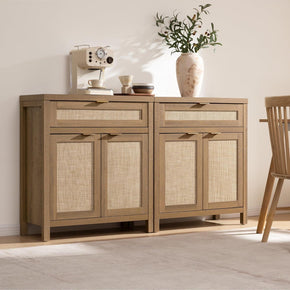
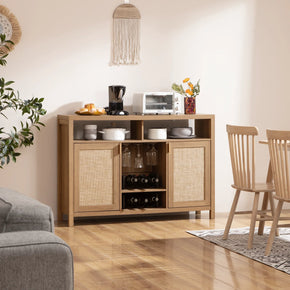
A sideboard with real closing doors changes this at the root. The Savanna Sideboard 3 Drawers and 2 Doors has three drawers — controllers, remotes, cables, batteries, all the small rattling stuff — and two cabinet doors that close over anything bigger. The surface stays clear. Put a lamp on it. That's it. One piece and the back wall look like someone finished the room.
4. Use a Tall Bookcase on the Blank Wall

Basement walls are usually just blank. Long, unbroken, no windows, nothing to interrupt them. Art helps marginally. Furniture that goes from floor to near-ceiling helps a lot more — it gives the eye somewhere to move and makes a room with low ceilings read as taller, which sounds like a contradiction but isn't.
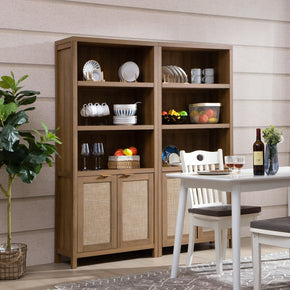
The Savanna Arched Bookcase splits the job in two: open shelving in the upper section for books, games, and things worth displaying, closed doors at the base for everything that doesn't need to be seen. The height does the visual work. The closed base handles the basement's inevitably messy storage. Both things at once.
5. Pick a Coffee Table Nobody Has to Be Careful Around

Not glass. Not marble. Not anything that starts a coaster conversation.
The basement coffee table takes feet, drinks, late-night snack plates, and a half-finished game of Risk left out until Wednesday. That's fine. A lift-top version converts to laptop height during the day, which makes the room useful outside of evenings. Nesting tables are better than a single table if the room regularly fills up with people — tuck one away when the space is empty, and pull both out when it isn't.
6. The Bar Doesn't Need a Contractor

Built-in bars look great. They also cost a lot, take weeks to install, and become permanent features in a room whose purpose changes every few years. Two barstools, a bar cart, and one good storage piece — that's the whole thing without the construction timeline.
The storage piece is worth spending on. A plain closed box looks exactly like what it is. Something with a bit of character on the front — a decorative panel, textured doors, glass insets — looks chosen rather than settled for. The Helio Decorative Sideboard Cabinet has that quality. The decorative front panels give the corner an actual presence. Bar cart and bottles on top, glasses and extras behind the doors, and the whole setup looks designed rather than assembled.
7. Sort Out the TV Wall

What does the standard basement TV wall look like? Flat screen — wall-mounted or on a too-narrow console — two streaming boxes stacked on each other, a games console, a router with four lights blinking, cables going straight down to a power strip on the floor, and a pile of remotes on whatever surface is nearby. Looks chaotic on the best day.
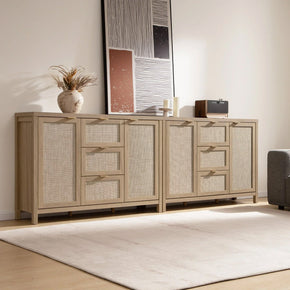
A console table with drawers puts most of that away. The Savanna Console Table has three drawers — one for controllers and remotes, one for cables and adapters, and one for everything else that ends up there. Run the cables behind the table rather than down the visible wall. Close the drawers. That wall goes from loud to quiet in one move.
8. Light Furniture Colors Work Better Than Dark Ones

Dark walls and dark furniture in a windowless basement: the instinct is understandable — it feels cozy in theory. In practice, every dark piece absorbs what limited light is in the room. The space gets heavier with each addition.
Cream upholstery. Light oak tones. Warm gray that reads yellowish rather than bluish. These aren't exciting choices — they're just the right ones for a room that can't afford to lose any light. The difference between a basement furnished in dark tones and one furnished in light ones, under the same lighting setup, is bigger than most people expect. And frankly, it's the thing that most often separates a finished basement from one that feels like a dungeon, even after renovation.
Walls: warm off-white, not cool white or gray. Cool gray shifts to an odd lavender-blue under artificial light in the evenings. Warm off-white — something with a cream undertone — holds steady at every hour. Tiny decision. Noticeable every night.
9. Put a Rug Down on the Concrete

The EPA recommends area rugs over concrete basement floors specifically because they can be lifted and checked for moisture underneath — unlike wall-to-wall carpet, which can trap dampness for months before you find it. Worth reading their guidance on basement moisture before committing to anything on the floor. The short version: area rug with a pad, not fitted carpet.
Low pile, not high pile. Easier on bare feet, dries faster, doesn't trap as much dust. Rug pad between rug and floor — stops the sliding and adds another insulating layer between you and the cold concrete. Check what's underneath the pad a couple of times a year, especially in fall and spring when basement humidity tends to shift.
10. Two Sideboards — One Is Not Enough

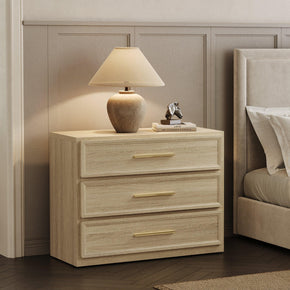
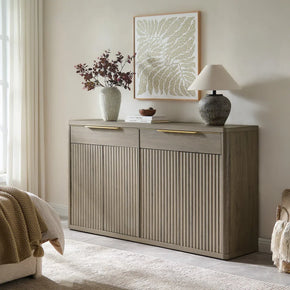
Six months in, one sideboard is full. Games, blankets, barware, the kids' things that migrated downstairs, seasonal items that have no home — the basement accumulates it all. A second sideboard on a different wall actually solves the storage problem rather than delaying it. The Stria Sideboard with 2 Doors works in a second position without being identical to the first piece — two-door front, clean lines, consistent with most modern basement furniture, without matching it precisely. Closed storage on two walls is what separates a finished basement from one that looks perpetually in progress.
11. Add Floor Lamps — The Overhead Fixture Is Not Enough

One ceiling fixture is in the middle of the basement ceiling. That's the default. Flat, even, slightly clinical light across the whole room, which is fine for functionality and bad for atmosphere.
Floor lamps in the back corners of the room — not near the TV, not near the seating, in the corners that currently go dark. One lamp per corner. That's step one. Dark corners make rooms feel unfinished and cramped; lit corners change the whole perimeter of the space. Then, a table lamp on the sideboard surface. Strip lighting behind the bookcase if you want it—all warm-toned bulbs — 2700K, not the 4000K that came factory-installed in most standard fixtures.
The bulb swap alone — from 4000K to 2700K — is the cheapest change in this whole list and has a bigger impact than most furniture decisions. Do it before anything else in this section.
12. Fix the Moisture Before Anything Goes Down

There is no version of this where skipping it works out. A basement with active moisture problems will warp wood furniture, damage upholstery, and grow mold on and under rugs — sometimes fast, sometimes slowly, but consistently. The EPA's guide on basement mold makes the point plainly: fix the source. Cleaning up mold without fixing the water that caused it means the mold returns. Putting furniture down before fixing the water means the furniture eventually shows the problem.
Dehumidifier running at 30–50% relative humidity. Furniture with legs rather than solid bases sitting directly on the floor. Pieces pulled a few inches off the walls rather than pressed against them — airflow matters, and you'll notice problems earlier when there's a gap to look into.
Sort it. Then furnish.
FAQs
What furniture actually works in a finished basement?
Pieces that do more than one job and can be put to real use: a low-profile sectional for the seating zone, a sideboard with closing doors for storage, a lift-top or round coffee table, a tall bookcase with closed lower storage. For upholstery, performance fabrics or microfiber — not velvet, not raw linen. And furniture with legs rather than solid bases sitting on the floor so that air can circulate and you can check for moisture underneath.
What should not go in a basement?
Antiques. Delicate upholstery in moisture-trapping fabrics. Anything made of untreated solid wood that you'd be upset to find warped in two years. And, practically speaking, any large sectional before measuring the turn at the bottom of the basement stairs. That L-turn has returned more sofas than any other reason in residential furniture delivery. Measure it. Specifically. Before ordering anything.
Is a sectional sofa a good call for a basement?
Yes. With two conditions: low profile (shorter back cushions, slimmer arms — basement ceiling heights don't accommodate tall furniture well) and modular or dismantling delivery if the stairwell is tight. A modular sectional that ships in pieces costs slightly more in some cases and avoids the stairwell problem entirely. It's usually worth it.
My basement feels dark and a bit stuffy even after furnishing. What's going on?
Probably the lighting and wall color, and possibly airflow. Cool-gray walls shift to a flat lavender or greenish-blue tone under evening artificial light — it's not dramatic, but it's there, and it makes rooms feel stuffy. Swap to warm off-white with a cream undertone. Then: floor lamps in the back corners, not just overhead. 2700K warm-white bulbs everywhere. Pull furniture a couple of inches off the walls to improve air circulation. The stuffy feeling, specifically — not just the visual darkness — is often due to airflow. Furniture pressed flat against every wall stops air from moving.
How do you set up furniture in a small basement?
One seating zone. Anchored by a rug. Clear walking path from the stairs — 36 inches minimum, wider if you can manage it. Storage on the walls rather than freestanding pieces in the middle of the floor. A small or round coffee table. And some empty floor space, which reads as larger than a corner stuffed with a chair that nobody actually sits in.
What kind of coffee table works best down there?
Round or oval edges — you'll thank yourself during a late-night movie when someone gets up in the dark. Lift-top if the basement sees daytime use, because the surface converts to working height and the room stops being a single-purpose nighttime space. Storage version,n if remote and controller pile-up is already a problem, which it usually is.
Does basement furniture need to be moisture-resistant?
Not waterproof. Just practical. Performance fabrics over delicate textiles. Wood furniture with legs, not solid bases on the concrete. A dehumidifier runs if the space tends tobes to be. And actually fixing water intrusion before putting anything expensive down — not working around it, fixing it. That's the distinction.
How do I furnish a basement without spending more than necessary?
Buy seating first — it sets the layout and everything else positions around it. For secondary storage pieces (side tables, extra shelving, a second sideboard), secondhand or clearance pieces are fine because they take less wear than the main sofa. Rugs and lighting give the most visible improvement per dollar spent. For sideboards, bookshelves, and console tables that handle real basement storage without looking budget-built, the Sicotas furniture collection is worth a look — mid-market pricing, actual build quality, nothing that'll fall apart in a room that gets genuinely used.
Sources
- HGTV,82 Finished Basement Ideas and Designs
- EPA,A Brief Guide to Mold, Moisture, and Your Home
- EPA,Main Ways to Control Moisture in Your Home
- Living Spaces,7 Finished Basement Ideas + Easy Tips
- Family Handyman,Basement Furniture Ideas
- Honest and Truly,9 Tips to Furnish the Basement of Your Dreams
- HGTV,Basement Remodeling Ideas


Stay In The Know
Expert advice. Very good deals. The absolute best (and worst) things we've tested lately.
Looking for something else?
How to Arrange Outdoor Furniture for Better Flow and Conversation
LEARN MORE
What Is Faux Leather Made Of? Materials, Types, and Care
LEARN MORE
Can Any Mattress Work With an Adjustable Bed?
LEARN MORE
California King Bed Size: Complete Dimensions, Chart & Buying Guide
LEARN MORERead more from Blogs
Looking for something else?
How to Steam Clean a Couch at Home Without Wrecking It
LEARN MORE
Best Vase for Tulips: A Florist's Honest Guide to Shape, Height, and Styling
LEARN MORE
41 Small Outdoor Living Spaces Ideas to Transform Even the Tiniest Patio
LEARN MORERead more from Blogs
You may also like


Further reading
Sectional Sofas for Open Concept Living Rooms: Layout Rules That Work

21 Contemporary Interior Design Ideas to Transform Your Home in 2026


