




How to Decorate a Bookcase: 15 Easy Ideas
If you’ve been staring at empty shelves wondering how to decorate a bookcase, you’re not alone. Styling shelves feels tricky because it’s part art, part restraint. The good news: a few simple formulas—plus a little editing—make it painless. Below are 15 easy, repeatable ideas you can mix and match in any room, from living‑room feature walls to cozy corners. We’ll also cover how to decorate the top of a bookcase, how to decorate the top of a tall bookcase, quick bookshelf decor recipes, and living room bookshelf decor ideas that always look polished.
Before you start: a calm 5‑minute reset
-
Empty and edit. Keep only the pieces you love or use.
-
Pick a palette. Choose 2–3 colors plus one metal or wood tone to repeat across shelves.
-
Set anchors. Put the visually heavier items (dark ceramics, thick books, boxes) on lower or middle shelves.
-
Mix heights and textures. Combine vertical and horizontal book stacks with ceramics, glass, and woven pieces for depth. Designers often recommend odd‑number groupings and leaving some negative space so shelves don’t read as cluttered.
15 Easy Ideas (copy‑and‑use formulas)

1) The “3‑2‑1” focal triangle
Create a loose triangle across the whole case: three standout pieces placed on different shelves (a tall plant, a framed print, and a sculptural object). Triangles guide the eye and keep the composition balanced. Odd‑number groupings (3, 5, 7) are a long‑standing styling trick for a natural, dynamic feel.
2) Vertical books + horizontal stack + topper
Stand most books vertically for function. Add one short horizontal stack (2–5 books) and top it with a small object or bowl. It’s a simple way to break the rhythm and add a resting point. (This “formula” approach is popular with stylists and home bloggers for a reason—it’s repeatable.)
3) Lean framed art inside the bookcase
Lean a framed print or photo at the back of a shelf and partially overlap it with a smaller object in front. Layering adds depth without crowding. (Pros also suggest leaving some open space on each shelf so your hero pieces can breathe.)
4) Add plants for life (but not on every shelf)
Use one plant per 2–3 shelves—trailing vines on upper shelves, upright forms at eye level. Live or faux both work; the greenery softens straight lines and pairs well with books and ceramics.
5) Baskets and boxes on the lower shelves
Hide cords, remotes, keepsakes, and seasonal bits in lidded boxes or woven baskets. Two per shelf is usually enough; align them to one side or center them for a clean look. (Baskets add texture and keep visual noise down.)
6) The single statement shelf
Don’t be afraid of one generous object—like a large vase, a sculpture, or a glazed bowl—on an otherwise empty shelf. Negative space is part of the design and helps the eye rest.
7) Repeat materials three times
Echo a finish (brass, walnut, rattan, matte black) at least three times across the case. Repetition creates cohesion without a matchy‑matchy look. Designers call this out often: mix heights, scales, textures, and sheen for balance.
8) Color‑block—lightly
Group similar spine colors or objects together for a subtle color‑blocked effect, then buffer with a neutral shelf so it doesn’t feel cartoonish. This works especially well on white or pale‑tone shelves where colors pop.
9) Style a “gallery” shelf
Combine leaned art at the back with a small plant and one object up front (a bowl, knot, or candleholder). This mini vignette reads like a layered still life and plays nicely with rows of books.
10) Use accessories as bookends
Bookends don’t have to be store‑bought. Framed photos, bold ceramics, or a heavy stone can work as book shelf decor and function as supports at once.
11) Light it up softly
A small picture light above, adhesive puck lights, or a slim LED strip at the top shelf add warmth and highlight texture. Keep it indirect; hot spots can make shelves feel busy.
12) Create a rhythm—two “clusters” per wide shelf
On wider shelves, think in two clusters instead of lining items end‑to‑end. Stagger heights within each cluster, and vary textures. This “two‑group” approach is an easy guardrail if you’re new to decorating bookshelves.
13) The “books + bowl” pair
Place a row of vertical books and balance with a filled bowl (moss spheres, shells, pinecones, or beads). It’s quick, tidy, and adds a curve to all those right angles.
14) Wallpaper or paint the back panel
A subtle pattern or contrasting color behind shelves adds depth and makes your objects pop. If pattern feels risky, try linen‑look wallpaper or a soft paint color two shades darker than the walls.
15) Rotate seasonally, not weekly
Keep a small “swap box” of alternative objects—different bowls, frames, or a seasonal accent—so you can refresh without re‑styling from scratch. Rotation keeps bookshelf decor feeling alive.
How to decorate the top of a bookcase

Treat the top as a mini stage:
-
Scale over quantity. Choose 1–3 larger items rather than many tiny pieces (for example: a tall vase, a medium plant, and a framed piece leaning behind).
-
Height matters. Leave 6–10 inches of breathing room to the ceiling so it doesn’t feel wedged.
-
Asymmetry reads modern. Try a left‑ or right‑weighted arrangement; it looks intentional from across the room.
-
Echo something below. Repeat a color, metal, or weave from the shelves to tie the top into the whole composition.
This simple approach handles both how to decorate the top of a bookcase and how to decorate the top of a tall bookcase. For very tall cases, scale up the objects (bigger vases, taller branches) so they don’t get visually lost.
Living room bookshelf decor ideas (that consistently work)

-
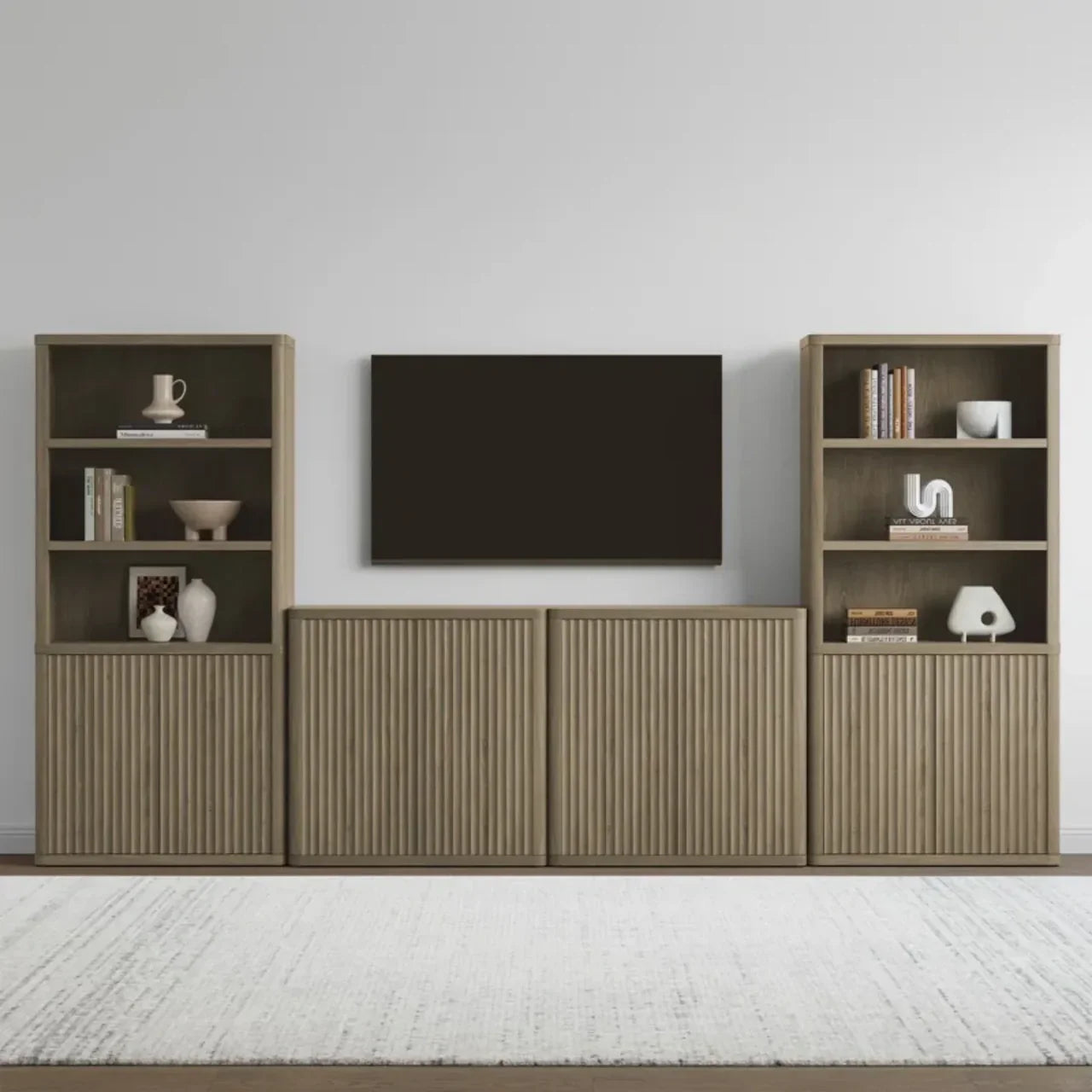
Frame a focal point. If your shelves flank a TV or fireplace, build symmetry around that focal, not necessarily on every shelf.
-
Give the center shelf your strongest vignette. It’s the first one you notice from the sofa.
-
Keep bottom shelves practical. Lidded boxes for remotes and chargers; heavier books low for stability.
-
Add life. One plant for every two shelves is plenty—choose trailing vines on upper shelves and upright plants in the middle.
No‑book looks: how to decorate shelves without books
If you’re light on books (or just want a quieter look), think in threes:
-
Grounding elements: lower shelves get woven baskets or closed boxes (hide the “stuff”).
-
Silhouettes: middle shelves get sculptural pieces—ceramic vases, a wood knot, candleholders, or a bowl.
-
Personal pieces: upper shelves get framed photos or small art you can lean and layer.
Keep 30–40% negative space so each vignette reads clearly. Designers and stylists often emphasize the combination of odd numbers, varied heights, and strategic empty space for shelves that look curated rather than cluttered.
Quick 30‑minute styling sprint
-
Empty two shelves at a time.
-
Place one anchor on each (a plant or tall vase).
-
Add vertical books, then one horizontal stack.
-
Lean one framed print behind.
-
Add a single textured piece (woven box or ceramic).
-
Step back and remove one item per shelf.
-
Repeat on the next two shelves.
Ten minutes per pair of shelves is often enough to make the whole bookcase feel new.
Common mistakes (and gentle fixes)
-
Overfilling. If every inch is covered, remove a third. Negative space is design, not emptiness.
-
All one height. Add a tall element every other shelf, and use small risers (a book under a small object) to vary height.
-
Monotone texture. Mix matte ceramic, woven fiber, glass, and wood for a more layered look.
-
No visual rhythm. Repeat a color, a material, and a shape at least three times.
-
Top‑heavy feel. Move darker or heavier items to the bottom shelves; keep lighter pieces up high.
Style notes for different finishes
-
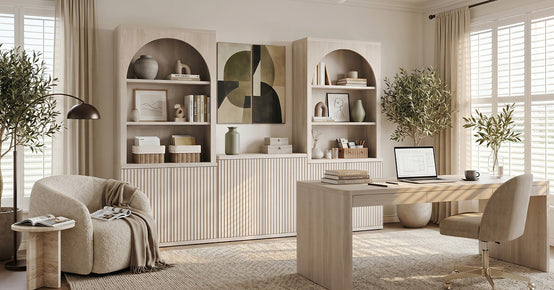
Light/white shelves: Add warm woods and woven baskets for texture; use a few black or charcoal pieces to ground the look.
-
Dark shelves: Contrast with pale ceramics, linen‑covered boxes, and a metallic accent.
-
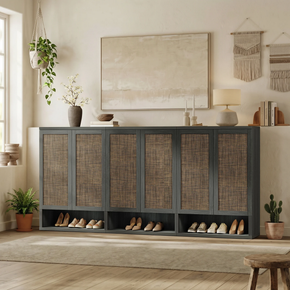
Mixed materials: Cane/rattan, metal frames, or glass‑front doors help tall units feel lighter in a small room.
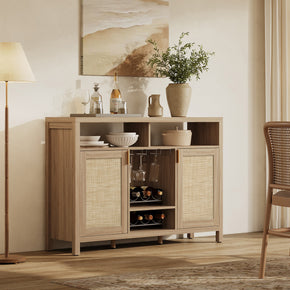
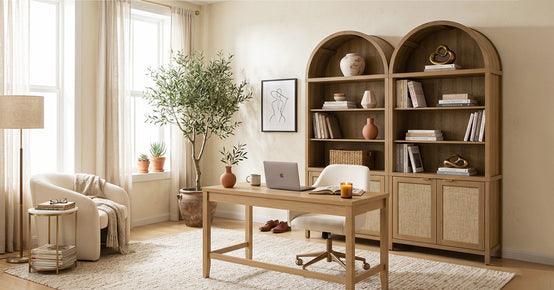
If you prefer closed storage with a display area above, this arched rattan bookcase with doors is a good all‑in‑one:
Frequently Asked Questions
How to decorate a bookshelf if I’m overwhelmed? Start with just three items per shelf: a vertical book cluster, one horizontal stack, and one object. Repeat this across the case and add only what’s truly missing.
How to decorate shelves in living room without clutter? Limit each shelf to one vignette (or two on wide shelves), repeat colors and textures three times, and keep 30–40% empty space. Designers frequently point to odd‑number groupings and negative space for a calmer feel.
What goes on the top of a tall bookcase? 1–3 larger pieces (tall vase/branches, medium plant, framed art leaning behind). Leave headroom to the ceiling and echo a color or material from below so the top belongs to the whole.
Should I anchor a bookcase? Yes—especially tall, loaded units. Use the included anti‑tip kit or brackets into wall studs for safety; national tip‑over campaigns continue to emphasize simple anchoring for prevention.
Competitor formula inspiration (and what we changed)
We reviewed a popular “10 formulas” shelf‑styling post to make sure our ideas are practical and easy to copy at home. You’ll see echoes of those simple groupings—books plus toppers, layered frames, stacked boxes—but presented here with a calmer, step‑by‑step approach and broader variations (plants, baskets, color‑blocking, gallery rows).
Wrap‑up
Learning how to decorate a bookcase is mostly about rhythm and restraint: repeat a few colors, mix textures, vary heights, and protect white space so your favorite pieces can shine. Use the 15 formulas above to style quickly, then tweak seasonally. When you want a bookcase that makes styling even easier—open shelves above and hidden storage below—explore options like this arched rattan bookcase with doors, or browse the full bookcase for sizes and finishes that suit your room.


Looking for something else?

Burl Wood Furniture: The Complete Buying Guide
LEARN MORE
What Is a Hope Chest? Meaning, History, and Modern Uses
LEARN MORE
What Is a Foyer? Meaning, Purpose and Design Guide
LEARN MORE
GREENGUARD Gold Certified Furniture: What It Really Means for Your Home
LEARN MORELooking for something else?

How to Clean a Mirror Without Streaks: Simple Step-by-Step Guide
LEARN MORE
21 Above-Bed Decor Ideas for a Stylish Bedroom Wall
LEARN MORE
Furniture Materials Guide: Picking the Right Material Room by Room
LEARN MORE


Further reading

18 Decorative Storage Box Ideas That Hide Clutter Well
ARTICLE BRIEF
Primary Keyword
decorative storage box ideas
Secondary Keywords
decorative storage boxes · decorative boxes with lids · stylish storage boxes · DIY storage boxes
...

How to Store Comforters Without Losing Space or Loft
Storing comforters comes down to four things. Clean and bone dry. Loosely folded, and sitting in something that breathes. Miss any one, and next season you pull out something that smells like a dam...

Furniture Distance From a Fireplace: How Far Is Safe?
Furniture distance from a fireplace answers two questions with one number. Keep anything that can burn at least 3 feet from heat sources.The U.S. Fire Administration gives that message for fireplac...


