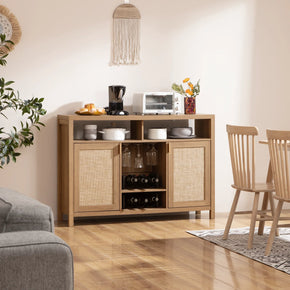
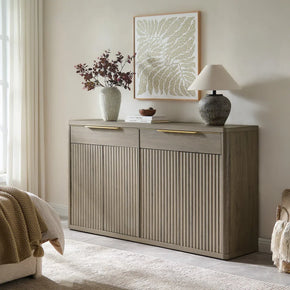
Modern Sideboard
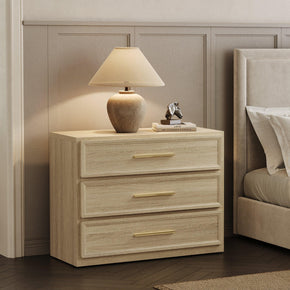
A modern sideboard typically features clean lines, flat-front doors, hidden hardware, and neutral or high-gloss finishes. It works best in dining rooms, living rooms, and minimalist homes that need a sleek storage piece for dishes, drinks, décor, or everyday items without adding visual clutter.
Rustic Sideboard
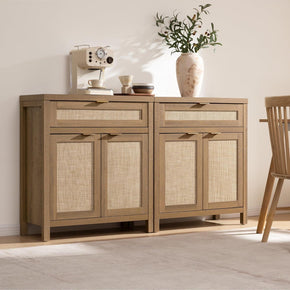
A rustic sideboard showcases natural wood grain, distressed finishes, and warm hardware details. It is a great choice for cozy dining rooms, kitchens, and farmhouse-inspired spaces where the furniture should add warmth, texture, and practical storage.
Traditional Sideboard
A traditional sideboard often uses rich wood tones, classic detailing, ornate carvings, and elegant craftsmanship. It suits formal dining rooms or classic interiors where the sideboard cabinet needs to feel refined, timeless, and substantial enough to hold plates, linens, and wine glasses.
Industrial Sideboard
An industrial sideboard blends rugged materials such as natural wood, exposed metal frames, and darker metallic accents. It works well in urban, loft, or modern rustic rooms where the design needs to feel sturdy, functional, and slightly raw.
Mid-Century Modern Sideboard
A mid-century modern sideboard usually features warm wood tones, tapered legs, minimalist geometric shapes, and functional storage. It is ideal for contemporary homes that want clean lines, a lighter visual profile, and a sideboard buffet that fits easily with other furniture.
Buffet Cabinet
A buffet cabinet is typically placed near a dining table, with a flat top for serving food and storage below. It is best for hosting meals, storing dinnerware, keeping plates and drinks within easy reach, and making the dining room feel ready for guests.
Long Low Sideboard
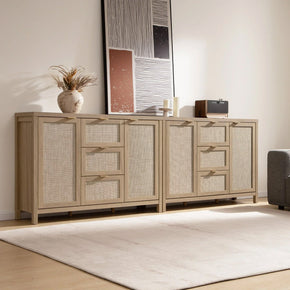
A long low sideboard is a wider, lower cabinet that can work in both dining rooms and living rooms. It can support a wall-mounted TV, hide cords, routers, and gaming consoles behind closed doors, or serve as a sleek media-style credenza with extra storage.
Narrow Sideboard
A narrow sideboard has a slimmer width and depth, making it easier to fit in entryways, hallways, kitchens, or small dining rooms. It can create a practical drop-zone for keys, mail, and daily things while still offering drawers, cabinets, shelves, or a display surface.
Hutch
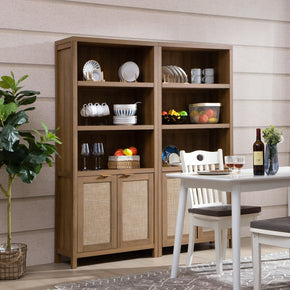
A hutch features open shelves or closed cabinets stacked above a lower counter or sideboard. It is best for adding vertical storage when floor space is limited, especially for dishes, glassware, décor, pantry items, or pieces you want to display and keep within reach.