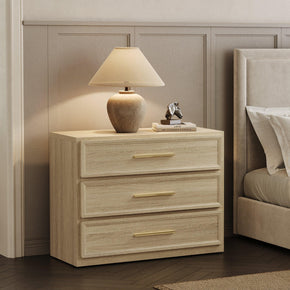
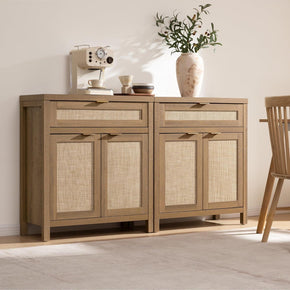
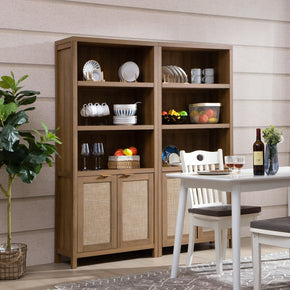
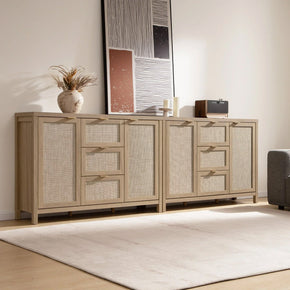
Measure the room first.
A buffet cabinet should fit your dining room, kitchen, living room, or entryway without crowding the space. For a good proportion, keep it within about 80% of the wall length. Leave at least 24 inches between the dining table and buffet, and 24–30 inches of clearance for doors, drawers, chairs, and easy movement.
Choose storage that fits your items.
Drawers work well for silverware, napkins, linens, and smaller dinner items. Doors and shelves are better for dishes, plates, drinkware, serving bowls, and larger kitchen or dining room storage. Adjustable shelves give you more options as your storage needs change.
Use the top for meals and display.
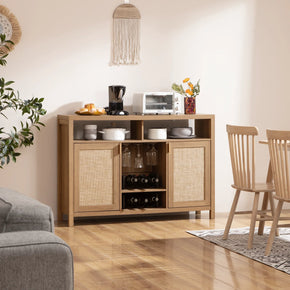
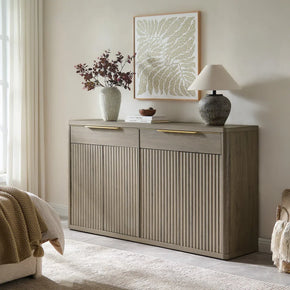
The flat table-like surface of a sideboard buffet cabinet is useful for serving food and drinks during meals. It can also display artwork, lamps, trays, plants, or seasonal décor, helping create a ready place for dinner, hosting, and everyday organization.
Match the room’s design language.
A buffet cabinet does not need to perfectly match your dining table, chairs, or sideboard, but it should suit the room through finish, color, shape, or material. Door fronts, trim details, legs, and hardware all affect whether the cabinet feels sleek, farmhouse, rustic, modern, or mid-century.
Think beyond the dining room.
Buffets can work as a coffee bar, extra pantry storage, TV cabinet, media console, or entryway drop zone for keys, mail, and bags. This makes a buffet cabinet a flexible piece that can store clutter, support daily items, and suit different rooms.
Check price, material, and details before you order.
Buffet cabinet price depends on size, material, finish, storage features, and design details. Engineered wood and MDF are often more budget-friendly, while solid wood is valued for durability and natural character. Before you shop or click to order, compare the number of doors, drawers, shelves, tabletop width, and finish to find the best sellers or more options you will love.